How should hypertrophic scarring after eyelid surgery be treated? What are the causes?
Hoang Bao Chau
Asked: 01/02/2026
I had eyelid surgery nearly a year ago, but for some reason, a mild hypertrophic scar has appeared on my upper eyelid, which is clearly visible when I wear makeup. I am quite worried and do not know the cause. Doctor, may I ask how hypertrophic scarring after eyelid surgery should be treated safely, and whether there is a way to completely correct it?
Hello, the doctor understands your concerns when, after a period of time following eyelid surgery, a hypertrophic scar appears on the eyelid area, affecting aesthetics and even making the eyes look uneven and unnatural. This is not an uncommon condition if the surgical procedure or postoperative care is not performed properly. So what causes hypertrophic scarring after eyelid surgery, and how should hypertrophic scarring after eyelid surgery be treated to achieve thorough correction while maintaining a beautiful eyelid crease? The doctor will explain in detail to help you better understand.
Hypertrophic scarring after eyelid surgery – what are the causes?
When hypertrophic scarring occurs after eyelid surgery, it is essentially due to an abnormal overproduction of collagen during the wound-healing process. Instead of producing just enough collagen to heal the skin, the body generates an excessive amount, causing the scar tissue to become thick, raised, and firmer than the surrounding skin. However, in clinical practice, hypertrophic scarring after eyelid surgery usually results from four main causes:
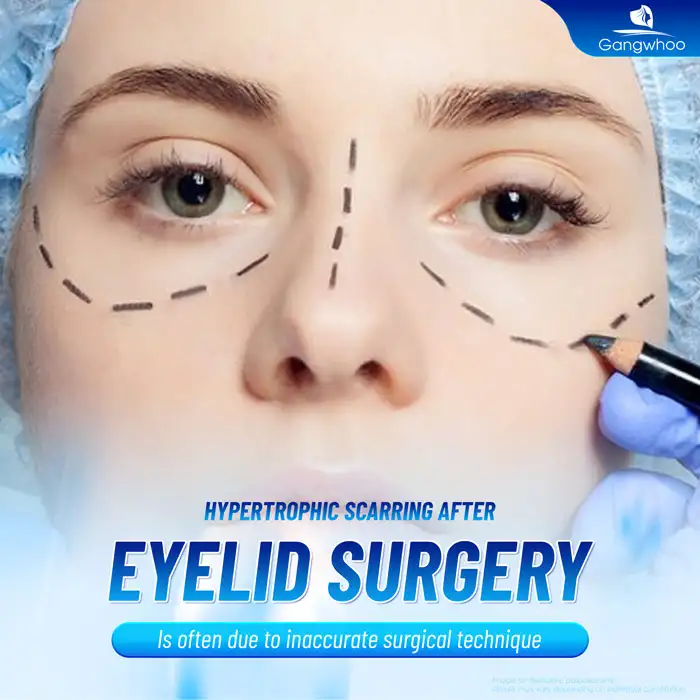
Hypertrophic scarring after eyelid surgery is often caused by inaccurate surgical technique
Hypertrophic scar-prone skin:
Some individuals have a skin type that is prone to hypertrophic scarring; even small wounds can develop excessive scar tissue. This factor is difficult to control and accounts for approximately 10–15% of cases.
Inaccurate surgical technique:
If the surgeon makes an incision that is too deep or uneven, or uses inappropriate sutures, the wound can be subjected to tension during the healing phase. This stimulates fibrous tissue overgrowth, leading to hypertrophic scars after eyelid surgery.
In particular, when eyelid surgery is performed using traditional surgical blades, the incision is less refined and causes greater tissue trauma, increasing the risk of scarring compared to modern endoscopic microsurgical eyelid surgery using Plasma technology.
Infection or inflammation during recovery:
If the eyelid area is not kept clean or postoperative care instructions are not followed, bacterial infection can occur, disrupting the healing process and leading to hypertrophic scarring.
Mechanical impact during healing:
Rubbing the eyes, sleeping on one side, applying heat too early, or excessive eye movement can stretch the wound, causing thick sutures and increasing the likelihood of scar formation.
How should hypertrophic scarring after eyelid surgery be treated?
When hypertrophic scarring occurs after eyelid surgery, treatment must be applied appropriately based on the severity and characteristics of the scar tissue. Below are four common treatment approaches used by specialists:
Topical scar treatment creams or ointments
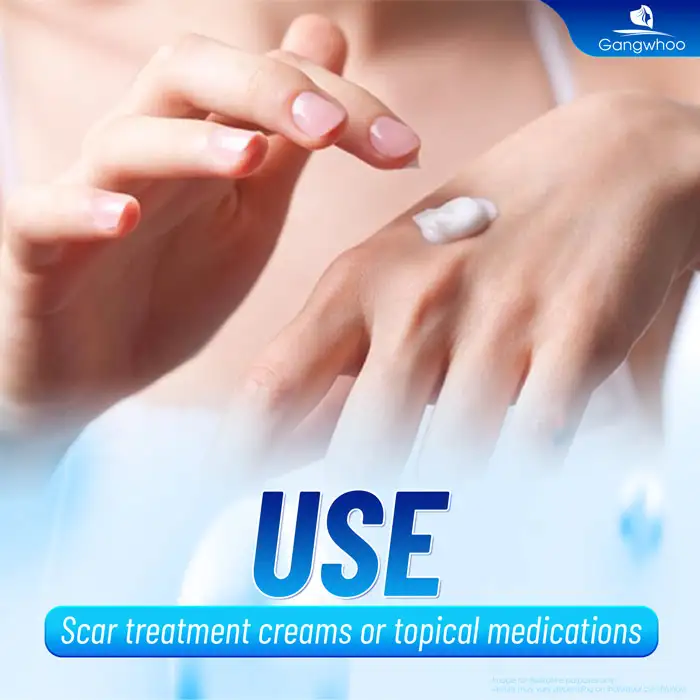
Using topical scar treatments to prevent hypertrophic scarring after surgery
For newly formed, small scars, doctors may prescribe scar treatment creams or gels containing Silicone, Allantoin, or Vitamin E to soften scar tissue, reduce inflammation, and limit collagen overproduction. However, these treatments are only effective for mild scars and require consistent use during the first 2–3 months.
Laser therapy
Fractional CO2 Laser or Nd:YAG Laser therapy helps microscopically break down scar tissue, stimulate skin regeneration, flatten the scar area, and improve pigmentation around the eyes. This method is highly regarded for being minimally invasive and not affecting the existing eyelid crease.
Corticosteroid injections
For firm, raised hypertrophic scars, doctors may recommend intralesional corticosteroid injections to inhibit excessive collagen production. Injections are typically administered every 4–6 weeks, helping to soften the scar tissue, reduce redness, and gradually flatten the skin surface. This technique requires a highly skilled physician to avoid tissue atrophy or adverse effects on the eyelid area.
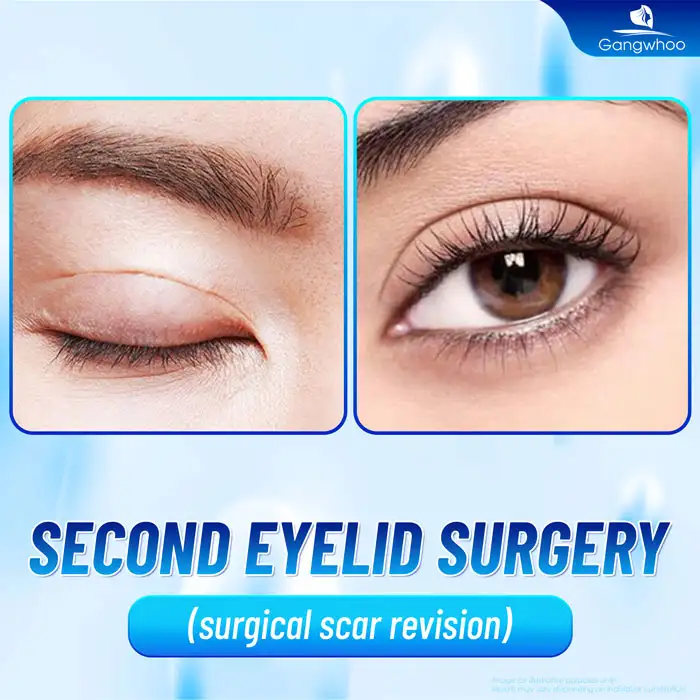
Second eyelid surgery (surgical scar revision)
For severe or long-standing hypertrophic scars, the most definitive solution is surgical scar revision combined with reconstruction of a new eyelid crease. The doctor will remove the old scar tissue, address fibrotic tissue, and apply endoscopic microsurgical eyelid surgery using Plasma technology to create fine sutures, control bleeding, and minimize the risk of scar recurrence. This advanced method delivers high aesthetic results and restores a soft, natural-looking eyelid crease.
Factors contributing to hypertrophic scarring after eyelid surgery
Hypertrophic scarring is influenced not only by surgical technique but also by several other factors. Clinically, the following factors increase the risk of hypertrophic scarring after eyelid surgery:
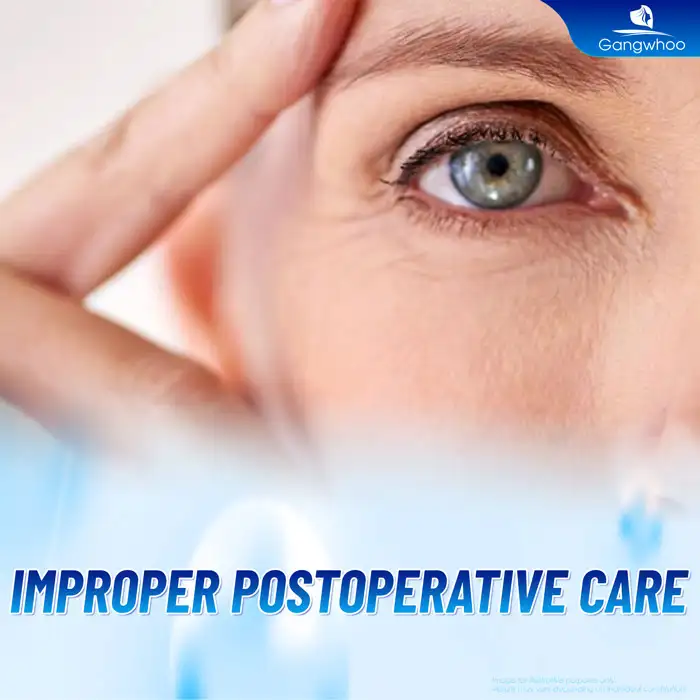
Improper postoperative care is a common cause of hypertrophic scarring after eyelid surgery
Genetics and skin type: Individuals with a history of hypertrophic scars on the ears, chest, or shoulders are more likely to develop scars on the eyelids.
Improper postoperative care: Applying heat too early, using unsuitable creams, or prematurely removing scabs or sutures.
Inflammation or allergic reactions: Strong inflammatory responses can cause abnormal scar tissue growth.
Environmental factors: Sunlight, temperature, and humidity can also affect the healing process.
Doctor’s advice:
When experiencing hypertrophic scarring after eyelid surgery, you should not self-treat with unverified medications or folk remedies, as these may worsen fibrosis and cause the scar to spread. The best approach is to visit Gangwhoo Cosmetic Hospital for a thorough examination by an aesthetic ophthalmic specialist, who will assess the scar and develop a personalized treatment plan.
At Gangwhoo Cosmetic Hospital, doctors apply exclusive endoscopic microsurgical eyelid surgery using Plasma technology, helping to recreate eyelids based on golden ratio standards, minimize scar recurrence, and ensure maximum safety.
If you are still wondering how to treat hypertrophic scarring after eyelid surgery, let the doctors at Gangwhoo help you restore natural, soft, and long-lasting beautiful eyes.