Is it a problem if eyelid sutures are left behind after removal? How should it be handled?
Thanh Tam
Asked: 23/02/2026
I recently had my eyelid sutures removed a few days ago, but I noticed that there seems to be a small remaining thread at the corner of my eye. I am a bit worried that leaving it there for too long might cause inflammation or scarring. Doctor, may I ask whether having a retained suture after eyelid suture removal is a problem, and how should I handle this situation?
Hello, after undergoing eyelid surgery, one of the important stages that determines the aesthetic outcome is suture removal. However, in some cases, retained sutures after eyelid surgery may occur, causing concern about whether this condition is dangerous or affects the eyelid crease. The doctor will explain in detail so you can better understand the issue of “is it a problem if eyelid sutures are left behind after removal” and the proper way to handle it.
Is it a problem if eyelid sutures are left behind after removal?
First of all, the doctor affirms that retained sutures after eyelid surgery can completely occur, even when the procedure is performed carefully. The eyelid is a thin area with multiple folds and fatty tissue, so sometimes a small piece of suture may be hidden deep under the skin and difficult to detect with the naked eye during suture removal.
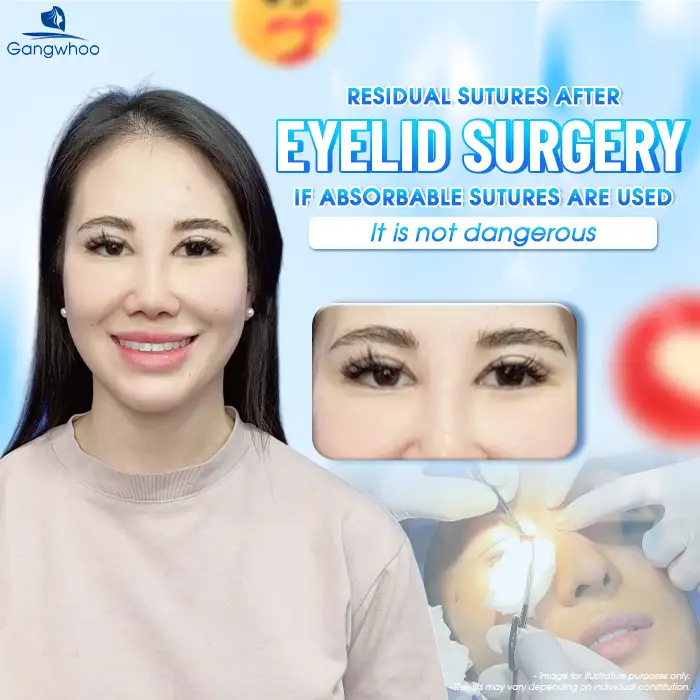
Basically, retained sutures after eyelid suture removal are not too dangerous if the suture is absorbable or lies superficially, as the body may naturally expel it after a few weeks. However, if the suture material is non-absorbable and is left behind, keeping it for too long may cause certain reactions such as:
If absorbable sutures are used, retained sutures after eyelid surgery are generally not dangerous
The eyelid area may experience mild swelling, redness, or prolonged itching.
A small fibrotic nodule or suture granuloma may form under the skin, causing discomfort and aesthetic concerns.
In rare cases, if the suture lies deep, it may cause localized inflammation or infection, especially since the periorbital skin is sensitive.
Therefore, if you notice that the eyelid heals slowly, shows signs of a palpable lump, burning pain, or mild discharge, you should see a doctor promptly for examination and removal of the remaining suture. Early management will help prevent inflammation and ensure that the healed eyelid crease appears natural and soft.
How to handle retained sutures after eyelid surgery
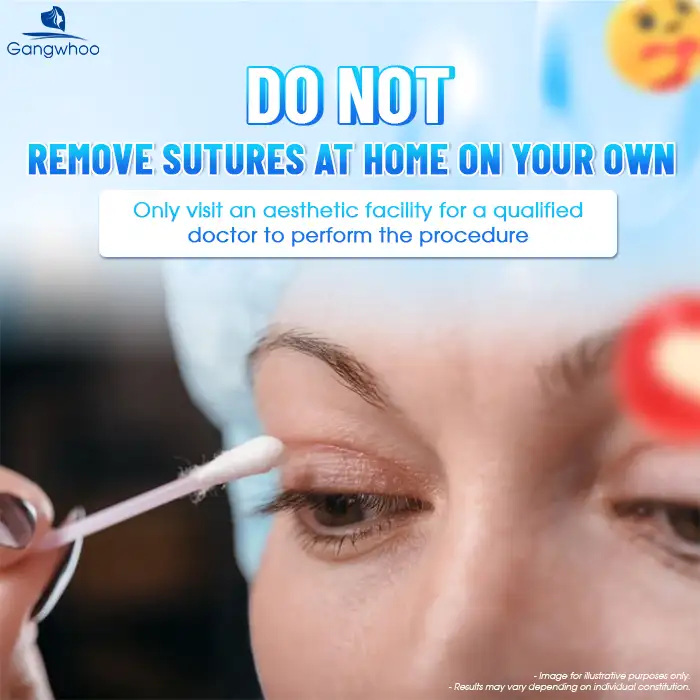
When detecting retained sutures after eyelid surgery, you should absolutely not attempt to remove the suture at home, as the eyelid area has a dense vascular structure and is highly prone to infection if handled improperly.
The doctor recommends that you:
Do not remove sutures at home; visit a medical facility for proper management
Return to the aesthetic facility or hospital where you underwent eyelid surgery so the doctor can examine and remove the remaining suture under sterile conditions.
If the retained suture is small and superficial, the doctor can use specialized instruments to remove it quickly, with minimal discomfort and without affecting the eyelid crease.
In cases where the suture lies deep or causes mild inflammation, the doctor may prescribe antiseptic cleansing, wound care, and additional antibiotics to prevent infection.
The important point is not to delay treatment, because if left too long, the suture may become encapsulated by fibrous tissue, making removal more difficult and potentially leading to scarring or a stiff eyelid crease.
Proper care after eyelid suture removal
To avoid retained sutures after eyelid surgery and help the eyelids recover quickly and evenly, you should follow these postoperative care principles:
Keep the eyelid area clean with saline solution
Maintain good hygiene of the eyelid area: Gently cleanse with saline solution and dry with sterile cotton pads.
Avoid touching, scratching, or applying strong pressure to the eyelid area for at least 1–2 weeks after suture removal.
Avoid makeup or using eye creams around the area until the wound has completely healed.
Apply cold compresses during the first 1–2 days, then switch to warm compresses to reduce swelling and stimulate blood circulation.
Attend follow-up appointments as scheduled so the doctor can evaluate the eyelid crease and manage any retained sutures or mild inflammatory reactions if detected.
In addition, choosing modern eyelid surgery technology from the beginning also helps minimize this condition. At Gangwhoo Cosmetic Hospital, doctors apply the exclusive endoscopic microsurgical eyelid surgery technology using the Plasma scalpel, creating ultra-fine incisions and meticulous suturing with specialized absorbable threads – thereby reducing swelling, preventing scarring, and almost eliminating the occurrence of retained sutures.
In summary, “eyelid suture removal with retained sutures – is it a problem?” – although not highly dangerous, if not detected and managed early, it may cause inflammation, scarring, or aesthetic concerns. Therefore, you should visit Gangwhoo Cosmetic Hospital for examination and proper medical management by a specialist, ensuring the eyelid crease heals quickly and naturally.