What ointment should be applied after blepharoplasty? What should be noted?
Le Phuong
Asked: 27/02/2026
After blepharoplasty, I have seen many people share that applying ointment helps the wound heal faster and prevents unattractive scarring. However, I do not know which type to choose. Doctor, may I ask what ointment should be applied after blepharoplasty, and what precautions should be taken during application to avoid irritation or darkening of the incision?
Hello, after blepharoplasty, proper eyelid care — especially the use of appropriate topical medication — plays an extremely important role in helping the wound heal quickly, minimizing scarring, and preventing complications. The doctor will explain each question in detail so you clearly understand what ointment should be applied after blepharoplasty, when to use anti-scar medication, and whether ointment should be applied after suture removal.
What ointment should be applied after blepharoplasty?
After blepharoplasty, the skin around the eyes may experience mild swelling, redness, or tightness during the first few days. At this stage, choosing the appropriate ointment after blepharoplasty will help reduce inflammation, prevent infection, and support faster recovery.
Typically, the doctor will prescribe several specialized topical medications, including:
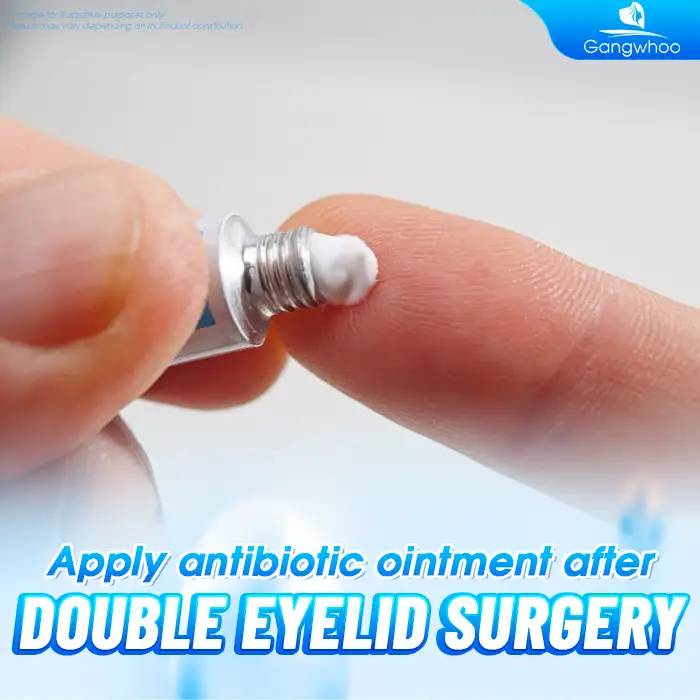
Apply antibiotic ointment after blepharoplasty
Antibiotic ointments (such as Tetracycline, Erythromycin): help prevent infection, especially during the first 5–7 days after surgery.
Antiseptic solutions (Betadine, 0.9% saline solution): used to clean the eyelid area before applying ointment to prevent bacterial invasion.
Anti-swelling and anti-bruising medications (containing Heparin or Arnica): help improve blood circulation under the skin, reduce bruising, and effectively minimize swelling.
Skin tissue regeneration medications (such as Madecassol, Stratamed): help soften the eyelid skin, prevent hypertrophic scar formation, and promote smoother, more natural eyelid lines.
Doctors recommend that what ointment should be applied after blepharoplasty must follow medical instructions. Do not use topical products of unknown origin, as they may cause irritation, dermatitis, or delay the healing process.
When should anti-scar medication be applied after blepharoplasty?
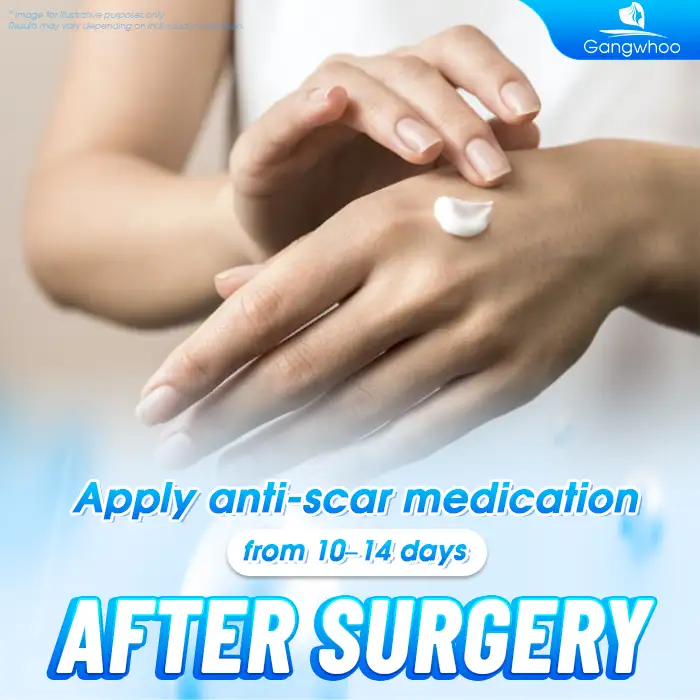
Normally, anti-scar medication should only be used after the wound has completely dried and the scab has naturally fallen off, which is approximately 10–14 days after surgery.
Anti-scar medication should be applied 10–14 days after blepharoplasty
If applied too early, the active ingredients may soften immature skin tissue, cause irritation, or disrupt unstable sutures. Conversely, applying too late may reduce effectiveness because scar tissue has already formed.
Therefore, the ideal time to apply anti-scar medication after blepharoplasty is:
When the incision has fully healed, with no discharge or scabbing.
After evaluation by the doctor, confirming that conditions are suitable for use.
Apply regularly 2–3 times per day, combined with gentle massage to enhance absorption.
Some anti-scar medications commonly recommended by doctors include: Contractubex, Strataderm, Dermatix Ultra, as they are safe and suitable for the thin skin around the eyes.
Can ointment be applied after eyelid suture removal?
Many people ask whether ointment can be applied after eyelid suture removal. The answer is yes, but it must be the correct type and applied at the proper time.
After suture removal, the eyelid area remains very sensitive. Therefore, doctors often instruct applying a thin layer of antibiotic ointment during the first 3–5 days to help:
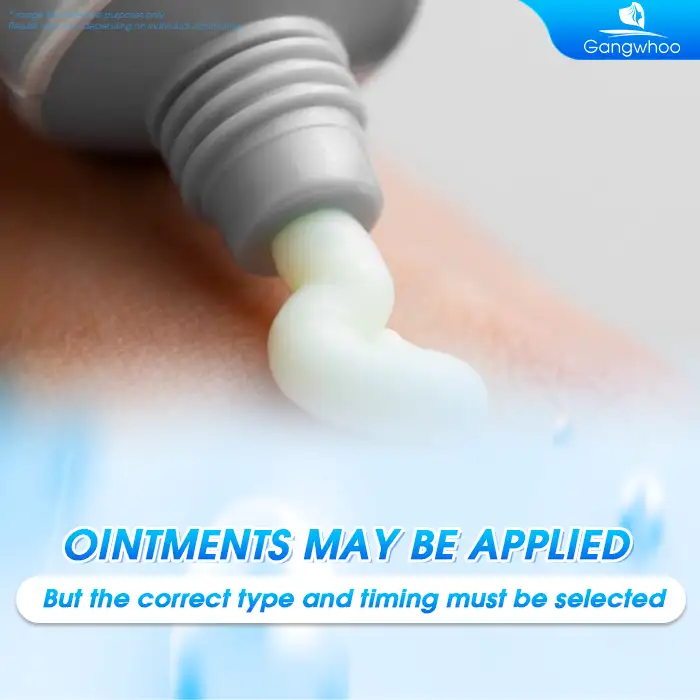
Ointment can be applied but the correct type and timing must be chosen
Ointment can be applied but the correct type and timing must be chosen
Maintain moisture and prevent dryness or cracking of the eyelid skin.
Create a protective environment for new skin tissue, reducing bacterial and dust exposure.
Support connective tissue regeneration, helping the eyelid line become softer and more even in color.
However, you should avoid overuse or thick application, as it may clog pores, trap moisture, and delay healing. Always follow the doctor’s instructions regarding dosage, frequency, and medication type.
Doctor’s recommendation:
To help the eyelid area heal quickly, minimize scarring, and prevent complications, you should undergo endoscopic microsurgical blepharoplasty combined with exclusive Plasma technology at Gangwhoo Cosmetic Hospital. This technology ensures micrometer-level precision, reduces tissue trauma, minimizes swelling and bruising, and significantly shortens recovery time.
If you are experiencing prolonged swelling, scarring, or do not know what ointment should be applied after blepharoplasty, visit Gangwhoo Cosmetic Hospital directly to receive examination and detailed medical-standard postoperative care guidance.