How long after eyelid surgery can it be redone? When is revision necessary?
Bich Hang
Asked: 26/04/2026
I had eyelid surgery nearly 2 years ago, but now my eyelids are slightly asymmetrical and the crease is no longer as defined as before. I am considering a revision but am concerned about affecting the existing tissue. Doctor, could you please advise how long after eyelid surgery it can be redone, and in which cases a second procedure is recommended to achieve optimal and safe results?
Hello, the doctor has received your question regarding “how long after eyelid surgery it can be redone?”—this is a very common concern among patients who have previously undergone eyelid surgery. In many cases, after a period of time, issues such as asymmetry, uneven creases, or loss of definition may occur. So when is the safest time for a second intervention, and what should be considered? The doctor will explain in detail from a professional perspective.
How long after eyelid surgery can it be redone?
Medically, the ideal time for revision eyelid surgery is after the eyelids have fully stabilized, typically ranging from 6 months to 1 year after the initial procedure. This is because the eyelid skin and tissues require time to restore their natural structure, scar tissue needs to soften, and blood vessels in the surgical area must fully regenerate.
If revision is performed too early—when scar tissue is still firm and the skin has not regained sufficient elasticity—it may lead to risks such as:
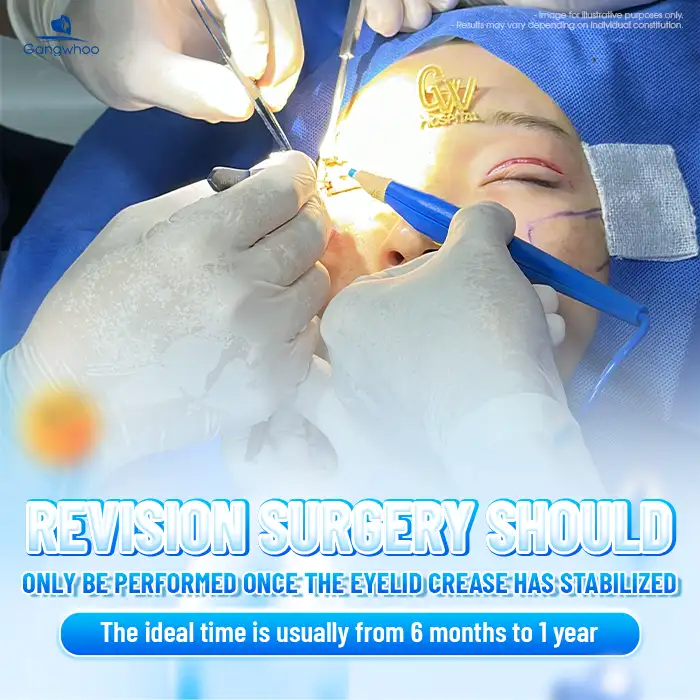
Revision eyelid surgery should only be performed once the crease is stable, typically after 6 months to 1 year
Damage to the levator muscle, leading to ptosis or incomplete eyelid closure.
Increased risk of fibrotic scarring, causing deformation of the eyelid crease.
Hematoma, inflammation, or prolonged swelling due to unstable blood vessels.
Therefore, revision eyelid surgery is only recommended once the tissue has fully healed, as confirmed through direct clinical evaluation. In some special cases, if there are significant complications (severe asymmetry, eyelid retraction, or prominent scarring), earlier intervention—around 3–4 months—may be considered, but it must be performed by an experienced specialist using exclusive plasma-assisted endoscopic microsurgical eyelid technique to minimize invasiveness and reduce tissue damage.
In summary, how long after eyelid surgery it can be redone depends on scar healing status, degree of tissue damage, and individual healing response, but generally, it is advisable to wait at least 6 months to ensure safety and optimal aesthetic outcomes.
Cases where revision eyelid surgery is necessary
Not everyone requires a second eyelid surgery, but in the following cases, revision may be necessary to correct imperfections or maintain long-term aesthetics:
Asymmetrical or uneven eyelids after surgery:
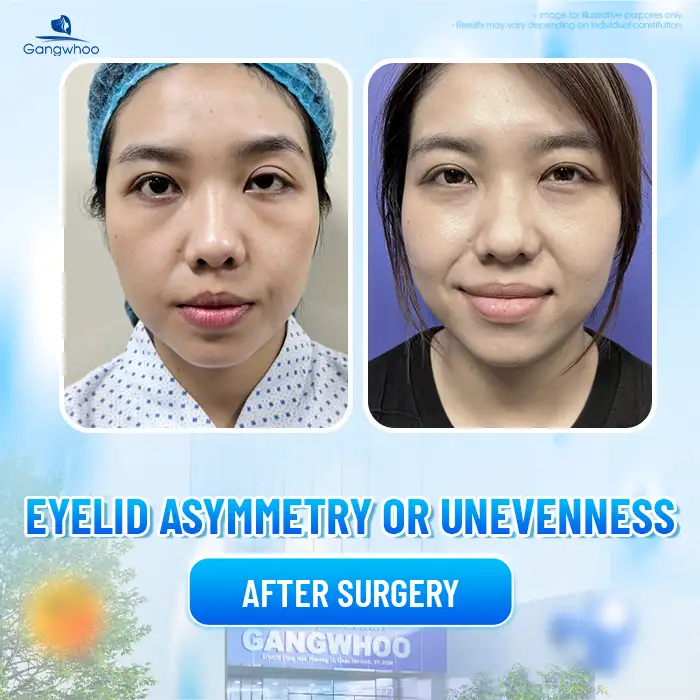
Asymmetrical eyelids can be corrected to restore balance and harmony
This is the most common reason for revision. Causes may include uneven surgical technique, scar contracture, or unequal healing between the two eyelids.
Overly large, unnatural, or retracted eyelids:
In some cases, the previous surgery results in a high, deep, or unnatural crease, making the face appear harsh or unbalanced. Eyelid surgery revision helps lower the crease and recreate a softer, more natural contour that suits facial proportions.
Recurrent ptosis, sagging skin, or reaccumulation of excess fat:
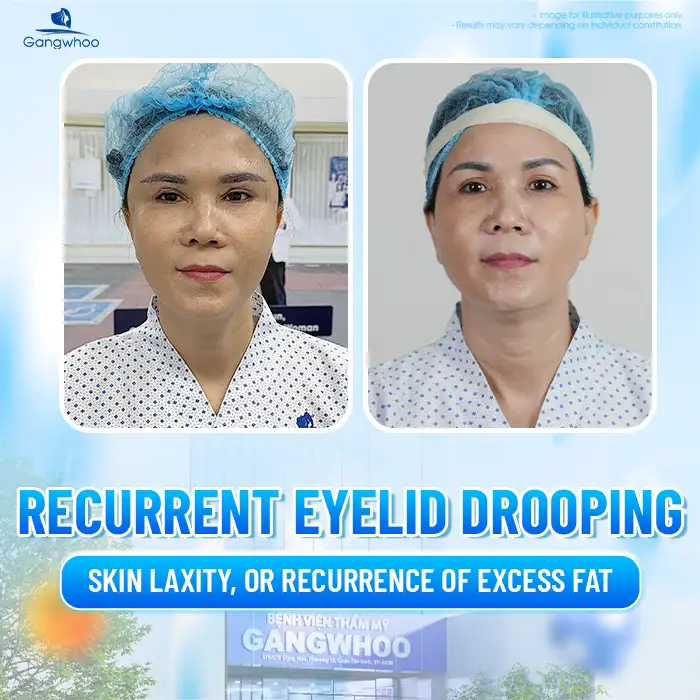
Recurrent sagging or excess fat can be corrected to restore brighter and more defined eyes
Over time, the eyelid skin may continue to age and sag, causing the original crease to fade. In such cases, a second procedure removes newly developed excess skin and restores a youthful eyelid appearance.
Scarring or infection after the initial surgery:
For cases involving hypertrophic scars, contracture, or inflammatory complications, the doctor will reassess the entire eyelid structure to perform safe reconstruction.
At Gangwhoo Cosmetic Hospital, revision eyelid surgeries are performed using exclusive plasma-assisted endoscopic microsurgical technique, which helps remove old scars, smooth fibrotic tissue, precisely reconstruct the eyelid crease, and significantly reduce swelling and discomfort.
Important notes after revision eyelid surgery
After a second eyelid surgery, previously operated tissues tend to be more sensitive, so proper care is extremely important for recovery. Below are key points to remember:
Follow the doctor’s care instructions to ensure safe and long-lasting results
Strictly follow the doctor’s care instructions: Do not self-apply heat, topical medications, or take additional drugs outside prescriptions, as this may cause inflammation or scarring.
Keep the eye area clean and dry: Avoid water or cosmetics contacting the incision for the first 5–7 days.
Avoid foods that may cause scarring or inflammation such as seafood, beef, water spinach, and sticky rice for at least 1 month after surgery.
Avoid rubbing the eyes, lying on your side, or bending your head down during the first week to protect the sutures.
Attend follow-up appointments as scheduled for monitoring healing and timely intervention if abnormalities occur.
When performed with proper technique by a specialist and modern technology, revision eyelid surgery is completely safe, providing natural, harmonious eyelid creases and restoring a youthful appearance.
Doctor’s advice:
If you are considering eyelid revision or are unsure how long after eyelid surgery it can be redone, you should visit Gangwhoo Cosmetic Hospital for a direct examination. A specialist will assess your eyelid tissue condition, scar healing, and recommend the most suitable approach.
At Gangwhoo, all revision cases apply exclusive plasma-assisted endoscopic microsurgical eyelid technique, ensuring maximum precision, minimal tissue damage, and long-lasting natural results.
If you would like a direct consultation and free evaluation of your current eyelid condition, please contact Gangwhoo Cosmetic Hospital for detailed support.