Can You Eat Snails After Breast Augmentation? Why Should You Avoid Eating Snails?
Le Thu Hang
Asked: 04/05/2026
Doctor, I’m wondering whether I can eat snails after breast augmentation? I really love seafood, especially snails, so if I have to avoid them for a long time, it would be quite upsetting. However, if eating snails affects the surgical incision or causes bad scarring, I will try to avoid them. I hope the doctor can explain this clearly for me.
Hello, the doctor understands that after completing breast augmentation surgery, you will have many concerns about what you should and should not eat to help the wound heal quickly and maintain a naturally beautiful, stable breast shape. One of the questions many women ask is “can you eat snails after breast augmentation?” – this is a very practical and important concern because nutrition directly affects the healing process and aesthetic outcome after surgery.
Can You Eat Snails After Breast Augmentation?
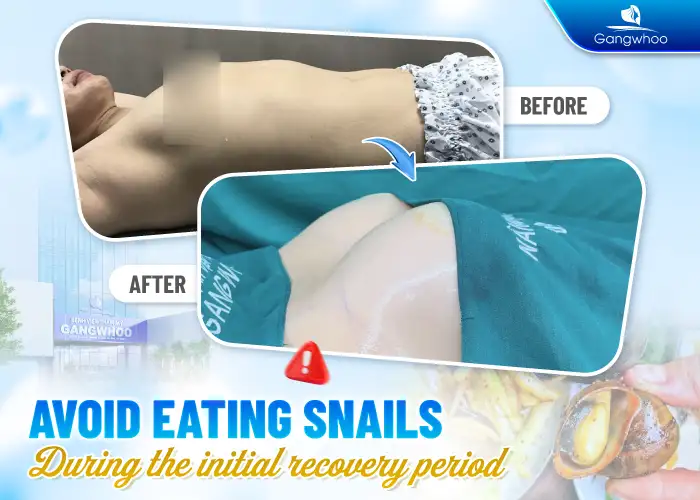
You should not eat snails during the early postoperative period
For the question “breast augmentation can you eat snails?”, the doctor advises that you should temporarily avoid eating snails during the early postoperative stage. The reason is that snails belong to the seafood group with “cold” properties, which can easily cause irritation and slow down tissue regeneration. Some individuals after surgery may experience itching, rashes, or even hypertrophic scars at the incision site when consuming snails.
From a medical perspective, proteins found in seafood in general—including snails—can stimulate histamine production in the body, increasing the risk of inflammation or allergic reactions in healing tissues. In addition, snails often live in muddy environments, so if not properly cooked, they may contain bacteria, parasites, or toxins that can lead to infection—this is particularly dangerous during the postoperative period when the immune system is still weakened.
Therefore, to ensure optimal aesthetic results and health, you should avoid snails at least until the incision has fully healed and the breast tissue is stable. Once your body has recovered well, your doctor will guide you on when it is safe to resume eating normally.
Reasons Why You Should Avoid Eating Snails After Breast Augmentation
There are several reasons why doctors recommend that patients avoid eating snails after breast augmentation, including:
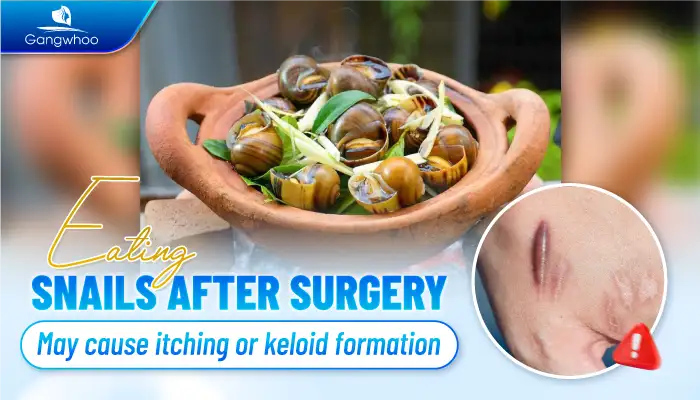
Eating snails after breast augmentation may cause irritation or lead to hypertrophic scarring
Risk of itching and hypertrophic scarring: The specific proteins in seafood can easily trigger sensitivity, causing itching, redness, or excessive scar tissue formation.
Impact on tissue healing: The “foreign” protein content in snails may provoke stronger bodily reactions during recovery, slowing down the regeneration of connective tissue around the implant.
Increased risk of infection: Snails live in bacteria-prone environments; if not thoroughly cooked, they may cause infections that directly affect the surgical area.
Digestive disturbances: After surgery, the digestive system is still weak; eating snails may lead to indigestion, bloating, or diarrhea—indirectly affecting overall health and recovery.
For these reasons, avoiding snails not only helps the breasts heal faster but also ensures maximum safety throughout the postoperative recovery process.
How Long Should You Avoid Eating Snails After Breast Augmentation?
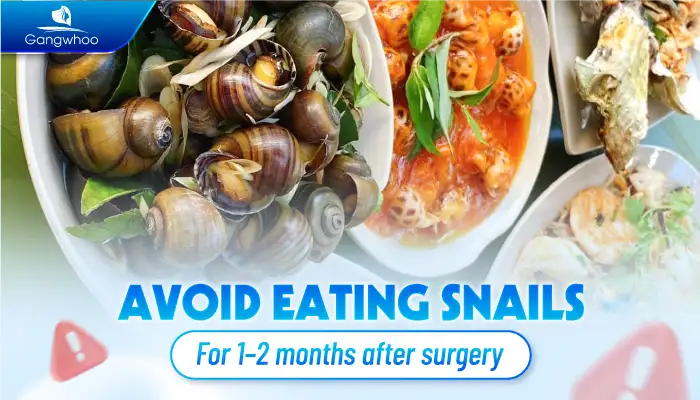
Snails should be avoided for 1 to 2 months after surgery
Typically, the avoidance period for snails should last from 1 to 2 months after surgery—until the wound has completely healed, the soft tissue around the implant is stable, and there is no more swelling or pain. However, this duration may vary depending on individual healing capacity.
For individuals with sensitive skin, a tendency for hypertrophic scarring, or strong reactions to seafood, doctors often recommend extending the avoidance period to 3 months. During follow-up visits, the doctor will assess healing progress and advise when it is safe to resume eating snails and other seafood.
Other Foods to Avoid After Breast Augmentation
In addition to avoiding snails, you should also limit other food groups to ensure optimal aesthetic results:
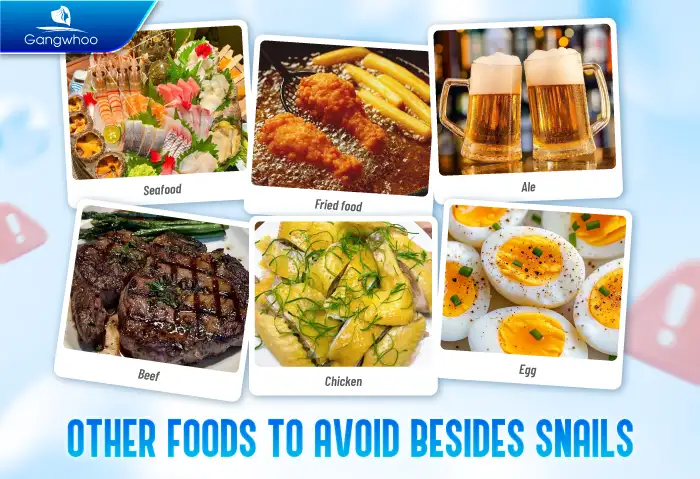
Other foods you should avoid besides snails
Chicken and sticky rice: May cause swelling and pus formation at the incision site.
Beef: May darken scars and affect skin regeneration.
Water spinach: Stimulates excessive scar tissue formation, leading to hypertrophic scars.
Spicy foods, alcohol, coffee: Dilate blood vessels, prolong recovery, and increase the risk of inflammation.
During recovery, you should prioritize foods rich in vitamins C, A, E and healthy protein sources (such as salmon, eggs, soybeans, lean pork), along with adequate hydration to support faster tissue regeneration and minimize scarring.
Doctor’s advice
After breast augmentation, diet is just as important as surgical technique. In addition to following nutritional guidelines, you should choose a reputable aesthetic facility to ensure maximum safety. At Gangwhoo Cosmetic Hospital, the entire breast augmentation process is performed using Harmonic scalpel, Plasma technology, and 4K endoscopic microsurgery techniques—helping minimize invasiveness, reduce pain, reduce bleeding, and significantly shorten recovery time.
The hospital also uses premium implants such as Nano Chip, Ergonomix, and microtextured Arion, providing softness, natural feel, and long-lasting durability. If you have any concerns about dietary restrictions or need postoperative recovery consultation, you can contact doctors at Gangwhoo directly for detailed and safe guidance.