Is Facial Freezing After Cheekbone Reduction Injections Dangerous? Causes and Solutions
Ngoc Nha Tran
Asked: 10/05/2026
Hello doctor, recently I’ve seen cheekbone reduction injections becoming quite popular because they are quick and convenient, so I also want to try them. However, I’ve heard that if injected incorrectly or overdosed, it can cause facial stiffness or freezing. Doctor, is facial freezing after cheekbone reduction injections dangerous, what causes it, and can it recover? I’m very worried that after the procedure my face may become stiff and look unnatural.
Hello, the doctor understands your concern when after cheekbone reduction injections, the face appears stiff, unnatural, or what is commonly referred to as “facial freezing after cheekbone reduction injections”. This is a relatively common condition when intervening in the muscle groups responsible for lifting and pulling the cheekbone area, especially if the injection technique is inaccurate. To help you feel more reassured, the doctor will clearly explain the causes, level of danger, recovery time, and the most appropriate treatment methods.
Causes of Facial Freezing After Cheekbone Reduction Injections
Facial freezing after cheekbone reduction injections mainly occurs when the injected substance (commonly Botox) affects the muscles responsible for lifting the cheekbones — muscles that play an important role in smiling expressions and lifting the corners of the mouth. When the injected substance spreads excessively or is injected into the wrong position, these muscles become overly inhibited, resulting in a “frozen” appearance and unnatural smiling.
Some specific professional causes include:
Causes of facial freezing after cheekbone reduction injections
Injection into the wrong muscle layer or incorrect anatomical position: The cheekbone area contains many small muscle groups such as the zygomaticus major, zygomaticus minor, and levator labii superioris muscles. Even a deviation of just 1–2 mm can affect facial expressions.
Excessive Botox dosage: A high dosage excessively inhibits muscle activity → causing facial stiffness, difficulty smiling, and difficulty lifting the lip muscles.
Botox spreading to surrounding muscle areas: This often occurs when the injection technique is improper or the injection is placed too deeply.
Sensitive body condition or naturally weak facial muscles: When the muscles are already weak, Botox effects become stronger than usual, making “freezing” more likely.
Injection performed at an unqualified facility: If the injector is not a doctor or lacks understanding of facial anatomy, aesthetic complications can easily occur.
In summary, facial freezing after cheekbone reduction injections is the result of improperly inhibiting the cheek-lifting muscle groups, leading to loss of natural facial expressions.
Is Facial Freezing After Cheekbone Reduction Injections Dangerous?
The doctor would like to reassure you that this condition is usually not dangerous, because the effects of Botox are only temporary and will wear off according to the medication’s breakdown cycle. However, it can greatly affect aesthetics and psychology because the face may appear unnatural, with expressions such as “unable to lift the lips” or “lacking flexibility” when smiling.
Although it is not life-threatening, improper handling may lead to:
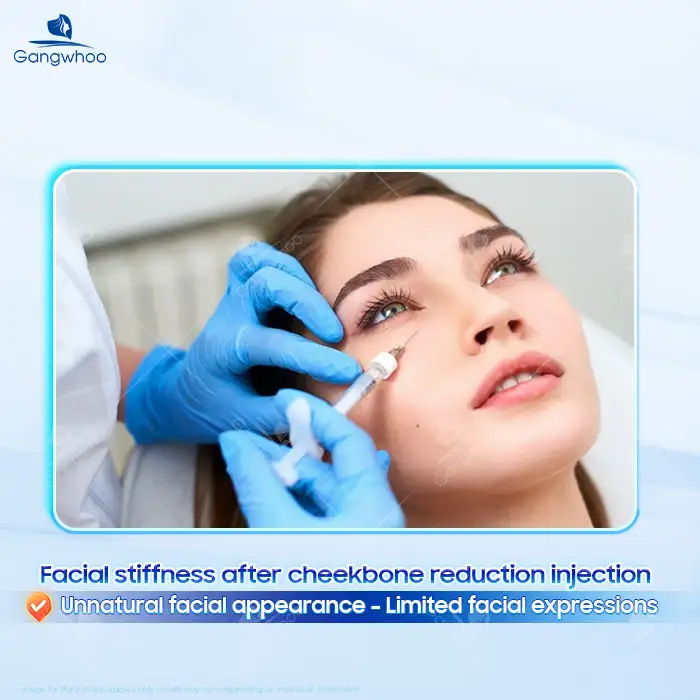
Facial freezing after cheekbone reduction injections causes stiffness and unnatural facial expressions
Facial asymmetry lasting for several weeks
Difficulty smiling and expressing emotions
Affected communication, especially for jobs requiring interaction
Prolonged recovery time due to improper massage or compress application
Most importantly: do not self-treat at home and avoid strong massage before receiving instructions from a specialist doctor.
How Long Does Facial Freezing Last After Cheekbone Reduction Injections?
Normally, facial freezing after cheekbone reduction injections resolves within 3–6 weeks, depending on:
The amount of Botox injected
The body’s absorption response
Whether the injection spread extensively or not
Post-injection care methods
On average:
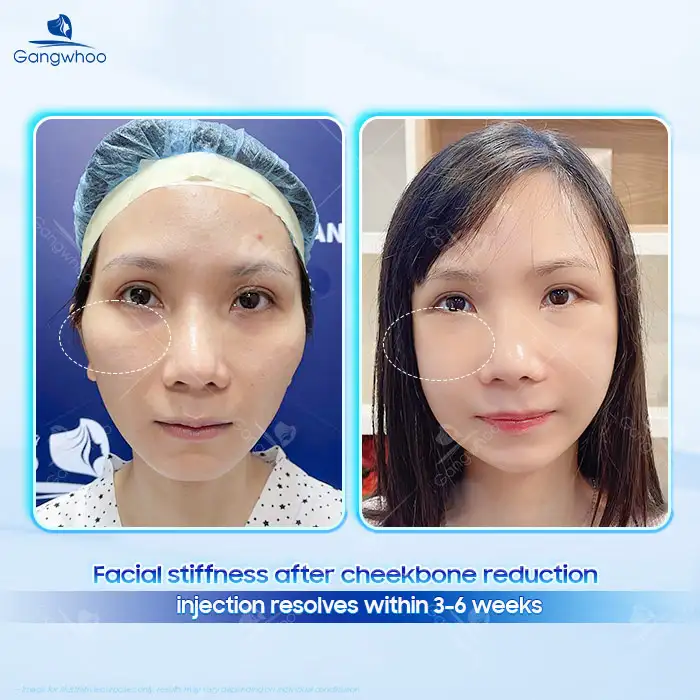
Facial freezing after cheekbone reduction injections usually resolves within 3–6 weeks
First 2 weeks: facial expressions feel less flexible
Weeks 3–4: muscles gradually begin functioning again
Weeks 5–6: the face returns to nearly normal
2–3 months: complete recovery
If an excessive dose was injected, facial stiffness may last longer but will still recover over time.
How to Improve Facial Freezing After Cheekbone Reduction Injections
To minimize discomfort and help facial muscles recover faster, the doctor recommends the following methods:
Follow-up examination with a specialist doctor to improve facial stiffness
Monitor and wait for the Botox to naturally wear off: This is the main treatment direction because Botox effects fade according to its natural cycle.
Gently activate facial muscles daily: Practice light smiling and controlled lip lifting to gradually restore muscle activity.
Infrared or low-level RF therapy: Helps improve blood circulation and supports recovery of inhibited muscle groups.
Follow-up examination with a specialist doctor: Most importantly, to determine which muscle groups are affected and monitor recovery progress.
Absolutely avoid strong massage on the injection area:Improper massage may cause Botox to spread further and worsen facial freezing.
Doctor’s Conclusion
Facial freezing after cheekbone reduction injections is not dangerous, but it can significantly affect aesthetics and emotions. The good news is that most cases recover completely within a few weeks if properly cared for and monitored.
If you want faster improvement, the doctor recommends visiting Gangwhoo Cosmetic Hospital for an accurate assessment of the affected muscle groups. Here, doctors apply safe recovery methods that help support rapid soft tissue recovery in aesthetic treatment programs.
Whenever you are ready, the doctor is always here to support and provide more detailed consultation for your case.