What Should Be Done If Lower Blepharoplasty Causes Eyelid Retraction? Effective Correction Methods
Bao Nhi
Asked: 28/05/2026
My name is Bao Nhi. I have a friend who underwent lower blepharoplasty, but afterward her lower eyelids became retracted and looked very unnatural. It honestly makes me nervous because I’m also considering lower eyelid surgery. Could the doctor explain what should be done if eyelid retraction occurs and whether it can be completely corrected? I would like to understand thoroughly so I can mentally prepare before undergoing the procedure.
Hello, the doctor understands that lower eyelid retraction after lower blepharoplasty is one of the complications that causes many people concern after surgery. Retracted eyelids not only affect aesthetics but can also cause discomfort, dryness, irritation, or excessive tearing. This issue needs to be properly evaluated and treated to avoid long-term complications. Below, the doctor will clearly analyze the causes, treatment options, and potential effects of this complication so you can better understand it.
What Should Be Done If Lower Blepharoplasty Causes Eyelid Retraction?
When experiencing lower eyelid retraction after lower blepharoplasty, the first thing you should do is visit a reputable aesthetic specialty clinic or hospital for direct examination so the doctor can accurately assess the severity of the retraction and the condition of the surrounding tissues. Eyelid retraction can generally be divided into two groups:
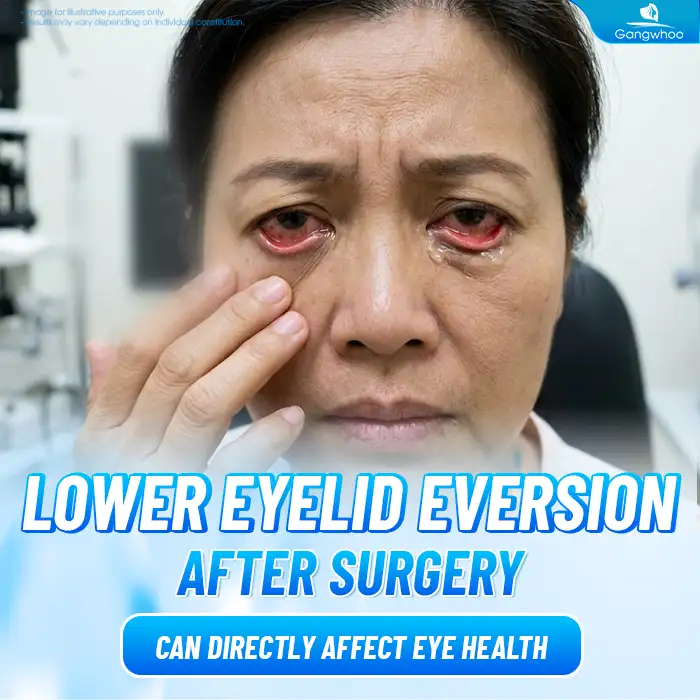
Retracted lower eyelids after blepharoplasty can directly affect eye health
Mild retraction: Usually appears within the first few days after surgery due to swelling or temporary tissue tension. In these cases, doctors often recommend cold compresses, anti-inflammatory medications, and gentle massage to improve the condition.
Severe retraction: When the lower eyelid is pulled outward, exposing the conjunctiva or eyelid margin, causing dry eyes, tearing, or difficulty fully closing the eyes. In this case, revision surgery is required to adjust the eyelid support structure, release scar tissue, and restore the eyelid to its proper position.
At Gangwhoo Cosmetic Hospital, doctors commonly treat lower eyelid retraction complications using microsurgical endoscopic techniques combined with the exclusive Plasma scalpel, allowing precise tissue dissection, minimizing damage to healthy tissue, and naturally reshaping the lower eyelid. Thanks to advanced technology, recovery time is significantly shortened, swelling and pain are reduced, and the eyelids regain a balanced and harmonious appearance.
Causes of Lower Eyelid Retraction After Lower Blepharoplasty
According to professional experience, lower eyelid retraction after lower blepharoplasty can result from several causes, the most common including:
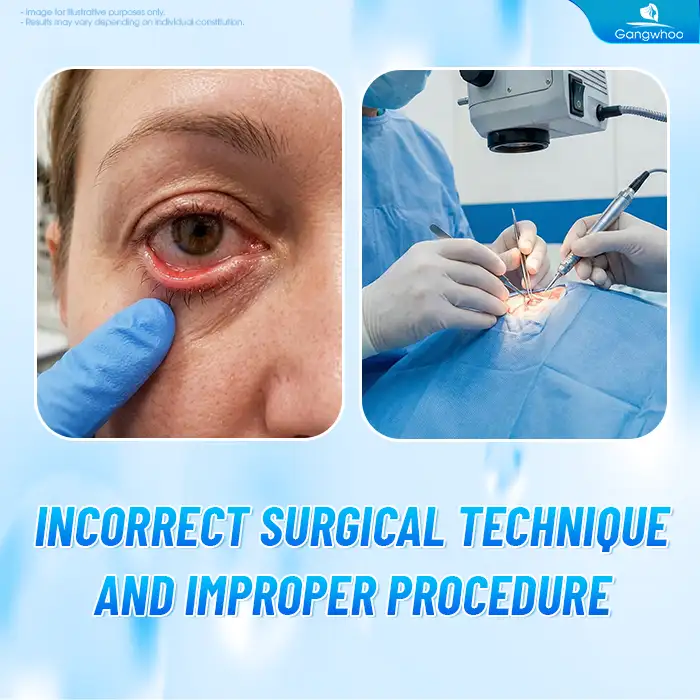
Incorrect surgical techniques can easily cause lower eyelid retraction
Incorrect surgical technique: This is the leading cause. When the surgeon dissects too deeply or removes excessive fat or skin, the lower eyelid loses elasticity and becomes prone to retraction.
Weak orbicularis muscle or unique eye structure: Some individuals naturally have weak eyelid support muscles, thin skin, or protruding eyes. If these factors are not carefully evaluated before surgery, the risk of eyelid retraction becomes much higher.
Scar tissue contracture: After healing, scar tissue forming in the wrong position can pull the lower eyelid downward, resulting in eyelid retraction or asymmetry.
Improper postoperative care: Excessive massage, sleeping on the side, or rubbing the eyes during recovery may damage healing tissues and lead to mild eyelid retraction.
Therefore, before undergoing the procedure, you should choose a surgeon with extensive expertise in eyelid surgery, and prioritize facilities that apply microsurgical endoscopic technology — a method that allows better control of tissue dissection and avoids excessive removal of skin and fat.
Does Lower Eyelid Retraction After Blepharoplasty Affect Eye Health?
Lower eyelid retraction after lower blepharoplasty not only affects appearance but can also directly impact eye health. When the eyelid is pulled downward, the inner conjunctival layer becomes vulnerable to dryness, inflammation, and irritation. In severe cases, patients may experience:
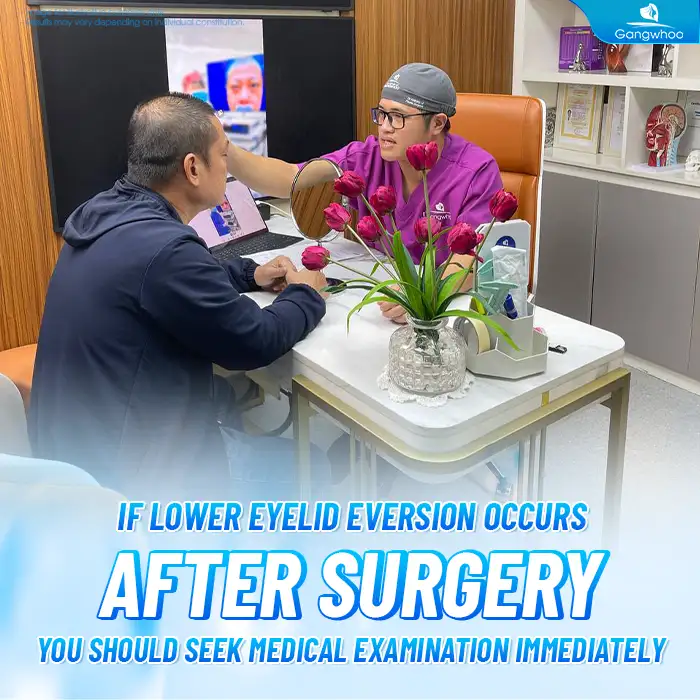
If you notice lower eyelid retraction after surgery, you should seek professional medical evaluation as soon as possible
Difficulty fully closing the eyes, leading to corneal dryness, burning pain, and even keratitis if prolonged.
Excessive tearing or tear duct inflammation due to incomplete eyelid closure.
Psychological impact, causing loss of confidence and reluctance to communicate socially.
For severe retraction cases, delayed treatment may allow scar tissue fibrosis to worsen, making correction more difficult later on. Therefore, you should seek a reputable facility as early as possible for proper evaluation and treatment.
At Gangwhoo Cosmetic Hospital, doctors always apply the exclusive Plasma scalpel and advanced microsurgical endoscopic technology during the correction of lower eyelid retraction, ensuring maximum safety, scar minimization, and the most natural aesthetic recovery for clients.
Doctors at Gangwhoo Cosmetic Hospital advise that if you are experiencing lower eyelid retraction after lower blepharoplasty, you should seek medical evaluation early to determine the cause and the most appropriate treatment direction. Timely intervention not only restores the natural beauty of the eyes but also protects long-term visual health.
If you need direct consultation from a specialist or correction of eyelid retraction, you can contact Gangwhoo Cosmetic Hospital — where microsurgical endoscopic blepharoplasty and the exclusive Plasma scalpel technology are applied to deliver safe, medically standardized, and superior aesthetic results.