Should You Reduce Cheekbones or Augment the Temples? Which Method Is More Optimal?
Dang An Nhien
Asked: 10/05/2026
Doctor, I’m currently torn between cheekbone reduction and temple augmentation because my face looks angular around the cheekbones, but my temples are slightly hollow. I’m not sure which method would help make my face more balanced and softer. Could you advise me on which procedure I should do first, or are there cases where both procedures should be combined to achieve the best results?
Hello, the doctor understands that many people with high cheekbones or hollow temples often wonder whether they should undergo cheekbone reduction or temple augmentation to achieve a more balanced and softer facial appearance. Although both methods improve the aesthetics of the midface and upper face, they affect completely different structures. The doctor will clearly explain each technique so you can understand and choose the most suitable method.
Understanding Cheekbone Reduction and Temple Augmentation
Cheekbone Reduction
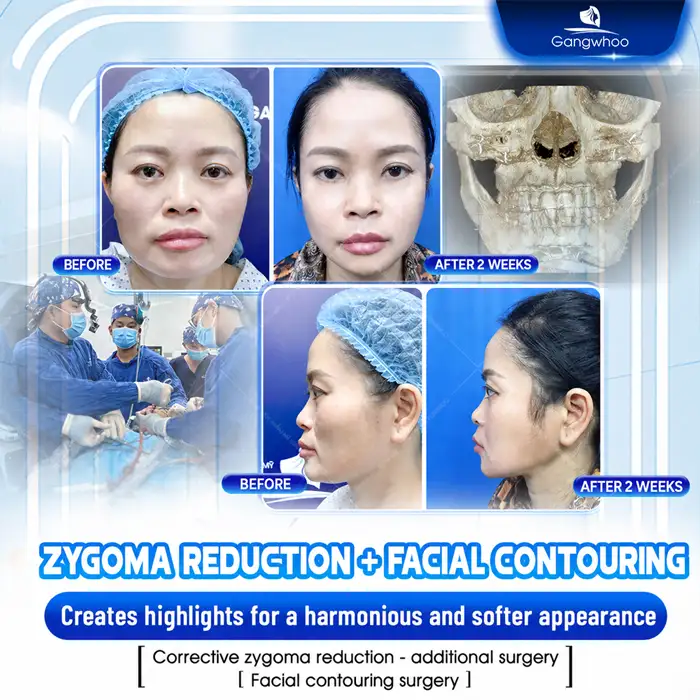
This method directly intervenes on the cheekbone structure to reduce protrusion, narrow the bony surface, and improve the width of the midface. Typically, the doctor performs incisions inside the oral cavity and uses 4K microsurgical endoscopy along with an Aesculap bone-cutting device to cut and reposition the necessary bone structure. The results of cheekbone reduction are long-lasting and permanent, making it suitable for individuals whose prominent cheekbones are caused by actual bone structure.
Temple Augmentation
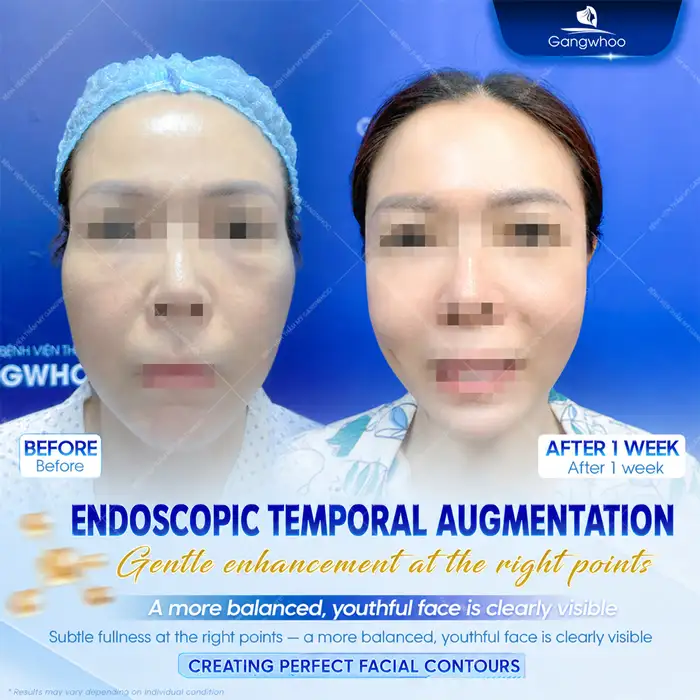
Endoscopic temple augmentation creates a more balanced and noticeably youthful facial appearance
This method does not affect the bone at all. Its main goal is to fill hollow temples using autologous fat or specialized implant materials. Once the temples are filled, the face appears softer and more balanced in the upper region, while also creating an effect that makes the cheekbones appear less prominent. The longevity depends on the method used: autologous fat can maintain 40–60% of the result long-term, while fillers or implant materials typically last 1–3 years.
Therefore, cheekbone reduction reshapes bone structures, whereas temple augmentation adjusts soft tissues. These two techniques work in completely different ways.
Comparing the Differences Between Cheekbone Reduction and Temple Augmentation
To help you better visualize and understand when to choose cheekbone reduction or temple augmentation, the doctor provides the detailed comparison table below:
Sunken temples making cheekbones appear more prominent
Level of Invasiveness
High (bone surgery)
Moderate to low
Recovery Time
3–6 weeks
5–10 days
Longevity
Permanent
1–3 years (autologous fat may last longer)
Aesthetic Effect
Slimmer face with reduced angularity
Softer, more youthful, and balanced appearance
When to Choose
Strongly protruding cheekbones with visible bone structure
Hollow temples where cheekbones only “look high” due to lack of soft tissue
So, Should You Reduce Cheekbones or Augment the Temples?
To accurately answer the question “Should you reduce cheekbones or augment the temples?”, the doctor first needs to determine the underlying cause of your facial imbalance:
The combination of cheekbone reduction and temple augmentation creates a more harmonious and softer facial appearance
If your cheekbones are truly prominent due to bone structure, cheekbone reduction is recommended. In these cases, the cheekbones protrude significantly, the bone is clearly visible from the side view, and feels hard and elevated when touched. Only surgery can effectively address this issue.
If your temples are hollow, temple augmentation is recommended. Deeply sunken temples create shadowing around the cheekbone area, making the cheekbones appear more prominent even when the bone itself is not high. Simply augmenting the temples can make the face appear softer and more balanced.
Some cases require a combination of both procedures. For example, slightly prominent cheekbones combined with hollow temples → mild cheekbone reduction combined with temple augmentation may provide the most aesthetically pleasing overall proportions.
Therefore, to determine the most suitable option for you, you should undergo a direct examination and CT scan to evaluate both bone structure and soft tissue.
Important Notes When Undergoing Cheekbone Reduction and Temple Augmentation
Only undergo the procedures at a licensed cosmetic hospital equipped with sterile operating rooms that meet Ministry of Health standards.
Cheekbone reduction must be performed by a maxillofacial specialist to avoid risks involving nerves and blood vessels.
Temple augmentation should use autologous fat or high-quality materials to prevent complications such as lumpiness or material displacement.
A CT scan should be performed before surgery to evaluate the cheekbone structure and accurately determine the cause of facial imbalance.
Follow postoperative care instructions properly, avoid strong impacts on the face, and attend follow-up appointments on schedule.
Doctor’s Conclusion
Each method serves a different purpose, so they cannot replace one another. To determine whether you should reduce cheekbones or augment the temples, the most important factor is identifying the cause of the facial imbalance — whether it originates from bone structure or soft tissue.
At Gangwhoo Cosmetic Hospital, doctors utilize a 4K endoscopic system and Aesculap bone-cutting device for cheekbone reduction, while applying ultra-refined autologous fat grafting techniques for temple augmentation to create a natural, soft, and safe facial appearance. If you would like the doctor to review your photos, analyze your facial proportions, and recommend the most suitable treatment plan, feel free to message the doctor or visit Gangwhoo for a direct consultation.