Hello, the doctor understands your concern when after blepharoplasty, the eyelid crease appears longer than normal, causing the eyes to look imbalanced or less natural than desired. This is one of the relatively common aesthetic complications, especially when the surgery is not performed with proper technique. So what causes an excessively long blepharoplasty incision, how can it be recognized, and can it be corrected? The doctor will explain clearly below.
What causes an excessively long blepharoplasty incision?
An excessively long blepharoplasty incision is a condition in which the eyelid incision extends beyond the anatomical limits of the eye, stretching toward the outer corner or inner canthus, making the crease look unnatural and potentially causing scarring, eyelid retraction, or a hollowed appearance.
The primary causes stem from surgical technique and the doctor’s expertise. Below are the most common causes encountered in clinical practice:
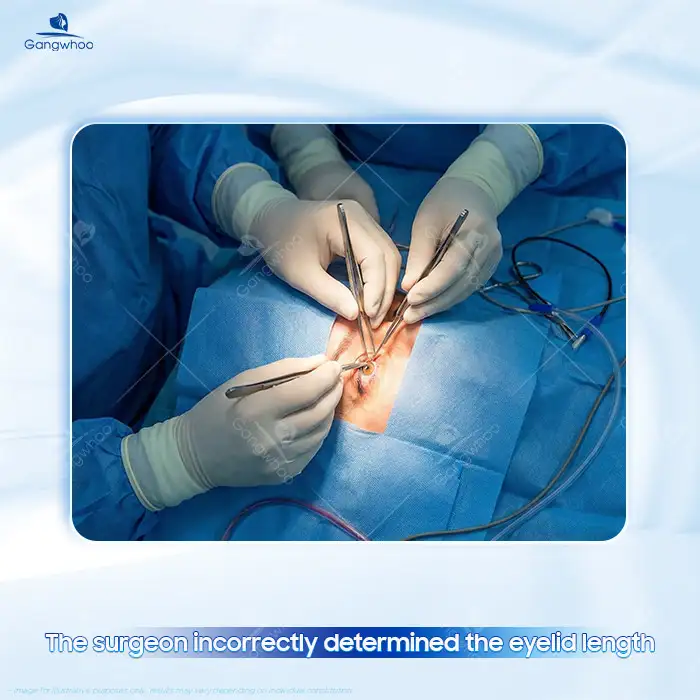
Incorrect determination of appropriate eyelid length: During eyelid design, if not accurately based on eye proportions, orbital bone structure, and the natural direction of eye opening, the incision may be extended beyond safe anatomical limits.
Inaccurate incision technique: Inexperienced surgeons may deviate from the correct incision line, damaging surrounding tissues or excessively extending the lateral eyelid crease.
Attempting excessive correction in a single surgery: In some cases, patients request simultaneous “eye corner widening” or deeper crease creation; if not performed properly, this may result in an unnecessarily overly long eyelid incision.
Failure to apply microsurgical technology: Traditional methods using standard surgical instruments are more prone to inaccuracies, whereas endoscopic microsurgical blepharoplasty combined with exclusive Plasma technology at Gangwhoo Cosmetic Hospital allows manipulation with millimeter precision, minimizing errors and postoperative scarring.
In summary, an excessively long blepharoplasty incision is largely caused by technical errors and the surgeon’s level of expertise. Therefore, choosing a reputable aesthetic facility and an experienced specialist is the key factor in preventing this complication.
Signs of an excessively long eyelid crease
After blepharoplasty, if you notice the following signs, you should visit a specialized medical facility for early evaluation, as you may be experiencing an excessively long eyelid incision:
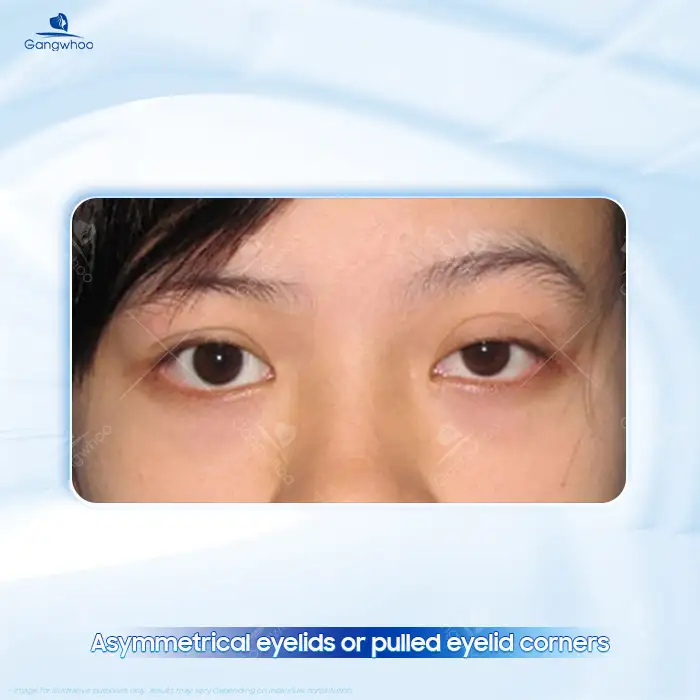
The scar extends beyond the outer corner of the eye: This is the most noticeable sign. When viewed from the side, the scar extends too far toward the temple or reaches the lateral canthus.
Asymmetrical eyelids, upward pulling, or eyelid retraction: When smiling or opening the eyes widely, the lateral crease appears tight, making the eyes look unnatural.
Incomplete eyelid closure: In severe cases, excessive skin removal may prevent full closure during sleep, potentially leading to corneal dryness or conjunctivitis.
Hypertrophic, red, or itchy scarring at the tail of the crease: Due to excessive incision length and tension, scar tissue may proliferate more aggressively than normal.
Overall imbalance between both eyes: One eyelid crease is longer than the other, affecting facial harmony and natural expression.
If you experience 2–3 of the above signs, you may have an excessively long blepharoplasty incision and should consult a specialist to determine the exact cause and appropriate treatment.
How to correct an excessively long blepharoplasty incision
Correction of an excessively long eyelid crease is entirely possible but must be performed at the appropriate time using specialized techniques. The doctor will assess the extent of tissue damage, scar condition, and current crease length before recommending a suitable approach.
Common corrective approaches include:
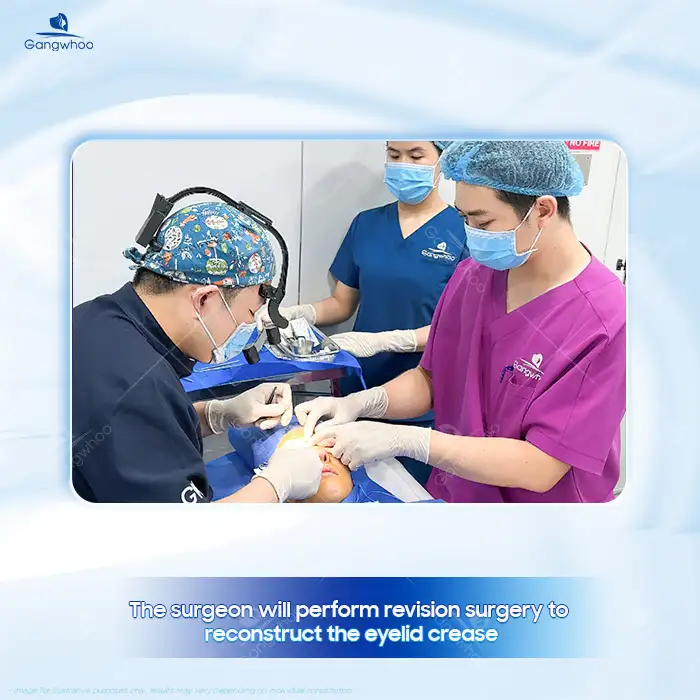
Revision surgery to reconstruct the eyelid crease: The surgeon removes old scar tissue, excises excess skin or adjusts the elongated portion, then recreates a balanced crease harmonious with the eye contour.
Microsurgical skin grafting or correction of tissue deficiency: In cases of skin shortage, autologous skin grafting (commonly harvested from the lower eyelid or behind the ear) may be performed to restore natural structure.
Application of advanced microsurgical technology: At Gangwhoo Cosmetic Hospital, the exclusive micro-point Plasma technology combined with endoscopic microsurgical blepharoplasty allows precise dissection, minimizes healthy tissue damage, shortens recovery time, and provides the most natural revision results.
Proper postoperative care: Maintaining hygiene, avoiding sun exposure, refraining from early makeup use, and taking medication as prescribed will promote healing and reduce scarring.
Typically, it is advisable to wait approximately 3–6 months after the initial blepharoplasty, once tissues have fully stabilized, before undergoing revision. Early intervention before complete healing may increase the risk of poor scarring and secondary complications.
Doctor’s advice:
If you are experiencing an excessively long blepharoplasty incision or asymmetrical eyelids, please visit Gangwhoo Cosmetic Hospital for consultation and evaluation. Here, a team of ophthalmic–aesthetic specialists trained in Korea, together with endoscopic microsurgical blepharoplasty and exclusive Plasma technology, will help comprehensively correct the elongated crease, reconstruct a balanced and natural eyelid contour, while ensuring absolute safety for the eye area.


