Can You Eat Chicken After Breast Augmentation? How Long Should You Avoid It?
Dang Khanh Ha
Asked: 04/05/2026
Doctor, I’ve seen many people say that after breast augmentation, you should avoid eating chicken because it may cause itching or lead to hypertrophic scarring. Is this true, doctor? If so, how long should I avoid eating chicken before I can return to a normal diet?
Hello,after undergoing breast augmentation surgery, nutrition plays an extremely important role in the recovery process and stabilization of breast shape. One of the most common concerns doctors receive is “can you eat chicken after breast augmentation?”. Although it seems like a small issue, it significantly affects wound healing and final aesthetic results, so it’s important to understand and follow proper dietary restrictions.
Can You Eat Chicken After Breast Augmentation?
From a medical and nutritional perspective, after breast augmentation, you should avoid eating chicken during the early recovery stage. The reason is that chicken contains certain proteins that may easily irritate newly healing tissues, especially in areas undergoing collagen regeneration and scar formation.
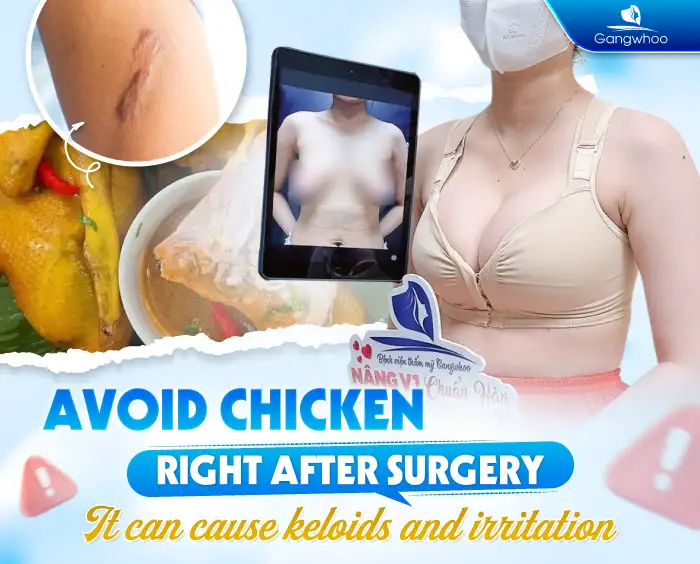
Avoid eating chicken immediately after breast augmentation as it may cause hypertrophic scarring and irritate the wound
If consumed too early, you may experience itching, swelling, skin tightness, or hypertrophic scars at the incision site—especially for those prone to poor scarring. This not only delays healing but also directly affects the aesthetic outcome of the breasts.
However, once the wound has fully healed (usually after a few weeks), chicken becomes a good source of protein, vitamin B6, and zinc, which support tissue regeneration and immune function. Therefore, the restriction is temporary, not permanent.
In summary, to answer the question “can you eat chicken after breast augmentation?” — you should avoid it during the early postoperative period and only resume consumption once the incision has healed, the breasts are stable, and with your doctor’s approval.
How Long Should You Avoid Chicken After Breast Augmentation?
The recommended avoidance period for chicken after breast augmentation is typically 3–4 weeks, depending on individual healing capacity and recovery speed.
Chicken should be avoided for 3–4 weeks after breast augmentation
For individuals with good healing ability, dry scars, and no inflammation, small amounts may be reintroduced after about 3 weeks to test the body’s response.
For those prone to hypertrophic scars, sensitive skin, or previous reactions to high-protein foods, doctors usually recommend avoiding it completely for at least 1 month.
During this period, instead of chicken, you should supplement with easily digestible protein sources such as salmon, lean pork, eggs, milk, or tofu. These are gentle nutrients that support healing without irritating scars.
Additionally, you should drink enough water (1.5–2 liters/day) and consume plenty of green vegetables and fruits rich in vitamins C, A, and E to promote skin regeneration, reduce inflammation, and help scars fade faster.
Other Foods to Avoid After Breast Augmentation
Besides chicken, there are several other food groups you should limit during the early recovery stage to avoid affecting surgical outcomes:
Foods to avoid after breast augmentation that require special attention
Sticky rice dishes (sticky rice, Chung cake, sweet sticky rice): May cause swelling, pus formation, and delayed wound healing.
Beef and seafood: May lead to dark scars, discoloration, and poor scar quality.
Processed and greasy foods: Cause toxin buildup and hinder skin and tissue recovery.
Instead, you should maintain a healthy, balanced diet and avoid overeating or excessive restriction, as the body needs sufficient nutrients to regenerate breast tissue and maintain long-term shape.
Doctor’s recommendation:
After surgery, you should attend follow-up appointments as scheduled and strictly follow your doctor’s dietary instructions, as each individual heals differently.
If you undergo breast augmentation at Gangwhoo Cosmetic Hospital, the medical team will closely monitor you throughout the recovery period. With advanced 4K endoscopic microsurgery, Harmonic scalpel, and exclusive Plasma technology, combined with premium implants such as Nano Chip, Ergonomix, and microtextured Arion, your recovery time will be significantly shortened while minimizing scarring and complications.
If you still have concerns about diet or abnormal signs after breast augmentation, you can visit Gangwhoo Cosmetic Hospital directly for professional consultation and detailed guidance to ensure safety and optimal aesthetic results.