Can You Eat Goat Meat After Eyelid Surgery? How Long Should You Avoid Goat Meat?
Vu Thi Phuong
Asked: 13/02/2026
Doctor, after eyelid surgery, can I eat goat meat? I have read that some types of red meat may cause swelling or make scars more likely to darken, and I often eat goat hotpot, so I am quite concerned. If goat meat should be avoided, how long is the restriction usually necessary, and after how many days can I resume eating it normally?
Hello, the doctor understands that after eyelid surgery, nutritional care — especially what to eat and what to avoid — is always a concern for many clients. One of the most frequently asked questions is “can you eat goat meat after eyelid surgery?”. Let’s analyze this carefully from a medical perspective so you can clearly understand why it is or is not recommended.
Can You Eat Goat Meat After Eyelid Surgery?
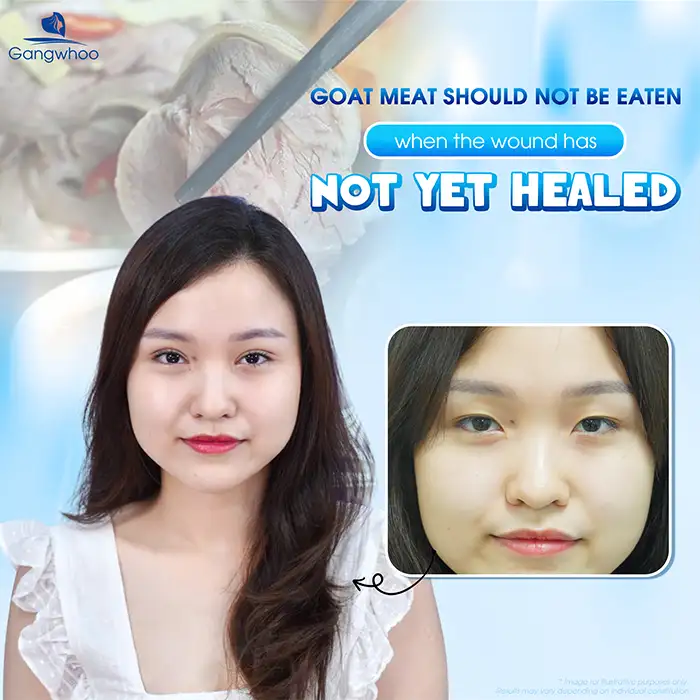
The doctor’s answer is as follows: after eyelid surgery, you should not eat goat meat until the wound has completely healed.
You should not eat goat meat after eyelid surgery until the wound has fully healed
Goat meat is considered a heat-producing (warming) food, contains a high protein content, and may stimulate abnormal collagen overproduction during the skin regeneration process. This can make the wound more prone to redness, swelling, pus formation, or hypertrophic scarring — especially in the eyelid area, where the skin is thin and sensitive. Additionally, certain components in goat meat may trigger inflammatory responses, causing delayed healing, itching, and unwanted post-inflammatory hyperpigmentation.
Therefore, regarding the question “can you eat goat meat after eyelid surgery” or “is goat meat allowed after eyelid surgery”, the doctor advises that you should strictly avoid it during the early healing stage to ensure even, beautiful eyelid creases without undesirable scarring.
Why Should You Avoid Goat Meat After Eyelid Surgery?
According to the natural healing mechanism, the eyelid skin after surgery needs time to regenerate tissues, blood vessels, and new collagen fibers. During this period, if you consume heat-producing foods such as goat meat, the body may overreact, leading to:
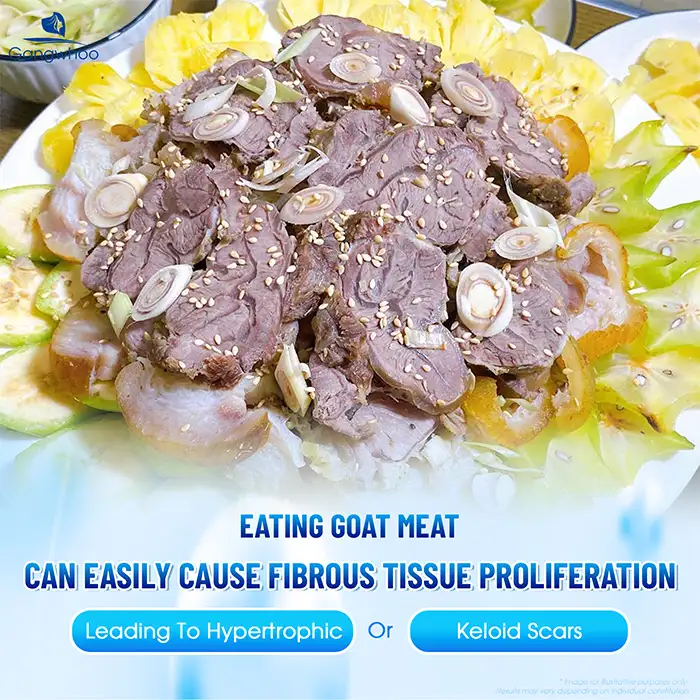
Eating goat meat may easily stimulate fibrous tissue overgrowth such as keloid or hypertrophic scars
Fibrous tissue overgrowth, causing keloid or hypertrophic scars.
Mild dermatitis, making the incision more prone to redness, itching, and prolonged recovery.
Affecting skin tone uniformity in the eyelid area, causing darkening or uneven pigmentation after healing.
Therefore, avoiding goat meat is not only to prevent “swelling” but also an important part of postoperative care, helping the eyelid crease become thinner, smoother, and more natural after recovery.
How Long Should You Avoid Goat Meat After Eyelid Surgery?
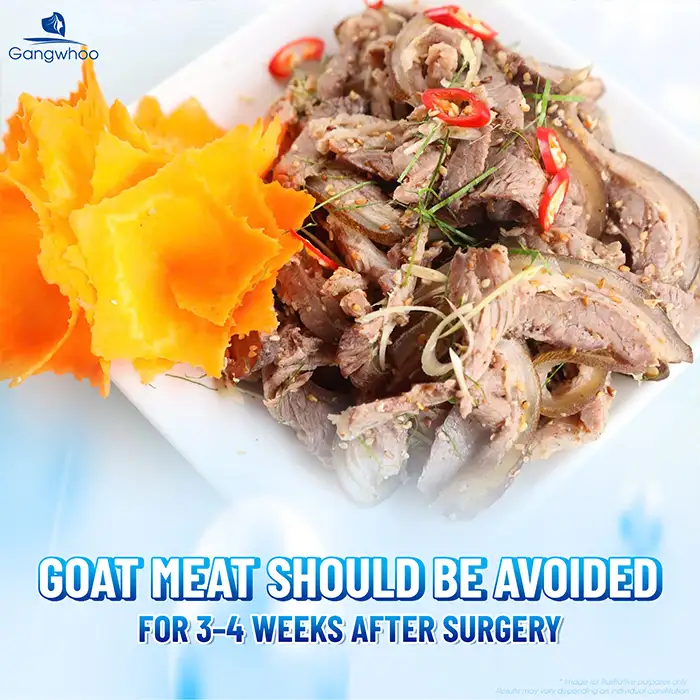
The recommended avoidance period is usually 3 to 4 weeks — corresponding to the time when new skin forms and scar tissue stabilizes.
Goat meat should be avoided for 3–4 weeks after eyelid surgery
However, if you have sensitive skin, are prone to keloid scarring, or have a heat-prone constitution, the doctor recommends extending the avoidance period to approximately 1–1.5 months to ensure maximum safety. Once the eyelid crease has completely healed, with no swelling, pain, or redness, you may resume eating in moderate amounts.
Other Foods to Avoid After Eyelid Surgery
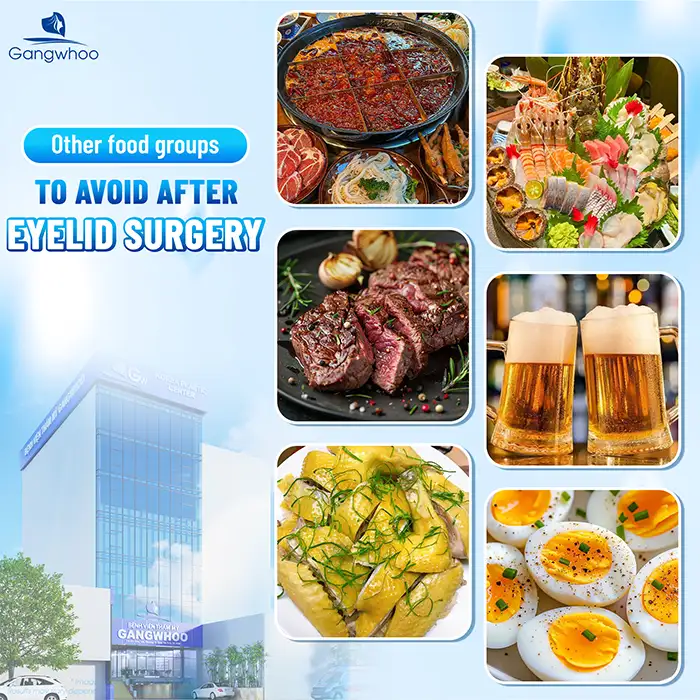
In addition to goat meat, to promote optimal wound healing and minimize scarring, you should also avoid the following food groups:
Other food groups that should be avoided after eyelid surgery
Beef: may cause dark discoloration of newly healed skin.
Chicken and seafood: may increase the risk of itching and delayed healing.
Water spinach: may stimulate keloid scar formation.
Sticky rice and eggs: may cause pus formation and patchy hypopigmented scars.
Spicy foods and stimulants (alcohol, beer, coffee): may increase inflammatory responses and affect wound healing.
Instead, you should supplement foods rich in vitamins A, C, E and plant-based proteins, such as green vegetables, salmon, boiled eggs, yogurt, or fresh fruits to support faster healing and achieve more even, beautiful eyelids.
Advice from Gangwhoo Doctor
Diet accounts for up to 30% of the recovery outcome after eyelid surgery. If you want to shorten healing time and minimize undesirable scarring, you should strictly follow dietary restrictions and care instructions.
At Gangwhoo Cosmetic Hospital, the exclusive Plasma scalpel microsurgical endoscopic eyelid surgery procedure creates thin incisions, minimizes invasiveness, reduces swelling and bruising, and promotes faster recovery compared to traditional methods. As a result, within just a few days, the eyelids stabilize and you can resume normal daily activities.
If you still have questions about diet or postoperative care after eyelid surgery, you may contact Gangwhoo Cosmetic Hospital directly for a detailed consultation with a specialist, helping your eyelids heal quickly, naturally, and beautifully as desired.