Can You Fly After Breast Augmentation? Is There a Risk of Implant Rupture on a Plane?
Phan Bao Linh
Asked: 20/04/2026
Doctor, I’ve heard many people say that after breast augmentation, you should not fly because the implants might rupture due to pressure. Is this true? If I need to travel by plane for work after surgery, is it dangerous, or how long should I wait before flying?
Hello, the doctor receives many questions from patients after surgery regarding whether you can fly after breast augmentation, and even concerns that breast implants may rupture during a flight. These are very practical and understandable concerns, especially for those who frequently travel for work or leisure. The doctor will explain each aspect in detail to help you feel more at ease.
Can You Fly After Breast Augmentation?
The answer is yes, breast augmentation patients can fly, but it is important to follow the appropriate recovery timeline and medical guidance. According to international cosmetic surgery standards, the body needs at least 2–4 weeks after breast augmentation for the breast tissues to stabilize, incisions to heal completely, and implants to settle properly. At that point, flying is safe and will not affect surgical outcomes.
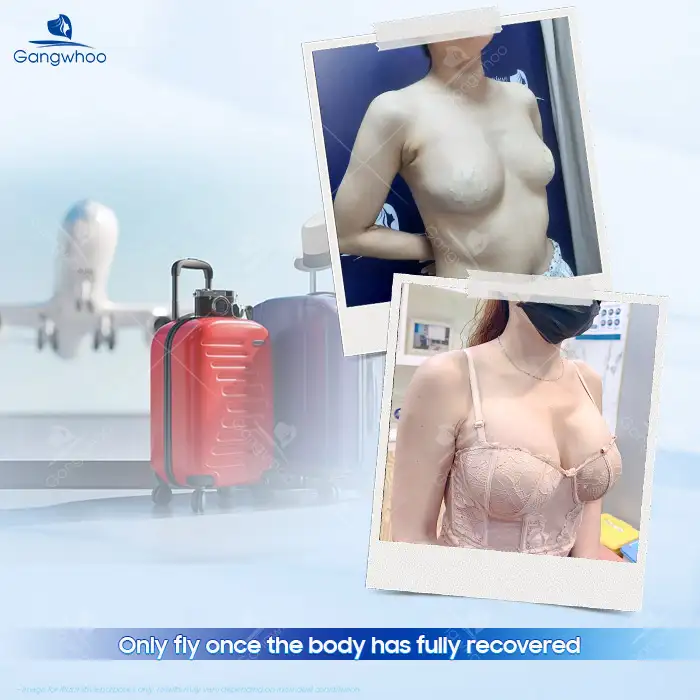
Only fly when your body is stable and fully recovered
From a medical standpoint, aircraft cabin pressure is regulated to simulate an altitude of approximately 2,400 meters, which is completely safe for post-surgical patients. Modern breast implants such as Nano Chip, Ergonomix, or microtextured Arion are made from high-grade medical silicone, designed to withstand pressure changes without expanding, deforming, or rupturing. Therefore, there is no risk of “swelling” or “explosion” as commonly feared.
However, the doctor advises that if you have just undergone surgery and still experience pain, swelling, have not had sutures removed, or show signs of inflammation, you should not fly immediately. Cabin pressure and prolonged sitting may increase swelling, cause chest discomfort, and negatively affect the healing process.
It is best to consult your surgeon before flying to assess incision healing, implant position, and overall health. Each individual heals differently, so the safe timing will depend on your condition and the surgical technique used (endoscopic augmentation, inframammary incision, transaxillary approach, etc.).
The Truth About Implant Rupture During Flights
In reality, the rumor that breast implants can rupture during flights is simply a misconception and has no medical basis. Modern breast implants undergo rigorous testing for pressure resistance, durability, and safety. During manufacturing, implants must pass strict tests such as withstanding compression forces up to 300 kg, vacuum testing, and high-temperature exposure to ensure they do not leak or deform.
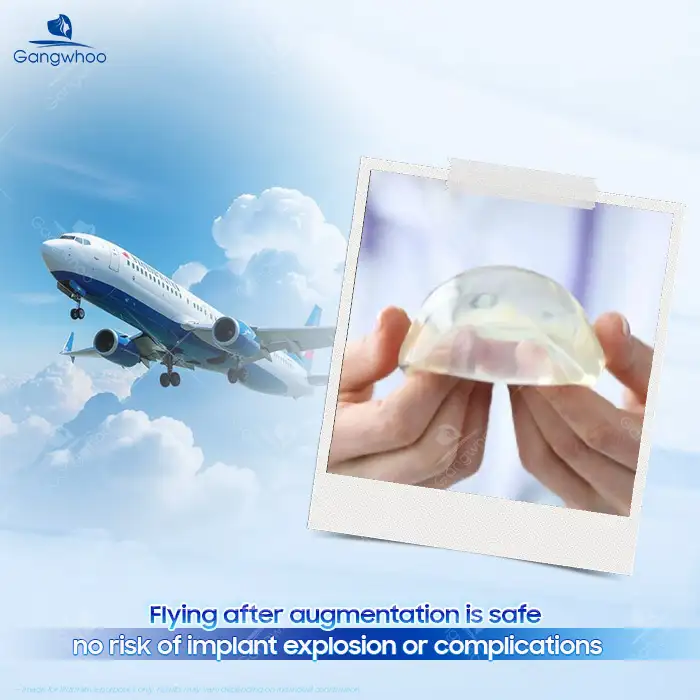
Flying after breast augmentation is safe without risk of implant rupture or complications
Therefore, even at high altitudes, breast implants maintain their structure and volume. Implant “rupture” cannot occur unless there is a severe manufacturing defect or direct, strong trauma to the chest.
Cases reported in the media about “implant rupture” are actually related to fluid accumulation, old implant rupture, or severe capsular contracture, not air travel. Therefore, you can be completely reassured that flying after breast augmentation is completely safe when performed at a reputable facility using implants that meet international medical standards.
Important Notes When Flying After Breast Augmentation
Although flying after breast augmentation is possible, to ensure optimal health and stable results, the doctor recommends the following precautions:
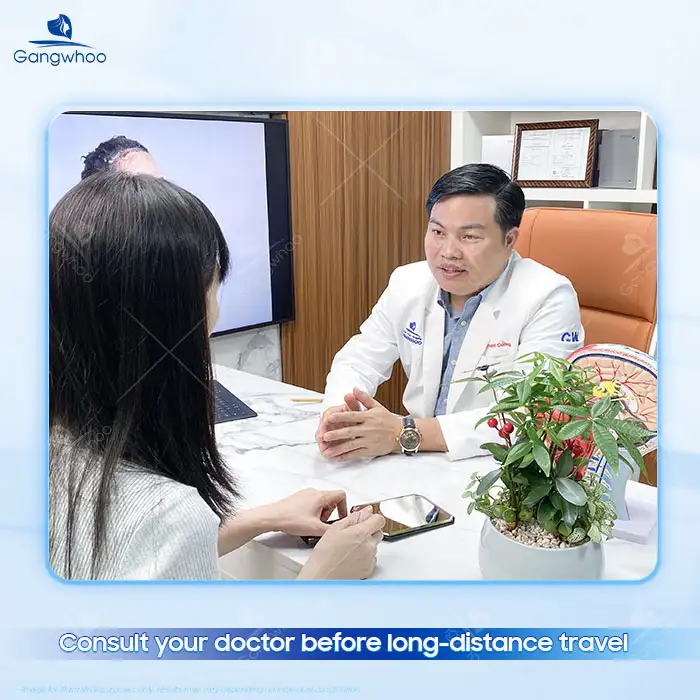
Follow-up check before long-distance travel to ensure safety after surgery
Wait at least 3–4 weeks after surgery before flying, especially for flights longer than 2 hours.
Have a follow-up check before traveling to ensure there is no inflammation or fluid accumulation around the implants.
Stay hydrated and limit caffeine and alcohol during the flight to prevent dehydration and swelling.
Wear a supportive bra during travel to maintain implant position and reduce movement during takeoff and landing.
If you experience pain, shortness of breath, or unusual swelling after the flight, seek medical attention immediately.
At Gangwhoo Cosmetic Hospital, breast augmentation procedures are performed using Harmonic scalpel combined with 4K endoscopic microsurgical techniques, ensuring precision, minimal tissue damage, and faster recovery. Therefore, patients at Gangwhoo can resume normal activities, travel, and even fly safely after just a few weeks without worrying about complications or implant-related issues.
If you are planning breast augmentation or would like more detailed advice on the safe timing for air travel, visit Gangwhoo Cosmetic Hospital for a direct consultation. The doctor will help you choose the most suitable method, implant type, and recovery plan to ensure safety, aesthetics, and long-lasting results.