What is capsular contracture after breast augmentation? What causes capsular contracture?
Lam Hoai Anh
Asked: 17/04/2026
I have heard many people talk about capsular contracture after breast augmentation but I don’t clearly understand what it is. Could you please explain what capsular contracture after breast augmentation is, what causes it, and whether there are effective ways to prevent it?
Hello, the doctor understands that after breast augmentation, many women are concerned about the complication of capsular contracture after breast augmentation, especially when hearing about cases where the breasts become hard, deformed, or painful for a prolonged period. In fact, this is a biological response of the body, but if you clearly understand the causes, formation mechanism, and prevention methods, you can feel completely reassured when choosing breast augmentation. The doctor will explain in detail so you can better understand.
What is capsular contracture after breast augmentation?
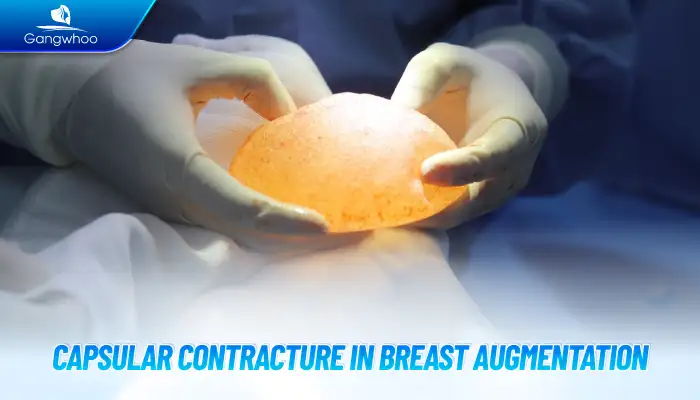
Capsular contracture after breast augmentation is a condition that requires special attention after surgery
Capsular contracture after breast augmentation is a condition in which the body’s natural fibrous tissue forms around the breast implant after surgery. Simply put, when an implant is placed in the body, the immune system reacts by creating a thin fibrous capsule (called a capsule) to isolate this foreign object. This is a normal physiological response, and most breast augmentation cases develop a capsule to some extent.
However, when this capsule becomes excessively thick, contracts, or undergoes fibrosis, it begins to compress the implant, causing the breast to become hard, painful, deformed, or displaced. This condition is known as capsular contracture.
According to medical standards, capsular contracture is classified into 4 grades (based on the Baker scale):
4 levels of capsular contracture in breast augmentation you should carefully observe
Grade I: Soft, natural, no detectable capsule.
Grade II: Slight firmness when touched, but normal appearance.
Grade III: Mild breast distortion, firm to touch.
Grade IV: Severe distortion, hard, painful, and tight breasts.
Therefore, when you hear the term “capsular contracture after breast augmentation”, it is not always a serious complication. The issue only arises when the capsule becomes too thick and contracts the implant, affecting both aesthetics and sensation.
At reputable aesthetic facilities such as Gangwhoo Cosmetic Hospital, the risk of capsular contracture is significantly reduced thanks to the application of modern technologies such as Harmonic scalpel, Plasma scalpel, 4K endoscopic microsurgery techniques, and robotic-assisted systems. These devices help create the implant pocket precisely, minimize tissue trauma, reduce bleeding and inflammation – the leading causes of capsular contracture. Additionally, the use of high-quality implants such as Nano Chip, Ergonomix, or microtextured Arion implants also reduces friction and helps the breast tissue adapt better, thereby significantly lowering the risk of capsule formation.
What causes capsular contracture after breast augmentation?
The causes of capsular contracture after breast augmentation can come from many different factors. First is the body’s natural response to a foreign object. However, in some cases, this process becomes excessive, leading to thick capsule formation. The main causes include:
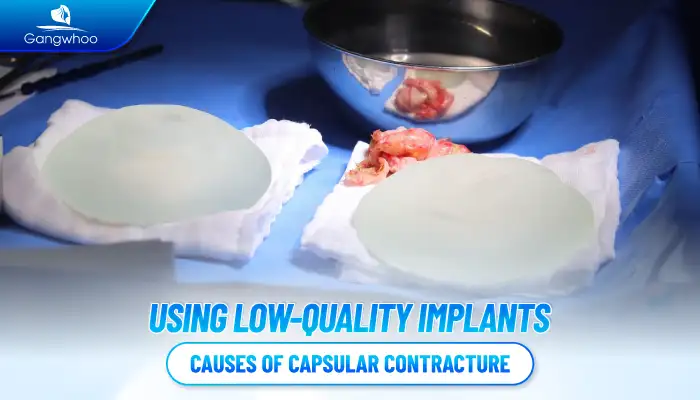
Using low-quality implants is a cause of capsular contracture
Low-quality breast implants or incompatibility with the body.
Infection or hematoma after surgery leading to chronic inflammatory response.
Fibrotic scarring tendency – an inherent factor affecting risk.
Failure to follow post-operative care instructions: improper massage, incorrect use of support garments, etc.
Who is at higher risk of capsular contracture?
Not everyone who undergoes breast augmentation will develop capsular contracture, but some groups have higher risk, including:
Individuals with a history of keloid or fibrotic scarring.
Individuals who smoke or consume alcohol frequently – affecting circulation and tissue healing.
Individuals who have had previous breast surgeries or multiple implant replacements.
Individuals who choose procedures at non-sterile facilities or with inexperienced surgeons.
Signs of capsular contracture after breast augmentation
When experiencing capsular contracture after breast augmentation, you may notice the following signs:
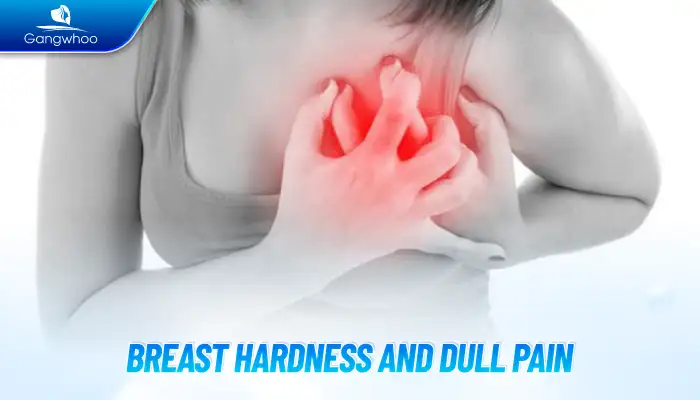
Breast firmness and dull pain are signs that require special attention
Breasts become firm, tight, or experience dull pain.
Breast shape becomes distorted, asymmetrical, or implant displacement occurs.
Breast skin feels tight, with a palpable hard mass inside.
In severe cases, breasts may lose sensation or show obvious contraction.
How to treat capsular contracture after breast augmentation
When detecting signs of capsular contracture, it is important that you do not self-massage or attempt home interventions, but instead visit a specialized medical facility for examination, diagnosis of severity, and appropriate treatment.
Current treatment methods include:
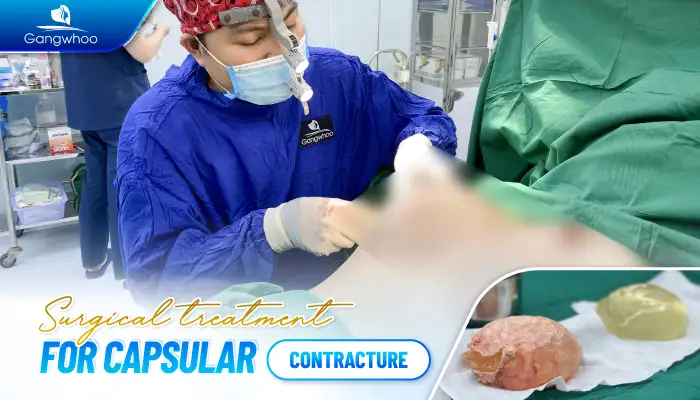
Surgical treatment of capsular contracture helps effectively improve the condition
Medical treatment: For mild cases (Grade I – II), anti-inflammatory medications may be used in combination with physiotherapy or ultrasound therapy to soften fibrous tissue.
Capsulectomy or implant replacement surgery: Applied in severe cases (Grade III – IV). At Gangwhoo Cosmetic Hospital, this procedure is performed using Harmonic scalpel and 4K endoscopic techniques, ensuring precise capsule removal, minimal invasiveness, and quick recovery.
If you are experiencing signs suggestive of capsular contracture after breast augmentation, do not worry too much. Visit Gangwhoo Cosmetic Hospital for direct examination, ultrasound evaluation of the implant condition, and the most appropriate treatment plan. With a team of experienced surgeons and advanced surgical technologies such as Harmonic scalpel, Plasma scalpel, and robotic-assisted systems, Gangwhoo is committed to delivering safe, aesthetic, and long-lasting results.