Can Cheekbone Reduction Cause Facial Sagging? Causes & Comprehensive Solutions
Linh Anh
Asked: 20/10/2026
Can cheekbone reduction cause facial sagging? I am researching cheekbone reduction surgery but am quite concerned about whether the skin and soft tissues in the cheek area may sag or become loose after the cheekbones are lowered, making the face look older. Which cases are at higher risk of facial sagging, and what should be done to minimize this condition after surgery?
Having excessively high cheekbones not only disrupts facial balance but also makes facial features appear harsh and less appealing.Therefore, cheekbone reduction surgery has become an optimal solution to help women quickly regain softer, more refined facial contours.However, alongside the desire to change their appearance, many women who come for in-person consultations with doctors still have a major concern: Can cheekbone reduction cause facial sagging?
In this article, from the professional perspective of a maxillofacial plastic surgeon, I will provide a detailed answer to this concern and clearly explain the anatomical mechanisms, causes, and the most advanced preventive solutions to help you feel completely confident when undergoing the procedure.
Can cheekbone reduction cause facial sagging?
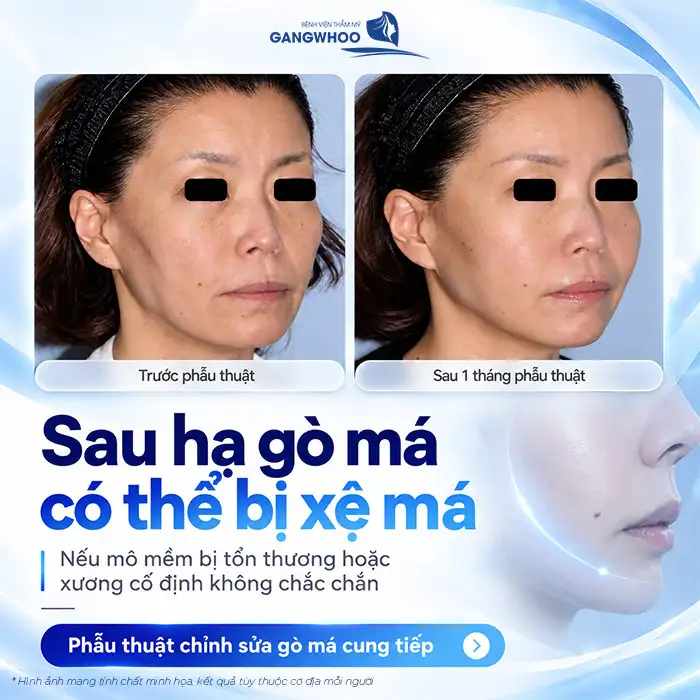
Facial sagging may occur after cheekbone reduction if the soft tissues are damaged or the bone is not securely fixed
To directly answer the question of whether cheekbone reduction can cause facial sagging, I can confirm that this condition CAN occur. However, facial muscle sagging is not an inevitable outcome of every surgical procedure. Rather, it is a technical complication that can be effectively prevented and controlled when the procedure is performed using the correct techniques.
Anatomically, the cheekbones serve as a natural “supporting platform” for the entire system of muscles, soft tissues, fat, and ligaments (SMAS) in the central facial region. When surgery is performed to reduce or lower the bony structure, the underlying support space becomes smaller. If the surgeon performs excessively extensive tissue dissection that damages the supporting ligaments or fails to secure the bone firmly, the overlying soft tissues lose their support, causing them to descend and resulting in sagging.
Causes of Facial Sagging After Cheekbone Reduction
Understanding the root causes of sagging helps patients proactively choose the right technique and a reputable medical facility. This condition generally arises from three main groups of causes:
Pay particular attention to the causes of facial sagging after cheekbone reduction
1. Surgical Technique and the Surgeon’s Expertise
This is the key factor determining 80% of the success of major surgery.If the surgeon lacks sufficient expertise, performs overly aggressive interventions that damage or sever the suspensory ligament system, or uses unstable plates and screws that allow the bone to shift out of position, the risk of soft tissue descent is very high.
2. Natural Skin Elasticity and Age
Older patients, typically those over 35, experience a faster decline in collagen and elastin. Their skin may already have lost its natural elasticity and may be prone to laxity. Therefore, when the cheekbone area is reduced, excess skin may not be able to retract sufficiently to conform to the new bone structure, resulting in deeper nasolabial folds.
3. Failure to Follow Postoperative Care Instructions
In many cases, surgery is successful, but patients neglect their at-home postoperative care. This may include failing to wear the facial compression garment for the prescribed duration, chewing excessively hard foods too early and causing vigorous activity of the masseter muscles before the bone has healed, or applying massage pressure incorrectly to the face.
Preventive Solutions to Minimize Sagging From the Time of Surgery
When addressing facial sagging after cheekbone reduction, assess the condition and identify an appropriate solution
At Gangwhoo Cosmetic Hospital, to comprehensively address concerns about whether cheekbone reduction can cause facial sagging, we have implemented an integrated range of modern technologies and microsurgical techniques in accordance with Korean standards.
First, we use 3D X-ray imaging technology to enable surgeons to visualize the entire skull structure, soft tissues, and nerve pathways. The surgeon accurately calculates the proportion of bone requiring intervention, minimizing unnecessary invasive tissue dissection.
Next, we apply the L-Cut cheekbone reduction technique (L-shape rotation).Unlike traditional bone-shaving techniques, the L-Cut technique allows the surgeon to reposition the cheekbone segment upward and inward before securely fixing it with specialized titanium screws and plates. Moving the bone upward helps tighten and support the entire facial muscle system, preventing cheek sagging at its source.
For older patients or those with signs of skin laxity before surgery, surgeons at Gangwhoo Cosmetic Hospital may recommend combining the procedure with periosteal suspension or midface muscle tightening.This combination addresses two issues simultaneously: reducing the bony framework and restoring skin firmness through structural reorganization.
Postoperative Care Instructions for a Slimmer Face Without Sagging
Postoperative care plays an extremely important role in helping the soft tissues adhere closely to the new bone structure:
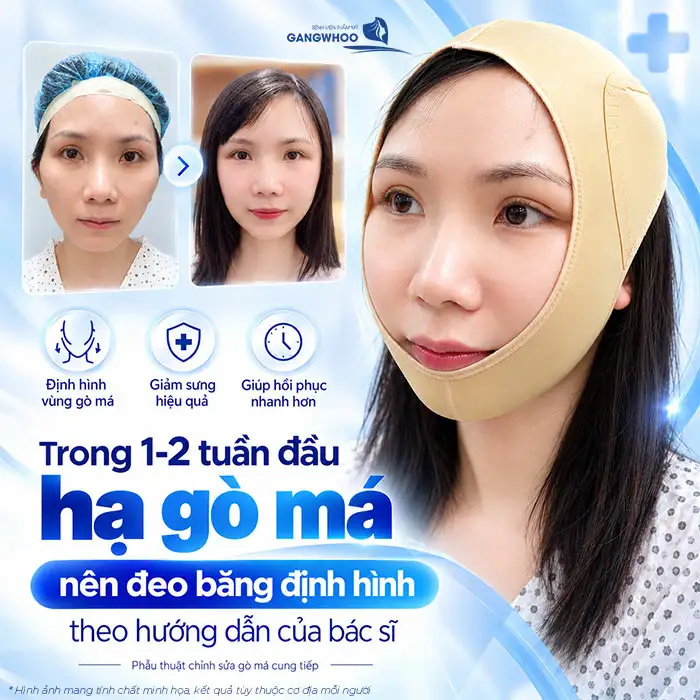
During the first 1–2 weeks after cheekbone reduction, wear the facial compression garment as instructed by your surgeon
Strictly Wear the Facial Compression Garment: Patients should wear the compression garment continuously during the first 1–2 weeks, as prescribed by their surgeon. The compression garment applies gentle biological pressure to keep the soft tissues firmly in contact with the bone surface, prevent fluid accumulation, and reduce the risk of sagging.
Maintain an Appropriate Diet:Consume only liquid and soft foods, such as porridge, soup, and milk, during the initial stage.Minimize chewing hard or chewy foods to avoid placing mechanical stress on the cheekbone area while the bone is undergoing biological healing.
Maintain Proper Hygiene and Attend Follow-Up Appointments as Scheduled: Clean the oral cavity with a specialized mouthwash and follow the scheduled follow-up appointments so the surgeon can assess the extent of bone healing.
How to Correct Facial Sagging After Cheekbone Reduction
If you unfortunately experience sagging after undergoing surgery at a low-quality facility, the condition may still be addressed using specialized treatment methods:
Mild Sagging or the Early Postoperative Stage:Use non-invasive skin-tightening and rejuvenation technologies, such as Thermage, Ultherapy, or HIFU, to stimulate collagen production and improve skin elasticity.
Moderate Sagging:Undergo a thread lift to tighten the soft tissues and reposition the descended cheek muscles.
Severe Sagging: Undergo facelift surgery or midface suspension to remove excess loose skin and reposition the layers of facial muscles.
Botox injections can only help slim the appearance of the cheekbones when their prominence is caused by muscle hypertrophy. If the cause is a prominent cheekbone structure or excessive lateral width, cheekbone reduction surgery is the only solution that provides comprehensive results with long-lasting effects.
Cheekbone reduction surgery is a safe aesthetic solution that helps you achieve a balanced, refined facial appearance quickly. Facial sagging can be prevented if you choose a reputable facility. At Gangwhoo Cosmetic Hospital, with our experienced team of maxillofacial specialists, medically standardized equipment, and a fully integrated surgical process, we are committed to delivering harmonious, natural-looking, and long-lasting safe aesthetic results.