Does Jaw Contouring Require Screws? The Role of Screws in Jaw Surgery
Nguyen Thanh Cong
Asked: 19/09/2026
Hello doctor, I am researching jaw contouring surgery because my jaw is somewhat wide, making my face look less slender. While researching, I came across information saying that screws must be used to fix the bone after jaw contouring, so I am quite worried and unsure whether this is true. I would like to ask whether screws are used during jaw contouring surgery and what role these screws play. In addition, does placing screws in this way affect daily activities or long-term health?
Hello, when researching jaw corrective surgery, many people are concerned about whether jaw contouring requires screws, whether screws need to be placed in the bone, and whether this has any long-term effects. This is a very practical question that needs to be clearly explained from a professional perspective. The doctor will provide a detailed analysis to help you properly understand the nature of this technique.
Does Jaw Contouring Require Screws?
The doctor explains as follows: jaw contouring may or may not require screws, depending on the surgical technique and extent of bone intervention.
Screw fixation during jaw contouring is an essential step that cannot be omitted
For cases of simple mandibular angle reduction (removing excess bone at the angle of the jaw), screws are usually not required because there is no displacement of a large bone segment.
However, for more complex cases such as:
Facial asymmetry correction
Sliding genioplasty
Jaw contouring combined with bone repositioning, the doctor will need to fix the bone using medical plates and screws to ensure that the bone remains stable in the correct position.
Screw fixation in these cases is mandatory according to the principles of maxillofacial surgery to ensure that the bone heals in the correct position and does not become displaced after surgery.
Types of Screws Used in Jaw Contouring
Types of screws used during jaw contouring
In jaw contouring surgery, all screws used are specialized medical-grade materials with high biocompatibility. Common types include:
Titanium Screws: This is the most commonly used type today, with the following characteristics:
Do not cause a reaction with the body
Do not corrode in a biological environment
Lightweight yet very strong
Fixation Plates and Screws (mini plate & screw): Used to hold bone segments in their correct position after cutting. The number of screws is not fixed and usually ranges from:
From 2–4 screws for small areas
There may be more if multiple corrective techniques are combined
At Gangwhoo Cosmetic Hospital, these materials are all used according to medical standards, ensuring long-term safety within the body.
Why Are Screws Needed in Jaw Contouring Surgery?
Screw fixation is not intended merely to provide “temporary stabilization,” but is an important part of the principles of bone surgery.
After the bone is cut or repositioned, without fixation:
the bone may shift from its original position
the bone-healing process may occur in the wrong direction
it may affect the bite and facial aesthetics
Screws and plates play the following roles:
keeping the bone stable during the healing phase
helping the bone heal along the correct anatomical axis
ensuring the aesthetic result is achieved accurately according to the preoperative plan
Today, with 3D CT imaging and preoperative simulation technology, doctors can accurately calculate the screw placement positions, making surgery much safer and more precise than before.
Does Screw Placement During Jaw Contouring Have Any Effects?
Does screw placement during jaw contouring have any effects?
This is something that causes concern for many people, but the doctor can confirm that titanium screws used after jaw contouring do not cause long-term health effects because:
Titanium is highly biocompatible and does not cause rejection
Does not affect daily activities, chewing, or sensation in the jaw area
Cannot be detected from the outside
Does not cause irritation in the body’s environment
In most cases, the screws are left permanently and do not need to be removed. Only in a small number of special cases (a feeling of discomfort or personal preference) will the doctor recommend screw removal after the bone has completely healed.
Important Considerations After Jaw Contouring with Screw Fixation
After jaw contouring with fixation screws, you need to pay attention to several points to ensure a smooth recovery:
Follow a soft diet and avoid vigorous chewing during the initial period
Do not apply strong force to the jaw area
Attend follow-up appointments as scheduled to check bone stability
Maintain good oral hygiene to prevent infection
Immediately inform the doctor if you experience unusual pain or prolonged swelling
These factors help the bone heal firmly, keep the screws securely fixed in the correct position, and ensure a long-lasting, aesthetically pleasing jaw contour.
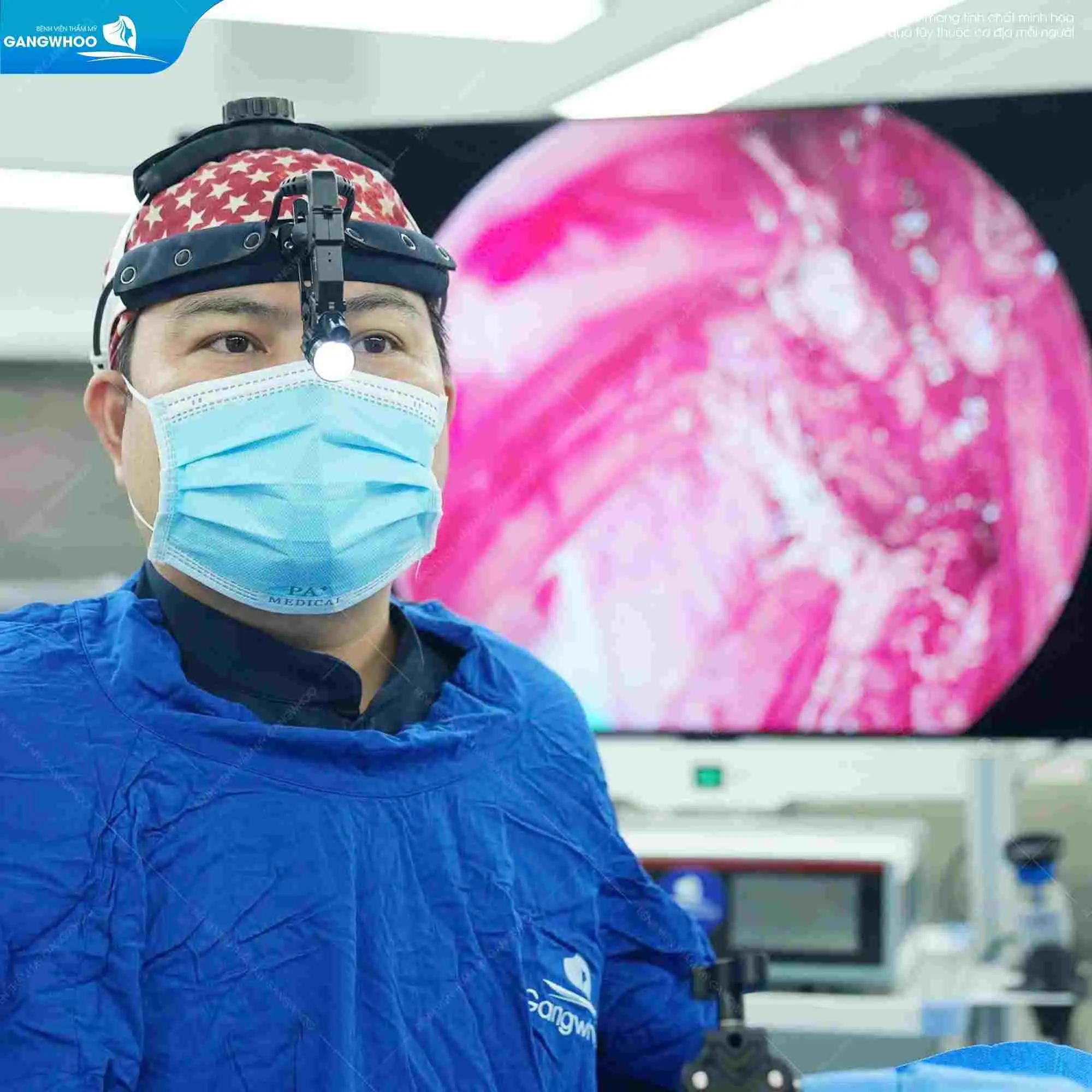
Jaw contouring at Gangwhoo Cosmetic Hospital with modern equipment to minimize swelling and bruising
In summary, regarding the question whether jaw contouring requires screws, the answer is: it may or may not, depending on the technique, but in cases where bone fixation is required, screw fixation is completely safe and necessary according to medical standards.
If you are considering surgery and want to know whether your case requires screw fixation, you can visit Gangwhoo Cosmetic Hospital for a 3D CT scan, analysis of your bone structure, and an accurate consultation based on your condition.