What causes eyelid eversion after blepharoplasty? How can it be corrected?
Ngoc Han
Asked: 05/05/2026
I have seen some cases where after blepharoplasty, the eyelid turns outward, making the eyes look quite unnatural. I’m worried that this might happen to me as well. Could the doctor explain what causes eyelid eversion after blepharoplasty? Is it due to the doctor’s skill or individual factors? And if this condition occurs, are there effective ways to correct it?
Hello, the doctor understands that after blepharoplasty, experiencing eyelid eversion after blepharoplasty can make many people anxious and worried, as it not only affects aesthetics but may also cause discomfort in daily activities. This is not an uncommon complication if the surgery is not performed correctly or postoperative care is improper. To help you better understand, the doctor will analyze in detail the signs, causes, and corrective methods for eyelid eversion after blepharoplasty below.
What are the signs of eyelid eversion after blepharoplasty?
The most obvious sign of eyelid eversion after blepharoplasty is that the lower or upper eyelid margin turns outward, exposing more of the sclera than normal. The eyes may feel tight, unable to close completely or blink naturally. In severe cases, the eyelids cannot fully close, leading to corneal dryness, excessive tearing, irritation, and redness.
In addition, you can recognize eyelid eversion through other signs such as:
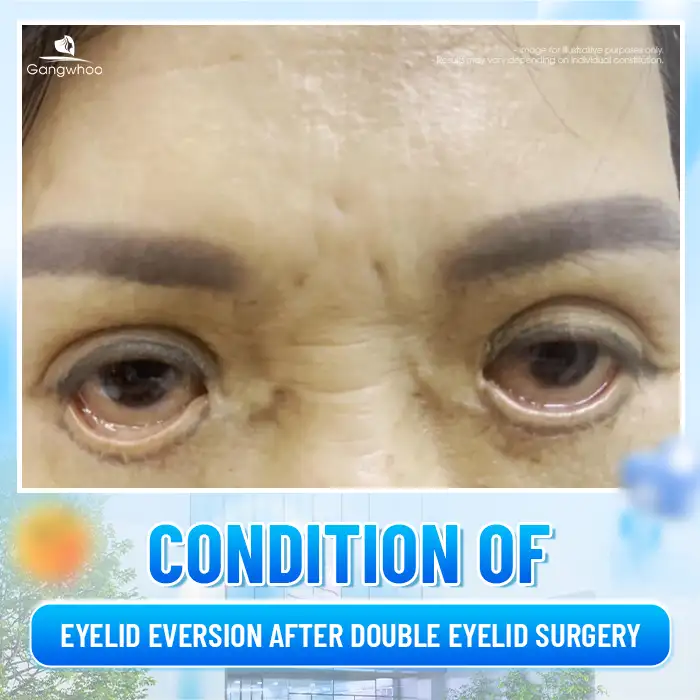
Eyelid eversion condition with exposed conjunctival mucosa
When viewed from the side, the conjunctival lining of the eyelid is visibly exposed.
The eyelid is pulled downward, making the eyes appear wide and unnatural.
Dryness, foreign body sensation, and discomfort, especially when sleeping or exposed to wind.
Loss of the natural eyelid crease, making the eyes appear uneven or abnormally open.
From a medical perspective, eyelid eversion often occurs when the orbicularis oculi muscle is damaged or when there is a deficiency of eyelid skin after surgery, causing insufficient elasticity for proper closure. Therefore, if you notice these signs, you should consult a cosmetic specialist immediately to avoid complications such as corneal dryness or chronic conjunctivitis.
What causes eyelid eversion after blepharoplasty?
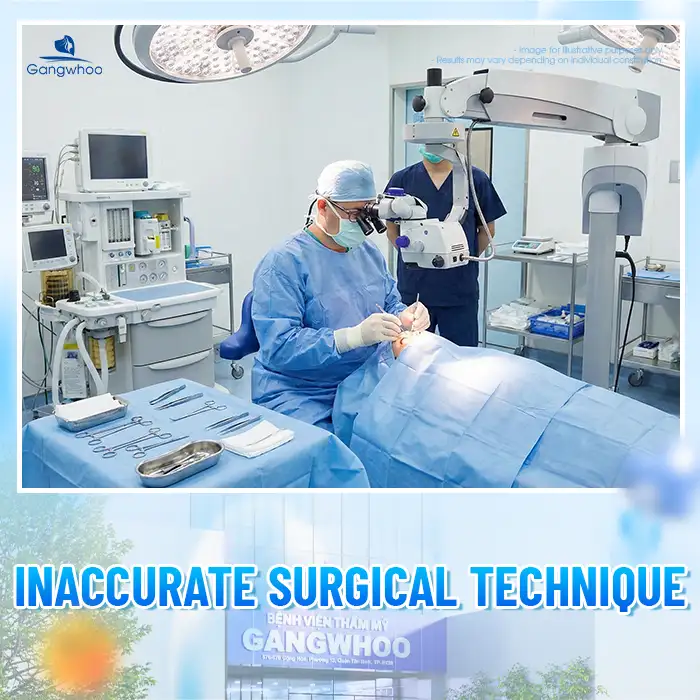
There are many causes of eyelid eversion after blepharoplasty, but in general, this complication usually stems from inaccurate surgical technique or insufficiently skilled surgeons. Specifically, excessive skin excision may disrupt the balance between skin and the levator mechanism, causing the eyelid to turn outward.
Common causes include:
Incorrect surgical technique is one of the causes of eyelid eversion
Excessive skin removal: Removing too much skin reduces elasticity, leading to eyelid eversion.
Damage to the orbicularis oculi muscle: This muscle controls eyelid opening and closing. If it is mistakenly cut or improperly sutured, the eyelid may become distorted and imbalanced.
Postoperative scar contracture: In individuals prone to hypertrophic scars or fibrosis, scar tissue may pull the eyelid outward.
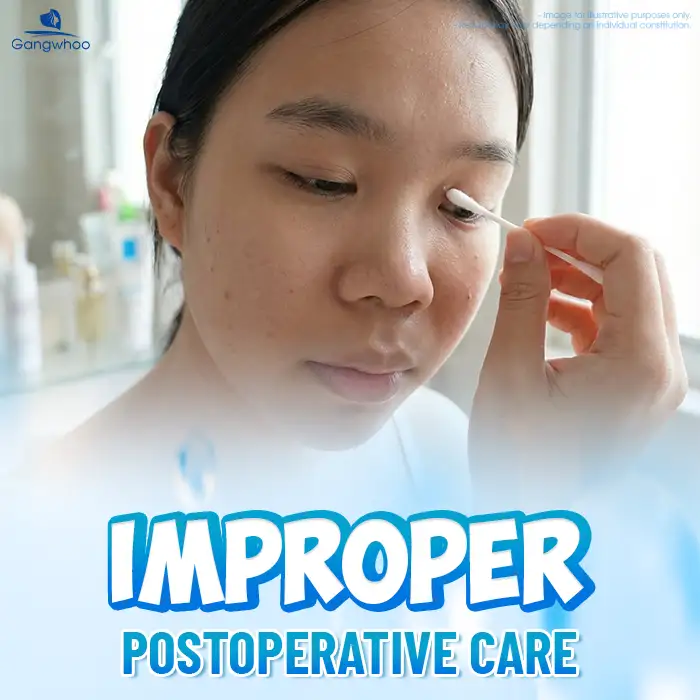
Improper postoperative care: Rubbing the eyes, strong impact, or not following medical instructions can lead to abnormal wound contraction and eyelid eversion.
Improper postoperative care can cause abnormal wound contraction
Lack of advanced technology: Blepharoplasty performed with traditional scalpels may cause more soft tissue damage, while the exclusive Plasma device at Gangwhoo Cosmetic Hospital enables precise, delicate manipulation and minimizes risks such as eyelid eversion, poor scarring, or eyelid retraction.
From a specialist perspective, this complication can be completely prevented if the surgery is performed properly by an experienced surgeon with deep knowledge of eyelid anatomy and the application of modern technologies such as endoscopic microsurgical blepharoplasty using Plasma technology.
How to correct eyelid eversion after blepharoplasty
For cases of eyelid eversion after blepharoplasty, treatment depends on the severity of deformation and the current scar tissue condition. The following are commonly applied methods:
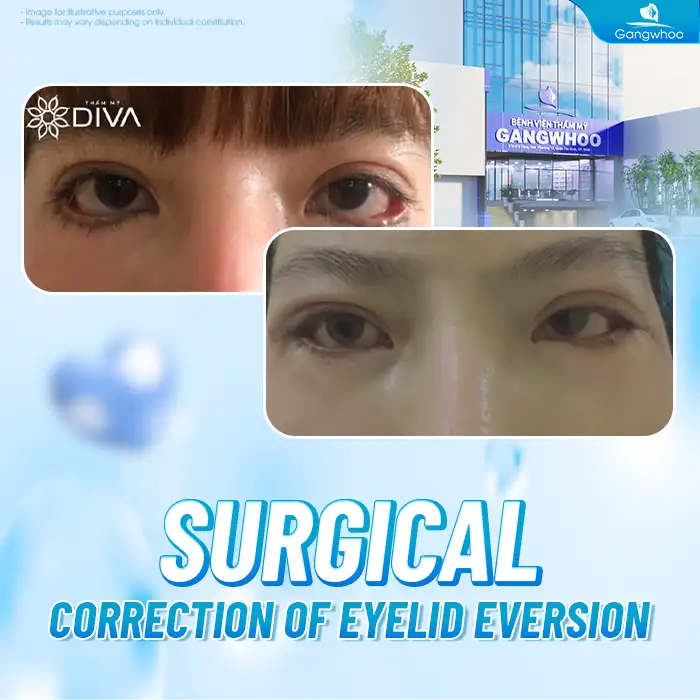
Corrective surgery for eyelid eversion performed by experienced specialists
Mild cases: Can be improved with eyelid physiotherapy, gentle massage combined with moisturizing ointments to soften scars and restore elasticity.
Moderate cases: Minor corrective surgery to release scar tissue and reposition the orbicularis oculi muscle properly.
Severe cases: Requires reconstructive surgery with skin grafting or microsurgical intervention to fully correct eyelid eversion.
At Gangwhoo Cosmetic Hospital, the correction of failed eyelid surgeries, especially eyelid eversion, is performed using endoscopic microsurgery and exclusive Plasma technology, allowing precise manipulation of microstructures, minimizing tissue damage, and ensuring the most natural recovery results. This technology is particularly suitable for complex revision cases, ensuring absolute safety and long-term aesthetic outcomes.
Doctor’s advice:
If you are experiencing eyelid eversion after blepharoplasty, you should absolutely not self-treat or delay medical consultation. Prolonged conditions may lead to hardened scar tissue and more severe complications, making correction more difficult later. You should visit Gangwhoo Cosmetic Hospital for examination, accurate diagnosis, and the most appropriate treatment plan.
With a team of doctors trained in Korea and the exclusive Plasma endoscopic microsurgical blepharoplasty technology, Gangwhoo is committed to providing balanced, natural-looking eyes with absolute safety.