Hello Hong, the doctor understands that quite a few patients experience issues after double eyelid surgery, such as uneven eyelids, prolonged swelling, or asymmetry, which makes many people feel anxious and wonder whether failed double eyelid surgery can be corrected. In fact, this is a fairly common situation and can be completely corrected if a specialized doctor intervenes at the right time with the appropriate technique. Below, the doctor will explain each aspect in detail so that you can better understand the causes, the types of failed double eyelid surgery, and the effective corrective methods currently available.
Can failed double eyelid surgery be corrected?
The answer is yes, failed double eyelid surgery can absolutely be corrected. However, it must be carefully evaluated by a specialized ophthalmic–plastic surgeon to identify the specific cause and choose the most suitable corrective approach.
Generally, failed double eyelid cases are divided into two groups:
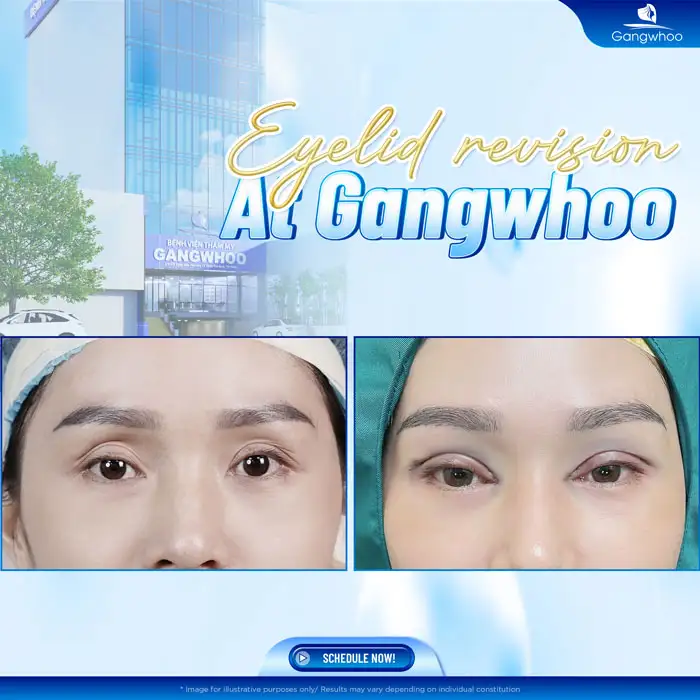
Group 1: Mild issues that can improve over time.
For example, swelling or slight asymmetry due to soft tissue edema or slow healing. In these cases, after about 2–3 months, the eyelids gradually stabilize and no intervention is required.
Group 2: Severe issues requiring corrective surgery.
These include obvious asymmetry, eyelids that are too deep or too shallow, bulging eyes, ptosis, poor scarring, or infection. In such cases, the doctor will assess scar tissue and wound healing, then determine the appropriate time for revision—usually 3–6 months after the initial surgery, when the skin and muscle tissues have stabilized.
Eyelid revision surgery involves refining the eyelid crease, removing scar tissue, and reconstructing the suture line to create a more natural and balanced eyelid. When performed with proper technique and modern technology—such as endoscopic microsurgical eyelid surgery using Plasma technology exclusively at Gangwhoo Cosmetic Hospital—the correction of failed eyelid surgery can yield excellent results, sometimes even more natural than the original eyelids.
What causes failed double eyelid surgery?
Failed or flawed double eyelid surgery can result from multiple factors, most of which relate to surgical technique and the surgeon’s skill:
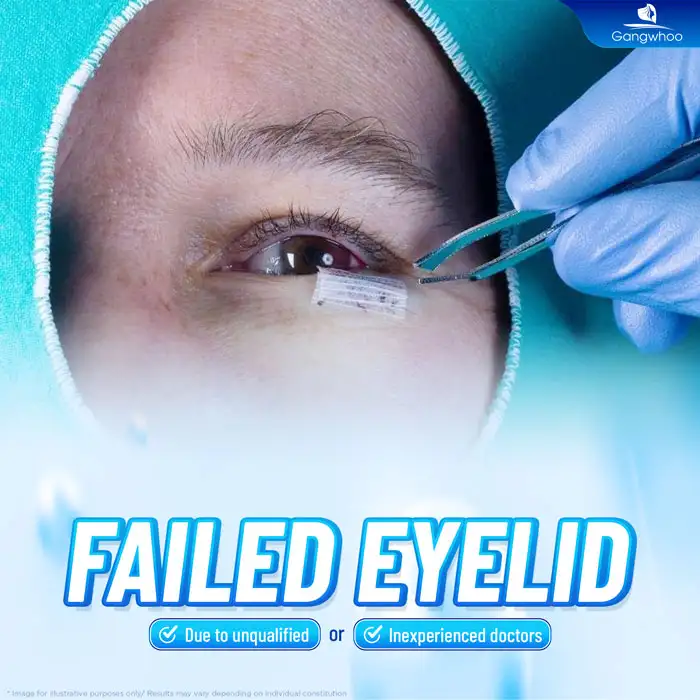
- Lack of experience or insufficient knowledge of eyelid anatomy: The eyelid area has a complex structure including the levator muscle, tarsal plate, and lacrimal glands. Incorrect manipulation or overly deep skin excision can lead to eye bulging, contracture, or ptosis.
- Incorrect measurement and design of the eyelid crease: This is a common cause of uneven eyelids or creases that do not suit the face.
- Improper suturing technique: Uneven tension or incorrect tissue layers can cause wrinkling, surface irregularities, or scar contracture, resulting in an unnatural appearance.
- Substandard aesthetic facilities: Non-sterile instruments or operating rooms that do not meet medical standards can lead to infections—a common cause of failed eyelid surgery.
- Patient factors or improper postoperative care: A tendency toward keloid scarring, poor wound healing, or incorrect postoperative restrictions (such as early consumption of beef, water spinach, or seafood) can also result in dark or raised scars.
Cases of failed double eyelid surgery that require correction
Not all failed eyelid cases require immediate corrective intervention. However, if any of the following signs appear, you should see a specialist for examination and evaluation:
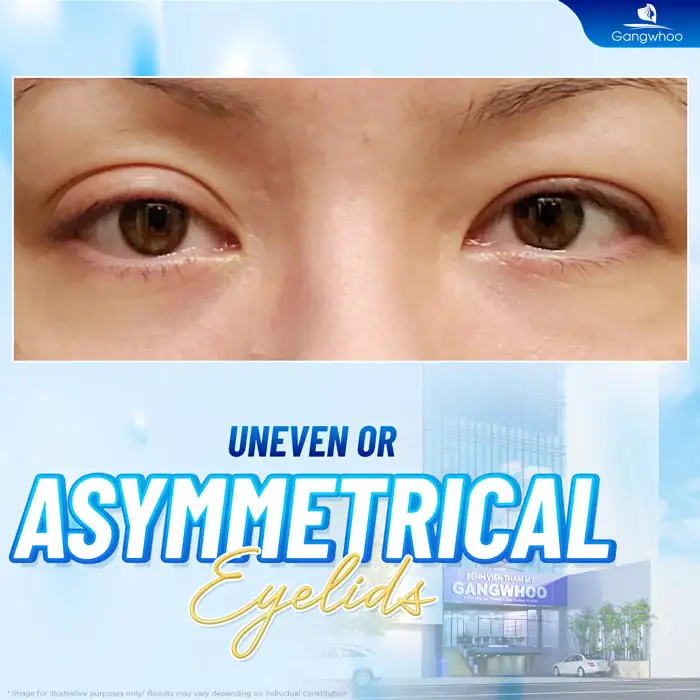
- Clear asymmetry between the two eyelids, with one side higher or deeper than the other.
- Overly large, artificial-looking, or unnatural eyelid creases that cause facial imbalance.
- Ptosis or eyelid retraction, leading to a tired appearance or difficulty closing the eyes.
- Raised or dark scars causing aesthetic concerns or skin contracture.
- Persistent hematoma, infection, or continuous discharge after surgery.
In these cases, revision surgery focuses on removing scar tissue, redefining the eyelid crease, restoring symmetry, and recovering the natural appearance of the eyes.
Methods to correct failed double eyelid surgery
Depending on the severity of the issue, the doctor will apply appropriate corrective methods:
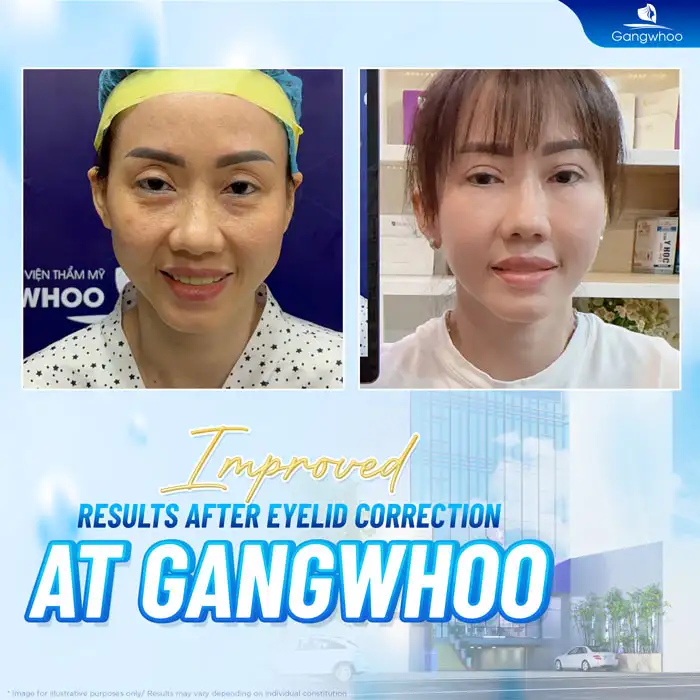
- For mild swelling or slight asymmetry due to edema:
Immediate surgery is not necessary. The doctor may recommend cold compresses, anti-inflammatory medication, and gentle massage to improve blood circulation. After about 2–3 months, the eyelids usually stabilize.
- For clearly uneven or asymmetrical eyelids:
Corrective surgery is performed by reopening the previous incision, removing scar tissue, and reconstructing a new, balanced eyelid crease.
- For ptosis or eyelid retraction:
The doctor will adjust the levator muscle or eyelid skin to restore natural opening and closing of the eyes.
- For raised or dark scars:
Laser therapy, scar-softening injections, or surgical excision of scar tissue may be applied depending on the case.
At Gangwhoo Cosmetic Hospital, doctors apply endoscopic microsurgical eyelid surgery using Plasma technology, allowing millimeter-level precision while minimizing tissue damage and reducing the risk of recurrent scarring after revision. This method is especially effective for severe cases of failed eyelid surgery, helping restore soft, natural-looking eyelids without visible surgical traces.
If you are experiencing failed or flawed double eyelid surgery, do not panic or attempt to treat it yourself at home. The most important step is to visit Gangwhoo Cosmetic Hospital for a specialist examination, accurate assessment, and a tailored corrective treatment plan. With exclusive Plasma endoscopic microsurgery technology, Gangwhoo has successfully corrected thousands of failed eyelid cases—restoring harmonious, natural eyes with absolute safety for patients.
You can schedule a direct consultation at Gangwhoo Cosmetic Hospital to be examined and receive detailed guidance from the doctor.


