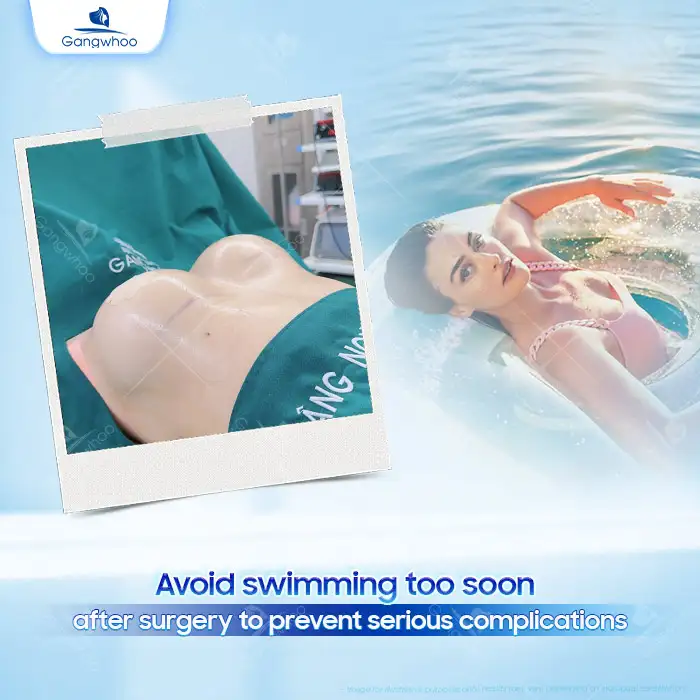
How Long After Breast Augmentation Can You Go Swimming? Important Precautions When Swimming
Pham My Duyen
Asked: 22/03/2026
I really enjoy swimming, but I have just had breast augmentation and I’m not sure how long I should wait before I can swim again. Doctor, could you tell me the safe time to go swimming after breast augmentation surgery, and whether there are any special precautions when swimming to avoid affecting the breast implants?
Hello, the doctor understands that after breast augmentation, many women want to return to their physical activities as soon as possible, especially swimming — a sport that helps relax the body, improve body shape, and relieve stress. However, how long after breast augmentation you can go swimming is not a question that has a universal answer for everyone, because it depends on the healing process, the surgical method, and the technique used in each case. Below is the doctor’s detailed explanation to help you understand more clearly.
How Long After Breast Augmentation Can You Go Swimming?
Normally, after breast augmentation for about 6–8 weeks, which is approximately 1.5–2 months, you may begin swimming again. However, this timeframe is not fixed and may vary depending on wound healing, individual condition, and the surgical technique performed.
During the first two weeks after breast augmentation, the body is still in the initial recovery phase: the incision has not completely closed, the breast tissues remain weak, and the implants have not yet stabilized in the pocket. If you swim too early, pool water containing chlorine, disinfectant chemicals, and bacteria may enter through the unhealed incision and cause infection, tissue inflammation, or fluid accumulation around the implant. At the same time, strong arm movements and kicking motions during swimming may displace the breast implants, cause pain, and affect the breast shape.
Therefore, the doctor advises you to follow these principles before returning to the pool:
You can return to swimming normally after 6–8 weeks
The incision must be completely dry and fully healed, with no swelling, redness, discharge, or scabbing.
No feeling of tightness or sharp pain when moving the chest or arms.
The breast implants must be stable, and surrounding tissues have securely encapsulated them according to the doctor’s assessment.
The breast skin has regained natural elasticity and tactile sensation has stabilized.
Typically, the doctor will perform a follow-up examination around week 6–8 after surgery. If recovery is progressing well, you may start swimming gently while avoiding vigorous movements during the first two weeks after returning to the pool.
Why Should You Not Swim Immediately After Breast Augmentation Surgery?
Many women mistakenly assume that once the external incision appears dry, they can swim again. In reality, this is very dangerous. Swimming too early after breast augmentation may lead to many serious medical complications because the internal structures are still healing.
Swimming immediately after surgery may lead to many medical complications
First, the risk of infection is high: pool or seawater contains many bacteria, chlorine, and strong cleaning compounds. When these come into contact with the surgical area that has not fully stabilized, they may cause infection leading to swelling, discharge, or tissue necrosis if not treated promptly.
Second, water pressure and swimming movements create stretching forces on the chest wall, especially during freestyle or breaststroke. Exercising too early may cause implant displacement, shape distortion, or damage to the connective tissues surrounding the implant, seriously affecting the aesthetic outcome.
Third, water temperature and the humid environment may also soften the skin at the surgical site and prolong scar healing or cause scars to widen. For individuals prone to hypertrophic scars, this can significantly affect aesthetics.
Therefore, before you plan to swim after breast augmentation, make sure that you have been examined and confirmed safe by a specialist doctor. Proactively asking your treating doctor for advice is essential to avoid unnecessary risks.
Important Precautions When Swimming After Breast Augmentation
Once your doctor allows you to return to swimming, you should still follow several safety guidelines to protect the aesthetic results and prevent injury to the chest area:
Do not stay submerged in water for more than 30 minutes
Only swim gently during the first two weeks and avoid long sessions or strong arm movements.
Avoid staying submerged in water for more than 30 minutes to limit the effects of chlorine and water on the skin tissues.
Prioritize clean swimming pools with closed water filtration systems and avoid crowded public pools that may contain bacteria.
After swimming, gently dry the chest area, change clothes immediately, and you may apply a light moisturizer to the skin around the breasts.
Attend a follow-up examination 1–2 weeks after resuming swimming so the doctor can assess the condition of the implants and surrounding tissues.
In particular, you should choose a swimsuit with moderate support that is not too tight to avoid compression and circulation issues around the chest area.
If during or after swimming you experience tightness, swelling, or changes in breast shape, you should seek examination immediately at Gangwhoo Cosmetic Hospital. Here, doctors will perform examinations using a 4K endoscopic system and soft tissue ultrasound to help detect early abnormalities related to the breast implants.
With a team of specialist doctors with more than 15 years of experience and exclusive modern surgical technology, Gangwhoo Cosmetic Hospital is always a leading safe and reputable choice for breast augmentation surgery in Vietnam.
In conclusion, the answer to the question “how long after breast augmentation can you go swimming” is about 6–8 weeks, when the incision has completely healed and the breast implants have stabilized. However, to ensure absolute safety, you should visit Gangwhoo Cosmetic Hospital for a direct examination before returning to swimming. Following proper medical guidance will help maintain a beautiful, soft, and long-lasting breast shape over time.