How Long After Childbirth Can You Get Eyebrow Tattooing? Important Considerations Before the Procedure
Vo Ha My
Asked: 30/05/2026
Doctor, I gave birth 3 months ago, and my eyebrows have become very sparse, making me look less vibrant, so I would like to have them tattooed again. However, I am not sure how long after childbirth I can get eyebrow tattooing without affecting my health or my breast milk supply. Could you please advise me on the appropriate timing as well as the important considerations for postpartum women?
Hello, thank you for your question. This is a concern shared by many mothers after childbirth, especially regarding how long after childbirth you can get eyebrow tattooing to ensure safety for both mother and baby while also helping you feel more confident. I will explain everything clearly based on medical standards so you can better understand and make the most suitable decision.
How Long After Childbirth Can You Get Eyebrow Tattooing?
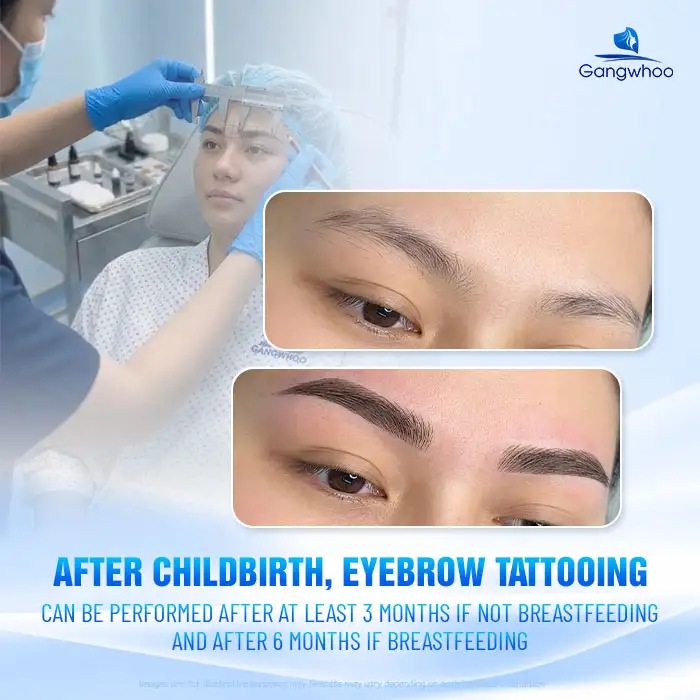
To answer directly: Mothers can undergo eyebrow tattooing at least 3 months after childbirth if they are not breastfeeding, and at least 6 months after childbirth if they are breastfeeding. This is considered the safest timeframe from a medical perspective.
The reasons are:
Mothers may undergo eyebrow tattooing at least 3 months postpartum if not breastfeeding and at least 6 months postpartum if breastfeeding
If you are not breastfeeding, your hormones recover more quickly, and your skin becomes healthier, making eyebrow tattooing generally safe after approximately 3 months.
If you are breastfeeding, doctors need to ensure that topical anesthetics, tattoo pigments, and the healing process do not affect your milk supply. Therefore, mothers should wait at least 6 months for the body to stabilize further.
In some cases, such as cesarean delivery, significant blood loss, or a weak physical condition, the waiting period may be longer, and a direct medical examination is recommended before proceeding. These timelines are only general guidelines because postpartum recovery varies from one mother to another.
Why Should Postpartum Women Carefully Consider Eyebrow Tattooing?
Eyebrow tattooing is a minor cosmetic procedure, but postpartum women experience significant hormonal and immune system changes, making the timing of the procedure extremely important.
Eyebrow tattooing should not be performed immediately after childbirth because the immune system is weakened during the postpartum period
First, hormonal levels have not yet stabilized.
Immediately after childbirth, estrogen and progesterone levels drop significantly, causing the skin to become more prone to pigmentation, dryness, or excessive oil production. These hormonal fluctuations can result in uneven pigment retention, patchy coloration, or lighter-than-expected results after eyebrow tattooing. Many mothers who undergo the procedure too early experience blue or red discoloration because the skin has not fully recovered.
Second, the mother’s immune system is weakened after childbirth.
The skin remains in a sensitive state and is more susceptible to inflammation than usual. Even minor irritation from topical anesthetics, pigments, or environmental contaminants may cause redness, swelling, or blister formation.
Third, postpartum women are often physically and mentally fatigued.
Many mothers experience sleep deprivation, stress, and nutritional deficiencies, which slow skin recovery. This directly affects the scabbing and pigment development process.
Fourth, for breastfeeding mothers
Although topical anesthetics generally do not have a significant impact, factors such as stress, mild discomfort, or skin irritation may indirectly affect breastfeeding.
Therefore, choosing the right timing is essential to ensure both safety and optimal aesthetic results.
Potential Risks of Eyebrow Tattooing After Childbirth
Undergoing eyebrow tattooing too soon after childbirth may lead to several unwanted risks:
Poor or Unsatisfactory Color Results
Poor or inaccurate color development after the procedure
Postpartum skin often has difficulty retaining pigment, causing uneven coloration, inconsistent shade intensity, or rapid fading within only a few weeks.
Increased Risk of Irritation or Dermatitis
The treated area may remain red for an extended period, develop rashes, or form blisters if the mother’s body is still weakened. Some mothers may also experience prolonged swelling.
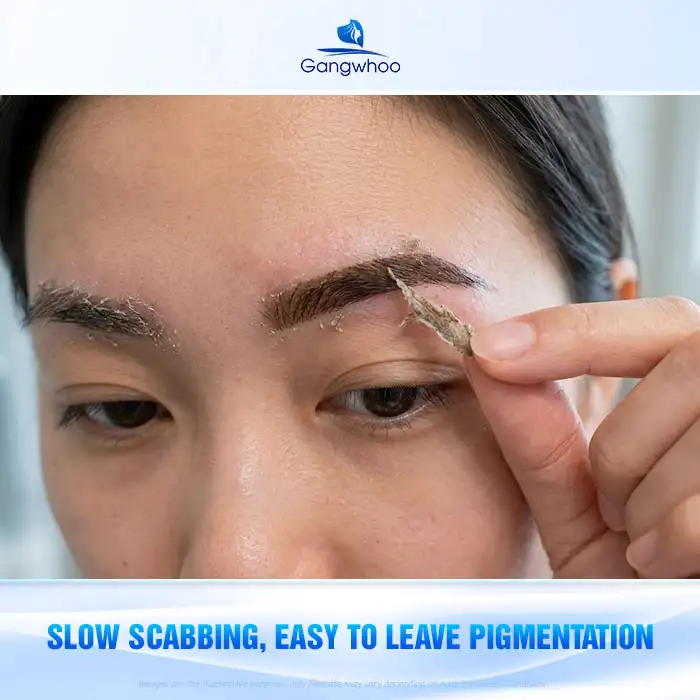
Delayed Scab Shedding and Increased Risk of Hyperpigmentation
Delayed scab shedding and increased risk of hyperpigmentation after the procedure
Because skin regeneration is slower after childbirth, scabs may remain longer and shed unevenly, resulting in missing strokes or uneven definition.
Impact on Emotional Well-Being and Childcare Activities
Peeling, dryness, and itching in the eyebrow area may cause discomfort, affecting childcare activities and sleep quality.
Therefore, waiting until your body has stabilized before pursuing cosmetic treatments not only improves safety but also helps achieve more beautiful and longer-lasting pigment results.
If you would like to undergo eyebrow tattooing after childbirth but are unsure about the appropriate timing, you can visit Gangwhoo Cosmetic Hospital for a direct evaluation of your skin condition, hormonal status, and overall health before the procedure. Gangwhoo offers a full range of eyebrow tattooing techniques, including Ombre, Shading, Powder Brows, and Nano Microblading, suitable for postpartum mothers seeking natural, soft-looking eyebrows without the need for makeup.