How Long Does Pain When Chewing After Jaw Contouring Last? Effective Ways to Relieve Pain
Le Minh Tri
Asked: 19/09/2026
Hello doctor, I had jaw contouring surgery about 1 week ago, and I still feel some pain and discomfort when eating and drinking, especially when chewing food. This makes me quite worried because I do not know how long this condition will last before it completely goes away. I would like to ask how long pain when chewing after jaw contouring usually lasts and whether there are any ways to relieve the pain more quickly. In addition, are there any dietary restrictions I need to follow during this period to avoid affecting the recovery process?
Hello, after undergoing jaw contouring surgery, the question of how long pain when chewing after jaw contouring lasts is a concern for many people because it directly affects daily activities. The doctor will provide a detailed explanation to help you understand the level of pain, recovery time, and proper postoperative care according to medical standards.
How Long Does Pain When Chewing After Jaw Contouring Last?
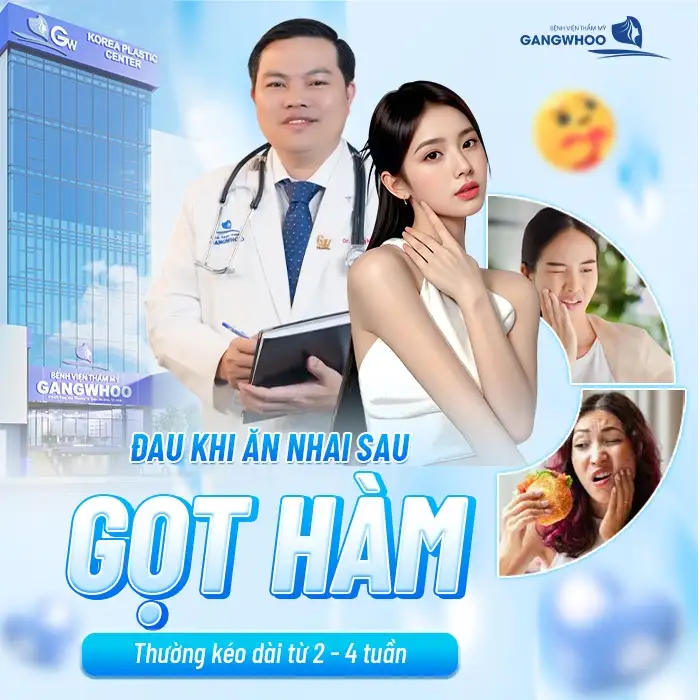
Pain when chewing after jaw contouring usually lasts from 2–4 weeks
Regarding the question of how long pain when chewing after jaw contouring lasts, the doctor explains as follows: pain when chewing usually lasts for about 2–4 weeks and gradually decreases throughout the different stages of recovery, including:
First 5–7 days: chewing is almost impossible, so the diet mainly consists of liquids; pain and a feeling of tightness are pronounced
2–3 weeks: begin eating soft foods; mild pain may still occur when chewing, but it is more comfortable
After 3–4 weeks: pain decreases significantly, and gentle chewing is possible
After 6–8 weeks: pain when chewing is almost completely gone, and jaw function is nearly normal
This is because during surgery, the doctor intervenes in the bone and soft-tissue structures, so time is needed for the bone to heal and the masticatory muscles to adapt. If you follow the postoperative care instructions properly, recovery will progress as expected and the pain will be significantly reduced.
Why Does Pain Occur When Chewing After Jaw Contouring?
Tissue and Bone Injury
After surgery, the reshaped jawbone undergoes a biological healing process. At this stage, the surrounding soft tissue is swollen and the bone has not yet become completely stable, so when chewing forces are applied, you may experience pain or mild soreness.
This is a completely normal response of the body, similar to when you sustain an injury and are in the recovery phase.
Causes of pain when chewing after jaw contouring
Jaw Muscles Have Not Yet Adapted
In addition to the bone, the masticatory muscles also need time to adapt to the new jaw structure. After surgery, the muscles become stretched and their attachment points change, so when you begin chewing again, the muscles may respond with mild pain or fatigue.
This condition will gradually improve as you practice chewing correctly and gradually increase the level of jaw movement according to the doctor’s instructions.
How to Relieve Pain When Chewing
To effectively reduce pain and help the jaw recover more quickly, you should combine several appropriate care measures. There is no need for complicated measures, but they should be performed correctly and consistently.
Ways to relieve pain when chewing
During the initial stage, you should prioritize liquid foods such as porridge, soup, or smoothies to minimize chewing force. When transitioning to soft foods, chew slowly, divide food into small portions, and avoid using excessive force. At the same time, applying a warm compress after 5–7 days can help improve blood circulation, reduce muscle tension, and significantly relieve pain.
In addition, you should use pain relievers and anti-inflammatory medication strictly as prescribed by your doctor. Do not take additional medications on your own, as they may affect the healing process.
When Is Pain a Sign of an Abnormality?
Normally, pain after jaw contouring gradually decreases over time. However, if you experience any of the following signs, you should seek an early examination:
Pain that gradually increases instead of decreasing over time
Pain accompanied by swelling, warmth, redness, or signs of inflammation
Pain that persists for more than 4–6 weeks without improvement
Pain when chewing accompanied by a feeling of jaw misalignment or difficulty moving the jaw
These may be signs of infection, fluid accumulation, or problems related to bone fixation. Early examination can help ensure timely treatment and prevent long-term effects.
Important Considerations When Chewing After Jaw Contouring
To minimize pain and help the jaw recover properly, you need to pay attention to several important points during the chewing process.
First, you should not rush to return to a normal diet too soon. The hardness of foods should be increased gradually according to each stage of recovery and the healing capacity of the bone and jaw muscles. When eating, you should chew evenly on both sides to avoid uneven force, and avoid using the front teeth to bite hard foods during the initial period.
In addition, you should avoid foods that are excessively chewy, hard, or require strong chewing forces, such as sinewy meat, crispy fried foods, or nuts. These foods can increase pressure on the recovering bone area, thereby prolonging the duration of pain.
Doctors always devote themselves to every aesthetic procedure for the benefit of each patient’s transformation
Finally, the doctor emphasizes that pain when chewing after jaw contouring is a normal phenomenon if it remains within a manageable range and gradually decreases over time. The important thing is to follow the proper diet and postoperative care regimen.
At Gangwhoo Cosmetic Hospital, jaw contouring is performed using modern technology, with preoperative 3D CT simulation and close postoperative care, helping minimize pain and shorten recovery time. If you are experiencing prolonged pain or are unsure how to care for yourself properly, you should visit the hospital directly for a medical examination and specific guidance.