Cut eyelid surgery: How long should seafood be avoided? Why is it necessary to avoid seafood?
Bich Hang
Asked: 07/02/2026
Hello doctor, I heard that after eyelid surgery, patients need to avoid seafood because it can easily cause itching or darkening of the wound. However, I am not clear on how long seafood should be avoided before it can be eaten normally again. I really like shrimp, crab, and marine fish, but having to avoid them makes me a bit worried and unsure whether eating them too early would affect the surgical incision. Please explain this to me, doctor.
Hello, after eyelid surgery, in addition to proper wound care, diet also plays a very important role in determining the recovery speed and the aesthetic outcome of the eyelid crease. One of the most common questions doctors receive is “how long should seafood be avoided after eyelid surgery” and why this type of food needs to be restricted. The doctor will explain this in detail for you below.
How long should seafood be avoided after eyelid surgery?
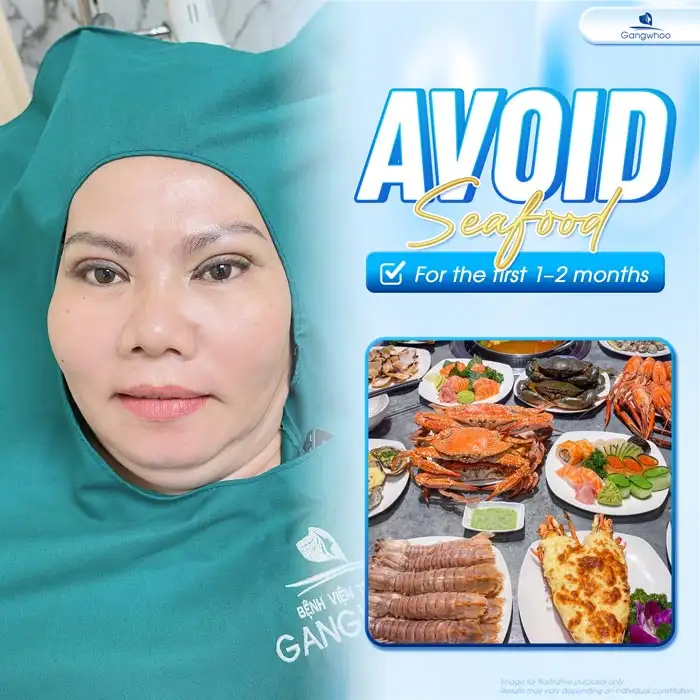
For the question eyelid surgery and how long seafood should be avoided, doctors generally recommend that you completely avoid all types of seafood for at least the first 1–2 months after surgery. This duration may vary depending on each individual’s constitution and wound-healing speed.
Seafood should be avoided during the first 1–2 months after surgery
For individuals with good healing ability, whose wounds close quickly without redness, swelling, or discharge, they may start consuming a small amount after 4–6 weeks to test the body’s reaction. However, for those prone to hypertrophic scarring, sensitive skin, or whose wounds are still pink, doctors advise maintaining avoidance for at least 2–3 months to ensure maximum safety.
The reason for avoiding seafood is that foods such as shrimp, crab, squid, and marine fish contain high levels of protein and histamine—a substance that can easily cause irritation, leading the newly operated eyelid area to become itchy, red, swollen, or even develop hypertrophic scars or hyperpigmentation. Therefore, although how long after eyelid surgery seafood can be eaten depends on each individual’s constitution, the general principle is to strictly avoid it at least during the period when the wound is still regenerating new tissue.
Why is it necessary to avoid seafood after eyelid surgery?
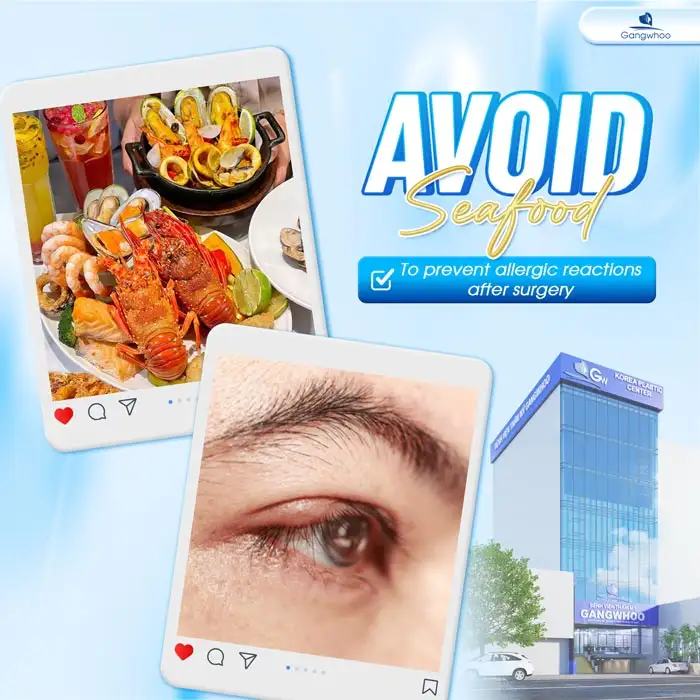
After eyelid surgery, the skin around the eyes is in the recovery phase, and newly formed soft tissues are very sensitive. Eating seafood during this period may cause mild allergic reactions such as itching, rashes, or swelling around the eyelids, making the wound heal more slowly and more prone to hyperpigmentation.
Avoiding seafood helps prevent allergic reactions after surgery
In addition, some medical studies have shown that the high protein and histamine content in seafood can trigger inflammatory responses in healing tissues. This not only affects wound-healing speed but can also cause the stabilized eyelid crease to become uneven and less natural. Therefore, avoiding seafood is not merely folk advice but is supported by clear scientific evidence.
Other foods besides seafood that should be avoided after eyelid surgery
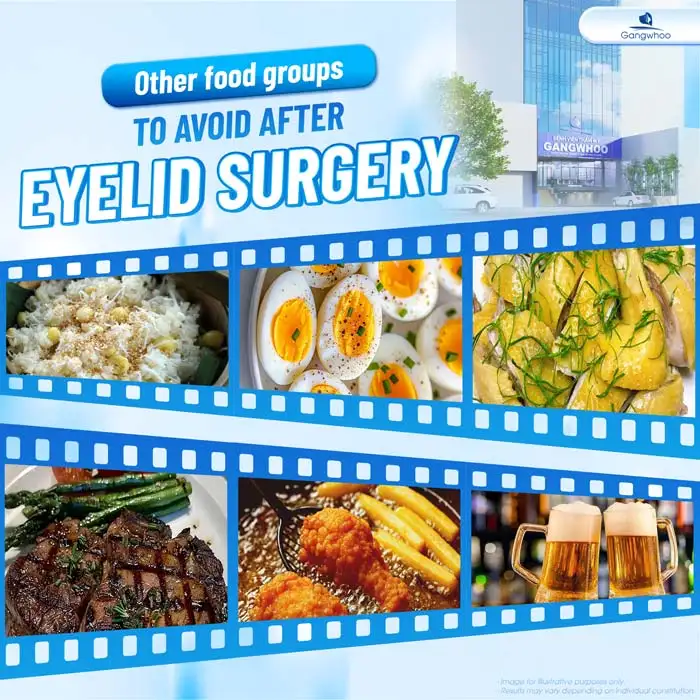
In addition to seafood, doctors also recommend that you avoid certain other food groups during the postoperative period to ensure faster healing and minimize scarring:
Other food groups to avoid after eyelid surgery
Beef and chicken: May cause darkening of the wound and darker scars.
Sticky rice and glutinous rice products: Generate heat and may cause wound infection or discharge.
Chicken eggs and duck eggs: May cause uneven skin pigmentation during healing, leading to uneven eyelid color.
Spicy foods, alcohol, and coffee: Cause vasodilation and slow down soft tissue recovery.
Strict dietary restriction during the first 1–2 months will help the eyelids stabilize faster, reduce complications, and result in a more natural and harmonious eyelid crease.
Recommended foods after eyelid surgery
Along with avoiding seafood, you should supplement your diet with foods that support the recovery process:
Eat plenty of vegetables rich in vitamins C, A, and E after surgery to support wound healing
Vegetables and fruits rich in vitamins C, A, and E (oranges, pomelos, carrots, bell peppers): help boost immunity, provide antioxidant effects, and fade scars.
Foods containing healthy protein such as lean meat, freshwater fish, tofu, and free-range chicken eggs: support cell regeneration.
Drink plenty of water and consider consuming pennywort juice or pineapple juice to help reduce inflammation and swelling effectively.
Combining a scientific diet with proper cold and warm compresses, and cleaning the wound with antiseptic solutions as instructed by the doctor will help speed up recovery, allowing the eyelids to stabilize sooner and look naturally beautiful.
Advice from Gangwhoo doctors:
If after 2–3 months the eyelids remain swollen, itchy, or show abnormal signs after resuming seafood consumption, you should visit Gangwhoo Cosmetic Hospital for timely examination and treatment. Currently, Gangwhoo applies exclusive endoscopic microsurgical eyelid surgery technology and Plasma knife technology, which help minimize swelling, shorten recovery time, and reduce the risk of scarring.
If you are in the postoperative period and would like specific guidance on diet or wound care, please visit Gangwhoo Cosmetic Hospital directly so that specialist doctors can examine, monitor, and provide appropriate treatment support.