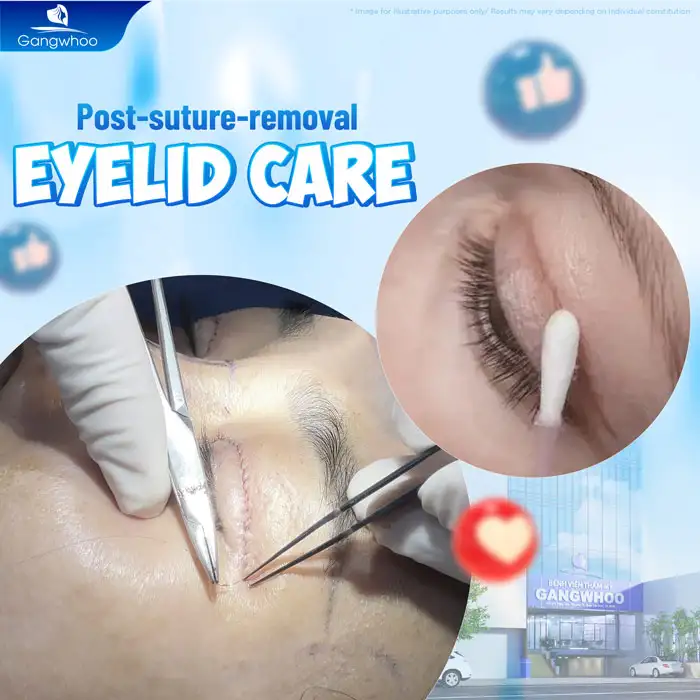
How should eyelids be cared for after stitch removal? What should be noted?
Mai Ngan
Asked: 05/12/2025
Doctor, may I ask whether any special care is needed after eyelid stitch removal? I’ve heard that at this stage the skin is still weak, and if not properly protected, it can easily swell again or leave scars. So what is the correct way to care for the eyelids after stitch removal? Do I need to avoid water contact or apply any medication?
Hello, after eyelid stitches are removed, this is an extremely important stage that determines the final aesthetic result — whether the eyelids are even, the incision line is smooth, and the eyelid crease looks natural depends greatly on how the eyelids are cared for after stitch removal. From a medical perspective, the doctor will provide detailed guidance for each stage of care to help you understand the healing mechanism of the eyelid area and know how to maintain beautiful, stable results in the long term.
How to care for eyelids after stitch removal by stages
After stitch removal, the eyelid area enters the stage of fibrous tissue regeneration and scar flattening — this is the most “sensitive” period, requiring strict adherence to care instructions to ensure fast recovery and no aesthetic traces left behind. Below is a detailed guide on eyelid care after stitch removal by specific stages:
First 24 hours after stitch removal:
The eyelid area is still fragile, so you should avoid touching it and not wash your face directly with water. Only use a soft cotton pad or sterile gauze to gently clean the area around the eyes. You may apply cold compresses using a clean towel-wrapped ice pack for 5–10 minutes per session, 2–3 times a day, to reduce swelling.
2–5 days after stitch removal:
At this stage, the skin begins to reconnect and may feel dry or slightly tight. You should apply antibiotic ointment (as prescribed by the doctor) to prevent infection and keep the skin soft. Minimize makeup use, wash the face gently, and avoid getting soap on the eyelids.
1–2 weeks after stitch removal:
The skin starts regenerating, the eyelids gradually stabilize, and mild itching may occur — this is a normal sign of healing. You may apply warm compresses to improve blood circulation and make the skin softer and rosier. Do not scratch or pull the eyelid skin, as this can lead to unsightly scarring.
After 2 weeks:
You may resume normal daily activities. However, avoid direct sunlight and protect the eye area carefully when going outdoors. Use specialized scar-reducing cream for the eyelids (as instructed by the doctor) to help fade the incision line and make the eyelid crease softer and more natural.
It is important to note that at Gangwhoo Cosmetic Hospital, thanks to the application of exclusive endoscopic microsurgical eyelid surgery using Plasma scalpel technology, the incision is extremely fine and tissue trauma is minimal, allowing faster and safer recovery after stitch removal compared to traditional techniques.
Why is eyelid care after stitch removal necessary?
Many people mistakenly think that recovery is complete once stitches are removed, but in reality, this is only the beginning of the scar tissue remodeling and eyelid crease formation stage. Without proper care, the wound may become inflamed, develop hypertrophic scars, or result in uneven eyelid creases.
From a medical standpoint, after stitch removal, the subcutaneous tissues are still in the process of collagen and elastin bonding. If the area is stretched, exposed to sunlight, or mildly infected, scar fibers may proliferate unevenly, leading to stiff or broken-looking eyelid creases. Therefore, proper post-stitch-removal eyelid care helps to:
Prevent infection, redness, swelling, and scar formation.
Accelerate skin tissue regeneration, ensuring a smooth wound and soft natural eyelid crease.
Stabilize aesthetic results, helping the eyelids settle into shape quickly and symmetrically.
Doctors recommend strictly following hygiene, dietary, and medication guidelines, especially during the first 2–4 weeks after stitch removal. This is the “golden period” that determines up to 80% of the final eyelid aesthetic result.
Things to avoid during eyelid care after stitch removal
To achieve optimal aesthetic results, you should strictly avoid the following actions or habits during the care period:
Do not apply eye makeup for at least the first 2 weeks to prevent irritation.
Do not rub or scratch the eyelids, even if they feel itchy or dry, as this can tear newly healed tissue and cause scarring.
Do not sleep face down, as it may place pressure on the eyelids. Sleep on your back with your head slightly elevated to reduce swelling.
Avoid foods that may cause inflammation or scarring such as seafood, beef, sticky rice, eggs, and water spinach during the first 2–3 weeks.
Limit sun exposure — UV rays can darken newly healed skin and affect aesthetics.
Do not use scar creams or topical medications of unknown origin without medical guidance; always follow instructions from an aesthetic eye specialist.
By strictly following these guidelines, your eyelid creases will settle quickly, become smooth with no visible scarring, and maintain long-lasting results.
If you have just undergone eyelid surgery or are approaching the stitch removal stage, the doctor recommends visiting Gangwhoo Cosmetic Hospital for regular check-ups and proper post–stitch-removal eyelid care guidance. With exclusive Plasma scalpel endoscopic microsurgical eyelid technology, Gangwhoo ensures a gentle, safe recovery process and delivers natural, harmonious, and long-lasting eyelid crease results over time.