Refer to effective treatments for acne dark spots recommended by doctors
Ngo Hai Yen
Asked: 23/05/2026
Doctor, I have quite a lot of acne dark spots recently, especially on my cheeks and forehead. Even though the acne is gone, the dark spots take a very long time to fade, making my skin always look dull and uneven. I would like to ask for the effective acne dark spot treatments that doctors truly recommend, from topical skincare products to advanced treatment methods. I want to clearly understand which methods are suitable for each type of dark spot so I can treat them properly.
Hello, the doctor understands that post-acne dark spots are a major concern for many young people. The acne may be gone, but the brown and red marks can linger persistently, causing uneven skin tone and loss of confidence. Proper acne dark spot treatment requires addressing the correct cause and skin healing mechanism to achieve real effectiveness. To help you clearly understand the nature of post-acne pigmentation and choose the right method — from at-home acne dark spot treatment to advanced technologies — the doctor will explain everything in detail for you.
What are post-acne dark spots?
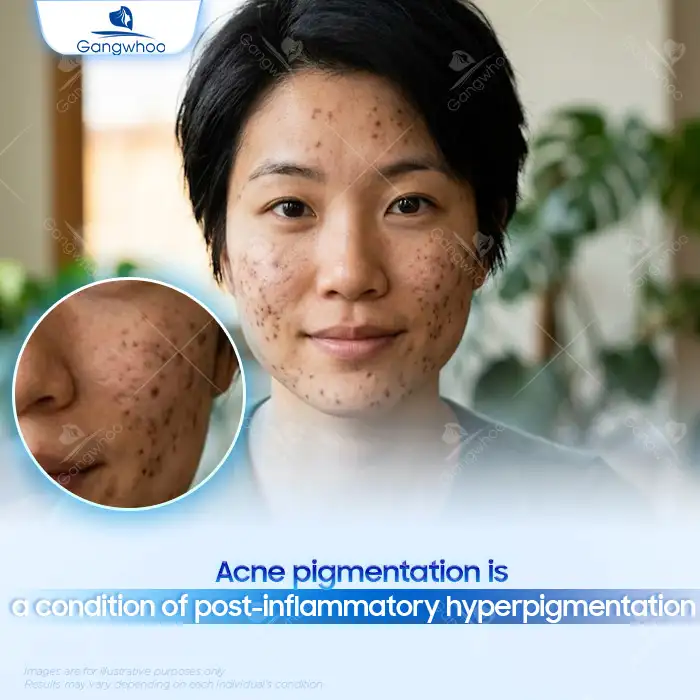
Post-acne dark spots are a condition of post-inflammatory hyperpigmentation (PIH) or dilated capillaries caused after the skin has been affected by acne. This happens when the skin heals itself after injury, leading to discoloration in the areas where acne once appeared.
There are two main types of post-acne marks that you need to distinguish:
Post-acne dark spots are a form of post-inflammatory hyperpigmentation
Red marks (PIE – Post-inflammatory Erythema): Caused by damaged capillaries after inflammatory acne. The marks appear pink, red, or light purple, especially noticeable under sunlight.
Brown marks (PIH – Post-inflammatory Hyperpigmentation): Caused by increased melanin production when the skin becomes inflamed. The spots appear brown or dark brown and become darker with UV exposure.
Post-acne dark spots occur due to many causes such as improper acne squeezing, severe acne inflammation, incorrect skincare, excessive sun exposure, or hormonal imbalance. Therefore, to effectively treat acne dark spots, you need to understand the type of pigmentation you have in order to choose the right treatment direction.
At-home acne dark spot treatment using skincare products
For mild or newly formed acne marks, you can absolutely treat acne dark spots at home by using active ingredients capable of brightening the skin, controlling melanin, and restoring damaged skin tissue.
Use active ingredients that inhibit melanin production for mildly pigmented skin areas
Vitamin C: This is a standout ingredient in pigmentation treatment. Vitamin C helps inhibit melanin production, brighten brown spots, and stimulate collagen production for a more even complexion. Suitable for mild brown pigmentation.
Niacinamide: Has gentle skin-brightening abilities, reduces redness, and supports restoration of the skin barrier. Niacinamide is very suitable for sensitive skin or red marks after inflammatory acne.
AHA (Glycolic Acid, Lactic Acid): Helps thin the stratum corneum and stimulates new cell regeneration. With consistent AHA use, acne marks gradually fade and the skin surface becomes smoother.
BHA (Salicylic Acid): Suitable for acne marks caused by hidden acne or blackheads. BHA penetrates deeply into pores, helping keep the skin clear and reducing inflammation-related pigmentation.
Retinol: Stimulates cell turnover, restructures the skin, and supports treatment of pigmentation caused by cystic acne and severe inflammatory acne. However, it should be used starting with low concentrations and under guidance.
Arbutin – Tranexamic Acid: Two “golden” ingredients in skin brightening, highly effective for long-standing brown pigmentation.
Doctor’s note: When using pigmentation treatment products, it is mandatory to apply SPF 30+ sunscreen daily; otherwise, the pigmentation will darken even if the treatment is done correctly.
Effective acne dark spot treatment with advanced technology
For long-standing, dark pigmentation or pigmentation combined with scarring, at-home skincare products are often not strong enough. At this stage, technology can significantly shorten the treatment time.
At Gangwhoo Cosmetic Hospital, doctors often recommend the following methods:
Pigmentation removal laser helps break down melanin pigment structures
Targets melanin pigments, breaking the pigment structures into ultra-small particles for gradual elimination by the body. Laser treatment helps treat brown pigmentation quickly, safely, and with minimal invasiveness.
Vascular laser – treatment for red marks:
Uses specialized wavelength lasers to target dilated blood vessels. This reduces redness and purple discoloration after inflammatory acne — showing effectiveness after just a few sessions.
Professional skin peeling (AHA/BHA/TCA):
Supports removal of the keratinized layer, stimulates skin regeneration, and brightens the skin surface. Peels are highly effective for mild to moderate pigmentation.
LED biological light therapy:
Helps reduce inflammation, soothe the skin, and support faster fading of pigmentation.
Mesotherapy (microinjection of vitamin C – HA – glutathione):
Mesotherapy (microinjection of vitamin C – HA – glutathione) enhances fast and effective pigmentation fading
Delivers nutrients directly into the dermis, increasing pigmentation fading effectiveness many times compared to topical application.
Gangwhoo always personalizes treatment protocols based on the pigmentation color, duration, and each client’s skin condition to achieve optimal results.
How long does it take for acne dark spots to fade?
This depends on:
The type of pigmentation (red or brown)
The depth of pigmentation
How long the pigmentation has existed
Daily skincare routine
Severity of previous acne inflammation
Typically:
Red marks: 2–8 weeks
Mild brown spots: 4–12 weeks
Long-standing brown spots: 3–6 months
Pigmentation with scarring: requires technological intervention and a longer treatment duration
If combined with technology at Gangwhoo, treatment time can be shortened by 50–70% compared to using home skincare products alone.
Important notes when treating acne dark spots to avoid skin irritation
When treating acne dark spots, especially when using multiple active ingredients simultaneously, you need to pay special attention to the following:
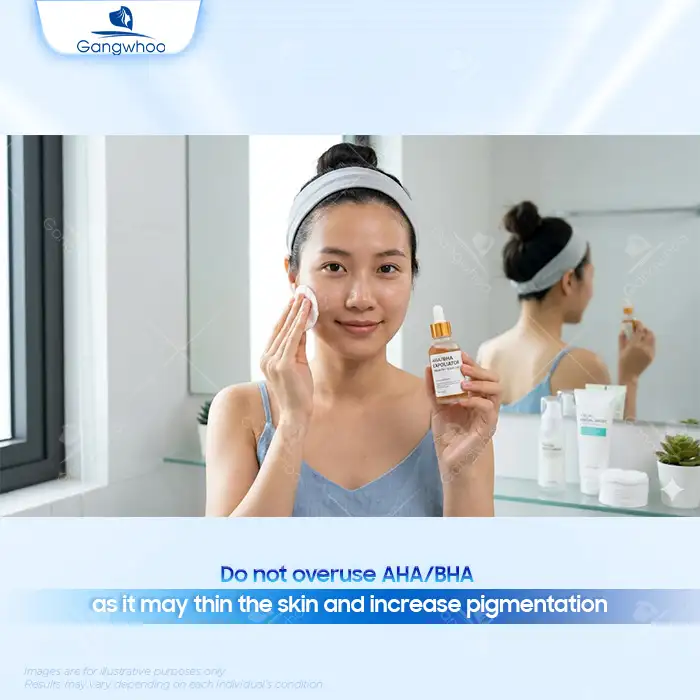
Do not overuse AHA/BHA as it may thin the skin and increase pigmentation after treatment
Do not use too many brightening products at the same time because it can easily cause irritation.
Do not overuse AHA/BHA because it can make the skin thin, weak, and worsen rebound pigmentation.
Always apply sunscreen, even when staying indoors.
Do not combine retinol with AHA/BHA in the same routine if your skin is sensitive.
Avoid squeezing acne because it will create new dark spots.
Drink enough water and supplement vitamin C to support fading pigmentation from within.
If the skin becomes red, burning, tingling, or excessively peeling, stop using the products immediately and consult a doctor.
Doctor’s conclusion
Treating acne dark spots is not difficult, but it requires understanding the cause, choosing the correct method, and being consistent. If you want to shorten treatment time, minimize irritation, and achieve the fastest results, visit Gangwhoo Cosmetic Hospital for a skin analysis and personalized treatment protocol.
Gangwhoo is currently applying Laser Toning, Pico Laser, medical-grade peels, LED biological light therapy, and mesotherapy — the safest and most effective technologies available today for acne dark spot treatment.