Phases of Acne Treatment According to the Ministry of Health
Do Bao Tran
Asked: 21/05/2026
Hello doctor, I’m currently researching the Ministry of Health’s acne treatment protocol because I’ve been struggling with inflammatory acne and blackheads for many years, but the treatments haven’t completely resolved the condition. I would like to know what the standard treatment process includes and what the purpose of each step is, so I can see whether it is suitable for my skin condition.
Hello, the doctor understands that when acne persists for a long time, finding the right Ministry of Health acne treatment protocol is extremely important to avoid improper treatment, worsening acne, or leaving scars. The doctor will explain clearly, in a professional yet easy-to-understand manner, closely following the official guidelines of the Ministry of Health so you can understand the most suitable treatment direction for your skin condition.
Acne Treatment Protocol According to the Ministry of Health
The Ministry of Health’s acne treatment protocol is divided into 3 levels: mild acne – moderate acne – severe acne. Each level has a different treatment approach to optimize effectiveness and minimize the risk of side effects.
Mild Acne (whiteheads, blackheads, few inflammatory papules)
The treatment protocol prioritizes topical medications, including:
Topical Retinoids effectively support comedone reduction for mild and non-severe acne conditions
Topical Retinoids (Adapalene, Tretinoin): prevent pore blockage and help dissolve acne comedones.
Benzoyl Peroxide (BPO) 2.5–5%: antibacterial against P.acnes and reduces inflammation.
Azelaic Acid 15–20%: helps treat post-acne pigmentation and mild inflammation, suitable for sensitive skin.
Note: Retinoids are used at night, while BPO should be used in the morning or alternated to avoid irritation.
Moderate Acne (moderate inflammatory acne, multiple papules and pustules)
At this stage, the acne treatment protocol usually combines topical medications + oral medications, including:
For moderate severe acne, combining topical and oral medications is recommended for faster improvement
Retinoids + BPO (combined or alternated).
Topical antibiotics: Clindamycin or Erythromycin (always combined with BPO to prevent antibiotic resistance).
Oral antibiotics for significant inflammation: Doxycycline, Minocycline (maximum 3 months).
Azelaic Acid supports treatment of post-inflammatory hyperpigmentation.
Female patients with hormonal imbalance or persistent inflammatory acne may additionally be prescribed:
Severe Acne (nodular acne – deep cystic acne – high scarring risk)
The severe acne treatment protocol prioritizes:
For severe acne, daily Isotretinoin is recommended for effectiveness and to reduce recurrence
Oral Isotretinoin (0.5–1 mg/kg/day) is the most effective option for severe, recurrent acne or acne with scarring.
Oral antibiotics may be used during the initial stage if inflammation is severe.
Can be combined with: topical Retinoids – Azelaic Acid – BPO depending on the irritation level.
Isotretinoin requires:
Monitoring liver enzymes and blood lipids.
Not for women planning pregnancy within 6–12 months.
Regular follow-up every 4–6 weeks.
This treatment group requires close medical supervision.
Indications for Combined Intensive Treatments
Depending on the severity of acne, according to the acne treatment protocol, the doctor may recommend additional intensive treatments to enhance effectiveness:
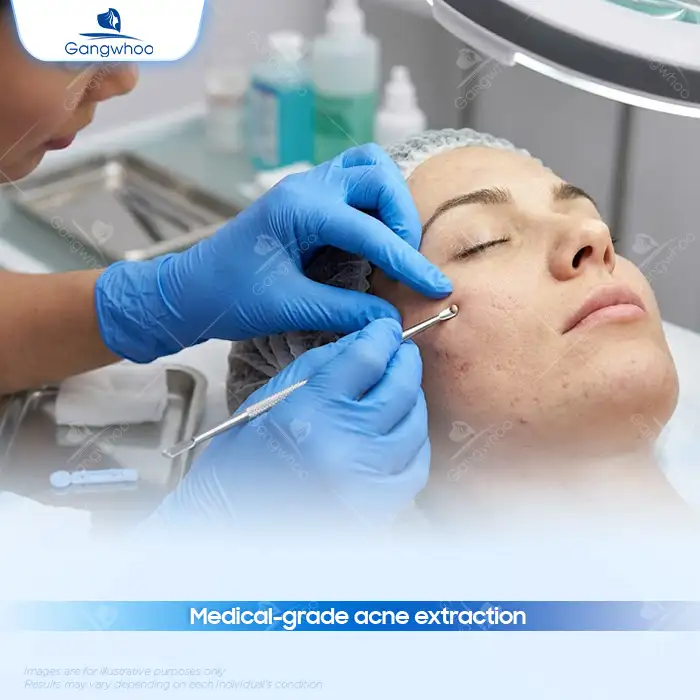
Reduce pore congestion, brighten the skin, and support treatment of post-acne pigmentation.
LED light therapy
LED light therapy helps reduce inflammation, eliminate bacteria, and accelerate skin healing for all acne types
Reduces inflammation – eliminates bacteria – accelerates skin healing, suitable for all acne types.
Laser treatment for pigmentation and scars
Used after acne stabilizes to improve red/brown pigmentation and shallow scars.
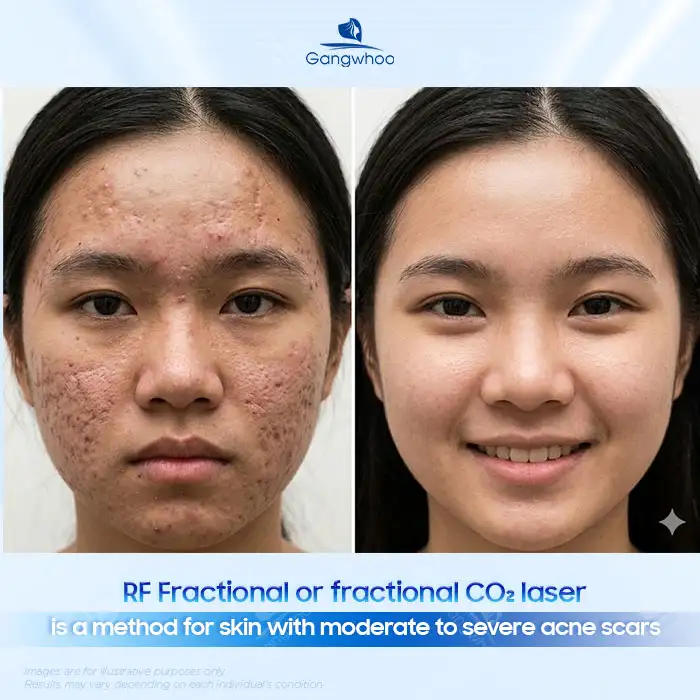
RF Fractional or Fractional CO₂ Laser
RF Fractional or Fractional CO₂ Laser helps improve moderate to severe acne scarring
Used for moderate to severe acne scars.
The above methods are always prescribed based on acne severity, skin type, and response to medications.
Important Notes When Following an Acne Treatment Protocol
To achieve optimal treatment results, you should note the following:
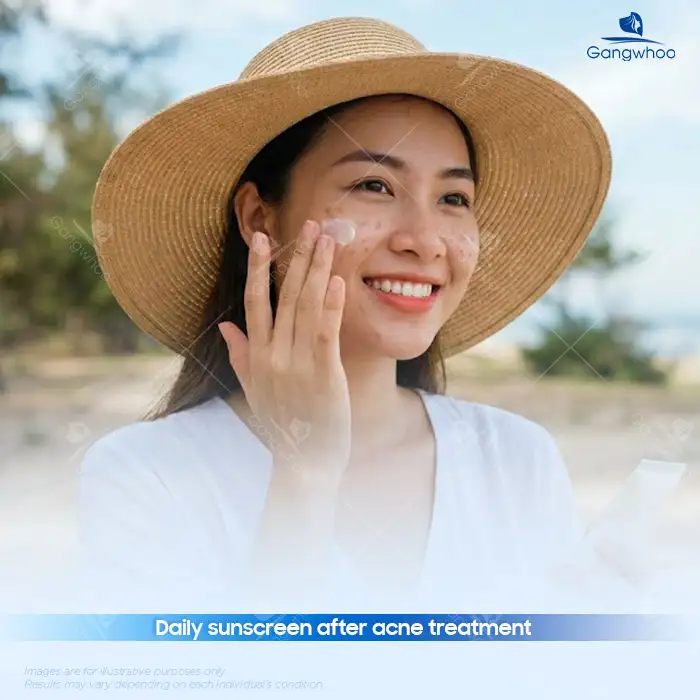
Follow daily sunscreen application after acne treatment as instructed
Be consistent for at least 8–12 weeks: No protocol provides instant results; medications require time to control inflammation and clear acne lesions.
Do not self-medicate with antibiotics or Isotretinoin: As this may cause antibiotic resistance, liver damage, or worsen skin irritation.
Avoid squeezing acne at home: Especially inflammatory acne, which can easily leave scars.
Use sunscreen daily: Many acne treatment ingredients increase photosensitivity and risk of pigmentation.
Moisturize adequately: Dry skin makes Retinoids and BPO more irritating, reducing treatment adherence.
Attend follow-up appointments on schedule: Doctors need to evaluate medication response, adjust dosages, and prevent side effects.
If your skin is experiencing persistent acne, prolonged inflammatory acne, or suspected hormonal-related acne, you can visit Gangwhoo Cosmetic Hospital for a dermatology consultation following the standard Ministry of Health protocol. The clinic provides prescription medications, intensive treatment programs, and personalized protocols to treat the right cause at the right severity level.
Whenever you need the doctor to assess your skin condition or create a personalized treatment protocol for you, feel free to contact the hotline for support!