What Foods Should You Avoid After Chin Augmentation to Help the Wound Heal Quickly?
Van Nhung
Asked: 08/09/2026
May I ask what foods should be avoided after chin augmentation to help reduce swelling and inflammation and promote faster recovery of the chin area? Do I need to avoid beef, chicken, seafood, or water spinach?
Many people after chin augmentation often ask, “what foods should be avoided after chin augmentation?”, whether they need to avoid beef, chicken, seafood, water spinach, or sticky rice, and how long they should avoid them. In reality, nutritional intake should be adjusted based on the surgical technique, incision location, wound condition, and each individual’s constitution.
According to postoperative guidelines for chin augmentation, a liquid or soft diet is generally preferred during the first few days, followed by a gradual return to a normal diet once the doctor determines that the surgical area has stabilized.
What Foods Should You Avoid After Chin Augmentation to Help the Wound Recover Quickly?
1. Hard, Chewy, and Difficult-to-Chew Foods
Avoid eating hard and chewy foods after chin augmentation surgery
This is a group of foods that should clearly be limited during the early period after chin augmentation.
Foods such as chewy meat, sugarcane, hard bread, hard nuts, crispy foods, or foods that require a lot of chewing force can cause the muscles around the mouth and chin area to move more. This is not beneficial for the recovery process, especially when the incision is located inside the oral cavity.
Instead, people who have recently undergone chin augmentation should choose porridge, soup, mashed potatoes, steamed eggs, soft fish, or foods that have been cut into small pieces and cooked until soft. Professional materials on postoperative chin augmentation care also recommend a soft diet and avoiding using the front teeth to bite during the early recovery period.
2. Spicy, Hot, and High-Fat Foods
After surgery, patients should limit foods that are excessively spicy, too hot, or high in fat. These foods may cause discomfort in the oral area, particularly if the incision is located inside the oral cavity.
Food that is too hot is also unsuitable for tissues that are undergoing recovery. Therefore, during the first few days, it is recommended to prioritize foods at a moderate temperature that are soft and easy to digest.
3. Alcohol, Tobacco, and Stimulants
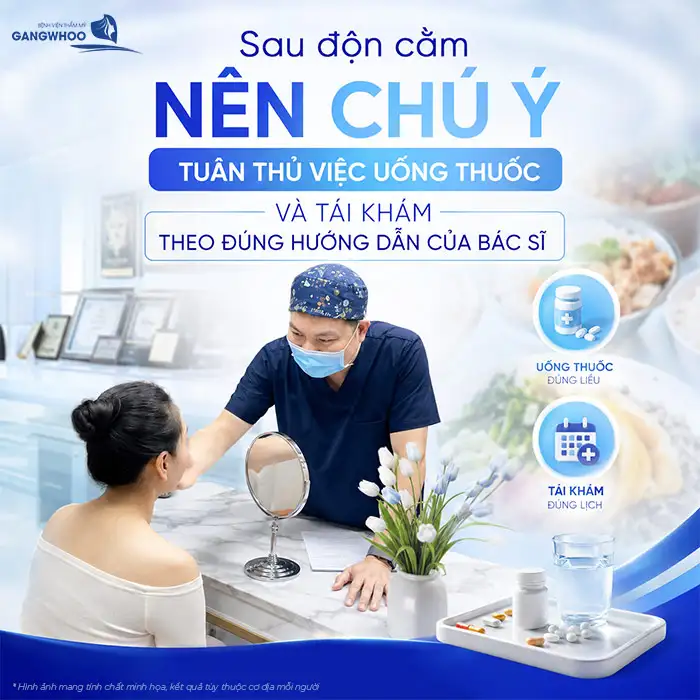
After chin augmentation, pay attention to taking medications and attending follow-up appointments according to the doctor’s instructions
If asking what foods should be avoided after chin augmentation, in addition to food, alcohol and tobacco are also issues that require special attention.
Alcohol can cause blood vessels to dilate and may make swelling and bruising last longer. Meanwhile, smoking can affect the wound-healing process. Therefore, after chin augmentation surgery, patients should avoid alcohol and tobacco for the period of time required by the doctor.
4. Certain Foods That Should Be Limited Depending on Individual Constitution and Wound Condition
Beef, chicken, seafood, water spinach, and sticky rice are often recommended by many medical facilities to be limited during the early period after surgery due to concerns about itching, irritation, or effects on the scar-formation process in some individuals. Vinmec’s postoperative guidelines also include these groups of foods on the list of foods to avoid during the initial period.
However, from a professional perspective, it should not be understood that everyone is required to completely eliminate these foods for the same period of time. The diet should be based on individual constitution, history of allergies, incision condition, and the direct instructions of the surgeon.
If your treating doctor has provided you with a specific list of foods to avoid, prioritize following those instructions.
What Should You Eat After Chin Augmentation to Support Recovery?
1. Soft, Easy-to-Swallow Foods
Include soft, easy-to-swallow foods such as porridge, soup, and soft-cooked vegetables
During the first few days, you should prioritize soft, liquid, and easy-to-swallow foods such as porridge, soup, soft-cooked vegetables, mashed potatoes, steamed eggs, or pureed foods.
The goal is not to eat as little as possible, but rather to ensure that the body still receives sufficient energy and nutrients while limiting movement of the jaw and chin area.
Some postoperative chin augmentation guidelines also recommend a liquid or very soft diet during the first few days, followed by gradually increasing the consistency of foods as recovery allows.
2. Protein-Rich Foods
Protein plays an important role in maintaining and regenerating tissues. Therefore, people after surgery should not only eat plain porridge or drink fruit juice while neglecting protein sources.
Depending on the specific condition, you can obtain protein from eggs, fish, soft-cooked lean meat, milk, or soy products if your body tolerates them well.
The important thing is to choose protein sources that are suitable for your individual constitution and prepare them in a soft, easy-to-eat form during the early stage.
3. Green Vegetables and Vitamin-Rich Fruits
Increase your intake of green vegetables and soft, easy-to-eat fruits
Green vegetables and fruits provide vitamins, minerals, and fiber necessary for a balanced diet. You can consume soft-cooked vegetables, pureed vegetables, or soft fruits, while limiting foods that are too hard and require excessive chewing.
There is no need to overuse a particular juice or food advertised as “helping wounds heal quickly.” A diverse diet that provides sufficient energy, protein, and vitamins will be more appropriate for the recovery process.
4. Drink Enough Water
Drinking enough water helps the body maintain normal metabolic activities. However, the amount of water needed by each person may vary depending on body weight, diet, level of physical activity, and health condition.
You should drink water regularly throughout the day rather than consuming a large amount at once.
How Long Should You Avoid Certain Foods After Chin Augmentation?
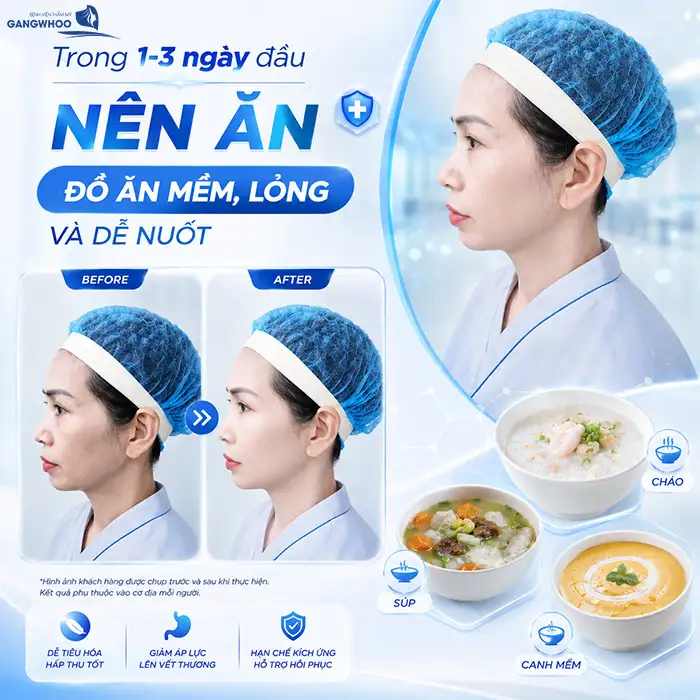
1. The First 1–3 Days
During the first 1–3 days, you should eat soft, liquid, and easy-to-swallow foods
This is usually the period when the chin area is still swollen and discomfort may be more noticeable. You should prioritize liquid or soft, easy-to-swallow foods and minimize vigorous chewing as much as possible.
If the incision is made inside the mouth, oral hygiene is also particularly important. The doctor may provide instructions on an appropriate mouthwash solution and suitable cleaning methods for each individual case.
2. The 7–14-Day Period
As the swelling decreases and the wound progresses well, you can gradually increase the consistency of your food. However, you should still limit hard, chewy foods and dishes that require extensive chewing.
You should not immediately return to a normal diet simply because the chin appears less swollen externally. The timing for returning completely to your previous diet should be based on the actual condition and the doctor’s instructions.
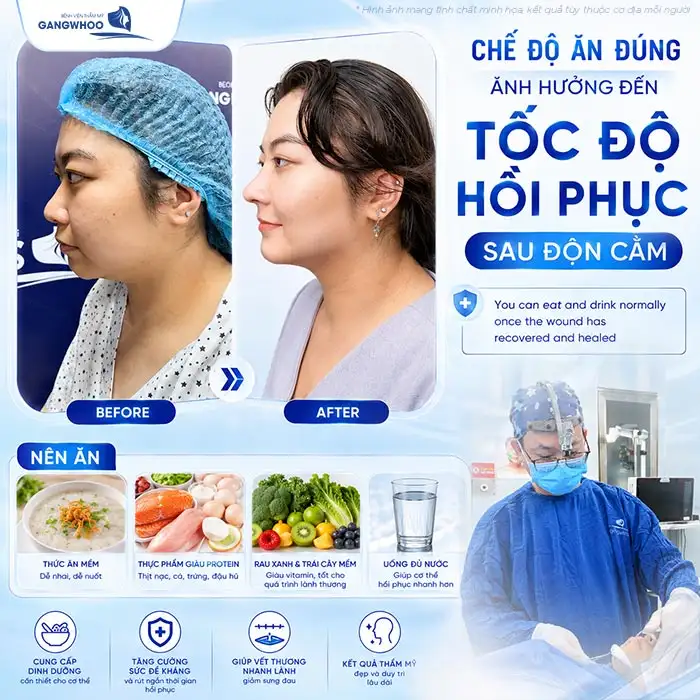
3. When Can You Eat Normally?
You can eat normally once the wound has recovered and healed
Recovery time is not the same for everyone. In cases of chin augmentation using an artificial implant, the degree of swelling and recovery time also depend on the technique, incision location, individual constitution, and postoperative care.
Therefore, there is no fixed timeline that applies to every case. During follow-up, once the doctor confirms that the soft tissues, incision, and implant position are stable, you can gradually return to your normal diet.
Why Does Diet Affect the Recovery Process After Chin Augmentation?
A proper diet affects the rate of recovery after chin augmentation
Chin augmentation is a procedure that involves surgical intervention in the chin area. After the procedure, the body needs time to control the inflammatory response, regenerate tissue, and stabilize the surgical area.
If you eat foods that are too hard or chewy, chewing activity may cause increased movement of the jaw and chin area. Especially with an incision inside the oral cavity, improper eating and hygiene may also increase the risk of irritation or infection at the surgical site.
Therefore, when learning about what foods should be avoided after chin augmentation, you should not focus solely on the idea that “the more foods you avoid, the better.” More importantly, you should establish a diet that is soft, nutritious, appropriate for the stage of recovery, and compliant with the surgeon’s instructions.
Important Considerations Besides Diet After Chin Augmentation
After chin augmentation, pay attention to taking medications and attending follow-up appointments according to the doctor’s instructions
Nutrition is only one part of the postoperative care process. You need to take medications as prescribed, attend follow-up appointments as scheduled, and avoid touching, massaging, or applying pressure to the chin area without authorization.
During the initial period, you should also limit activities that place pressure on the chin area or involve excessive movement. Some postoperative guidelines recommend avoiding strenuous activities for approximately 2 weeks and protecting the chin area from impact.
If you experience increasing swelling and pain instead of gradual improvement, redness and warmth in the surgical area, abnormal discharge, prolonged bleeding, fever, or signs of infection, you need to contact your surgeon immediately for an examination.
In particular, you should not self-administer medications, dietary supplements, or beverages advertised as being capable of “reducing swelling” or “promoting wound healing” without first consulting your doctor.
Postoperative Chin Augmentation Care at Gangwhoo Cosmetic Hospital
At Gangwhoo Cosmetic Hospital, after undergoing chin augmentation surgery, clients receive postoperative care instructions based on their actual condition rather than following a rigid regimen applied to everyone.
According to Gangwhoo’s postoperative care guidelines for maxillofacial surgeries, during the initial stage, liquid or soft foods should be prioritized, followed by gradually increasing the consistency of food as the surgical area stabilizes.
Dr. Phung Manh Cuong emphasizes that achieving a beautiful result after chin augmentation depends not only on the technique used to place the implant but also on the postoperative care and monitoring process.
Therefore, if you are preparing for chin augmentation or have just undergone surgery, discuss directly with your doctor the incision location, type of implant material used, wound condition, and diet appropriate for your individual situation.
Dr. Phung Manh Cuong – Director of Gangwhoo Cosmetic Hospital shares: “After chin augmentation, you do not need to follow excessive dietary restrictions. What is important is to eat a nutritious diet, prioritize soft foods, limit vigorous chewing, and strictly follow postoperative instructions. Each person has a different constitution and recovery condition, so the diet should be personalized.”
In summary, regarding the question “what foods should be avoided after chin augmentation?”, during the initial period, you should limit hard, chewy, and difficult-to-chew foods, overly spicy and hot dishes, alcohol, and tobacco. Foods such as beef, chicken, seafood, water spinach, or sticky rice may be restricted by the doctor depending on your individual constitution and wound condition. At the same time, you should ensure a soft diet that provides sufficient protein, vitamins, and water to support the body’s recovery.