What to Eat After Liposuction for Faster Recovery and Optimal Results
Hoang My Le
Asked: 19/03/2026
Doctor, I would like to ask what foods I should eat after liposuction so that my body recovers quickly and the fat reduction results remain stable. I’ve heard that I should eat plenty of green vegetables and drink lots of water, but I’m not sure which foods are truly beneficial for wound healing, reducing swelling, and preventing tissue hardening. I also want to know if there are foods that promote collagen production to prevent sagging skin in the abdominal area after liposuction.
Hello, the doctor understands that after liposuction, especially abdominal liposuction, diet plays a crucial role in helping the body recover, reducing swelling quickly, and maintaining long-term slim results. Therefore, questions such as “what to eat after liposuction?”, “post-liposuction diet”, “what to eat after abdominal liposuction” are of great interest to many patients. The doctor will explain each aspect clearly, based on medical standards, making it easy to understand and apply for proper post-operative care.
What Should Be Eaten After Liposuction?
To answer you directly:After liposuction, you should consume easily digestible protein, green vegetables, fruits rich in vitamin C, probiotic foods, and drink sufficient water to support tissue regeneration, reduce inflammation, and promote skin elasticity. These nutrient groups are essential for rapid recovery after the body undergoes fat removal.
The doctor will explain further based on medical mechanisms:
After liposuction, the body enters a tissue recovery and collagen regeneration phase. At this time, small damaged tissues need adequate nutrition to heal quickly, reduce swelling, and minimize the risk of pigmentation, scarring, or unevenness. Therefore, a post-liposuction diet must be both anti-inflammatory and supportive of firm, smooth skin.
The best food groups to include are:
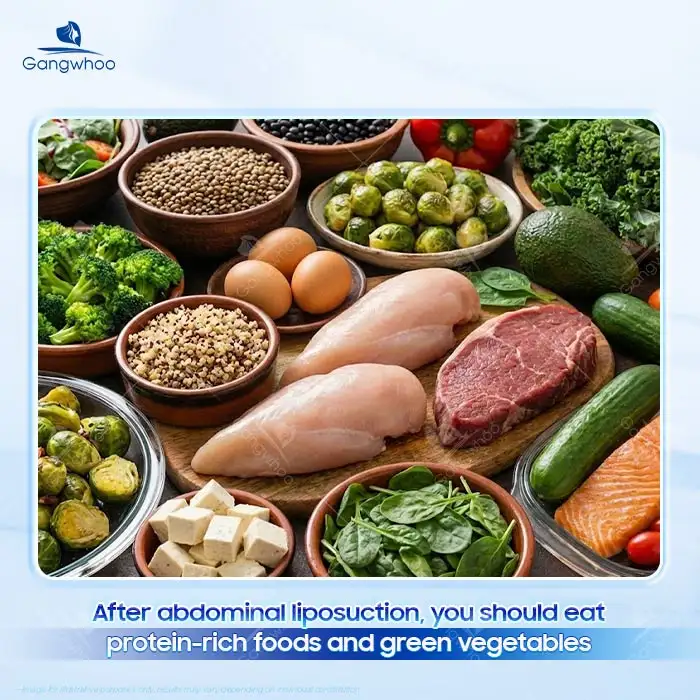
After abdominal liposuction, consume protein-rich foods and green vegetables
Easy-to-digest protein: Helps regenerate tissue and heal wounds quickly: lean pork, fish, eggs, tofu, chicken breast (consume in moderate amounts).
Green vegetables and vitamin C-rich fruits: Reduce inflammation, increase collagen: oranges, grapefruit, kiwi, strawberries, broccoli, spinach.
Whole grains and fiber-rich foods: Support digestion and reduce post-liposuction constipation.
Probiotic foods: Such as yogurt and kimchi, which aid digestion and boost immunity.
Drink 2–2.5 liters of water daily: Helps flush inflammatory fluids, reduce swelling, and accelerate recovery.
If liposuction is performed using the proprietary Lipo Ultrasound at Gangwhoo Cosmetic Hospital, a minimally invasive technology that leaves no scars and causes minimal bruising, the post-liposuction diet can be more relaxed and recovery is faster compared to traditional invasive methods.
Foods to Avoid After Abdominal Liposuction
To prevent complications and minimize the risk of poor scarring, you should avoid the following food groups:
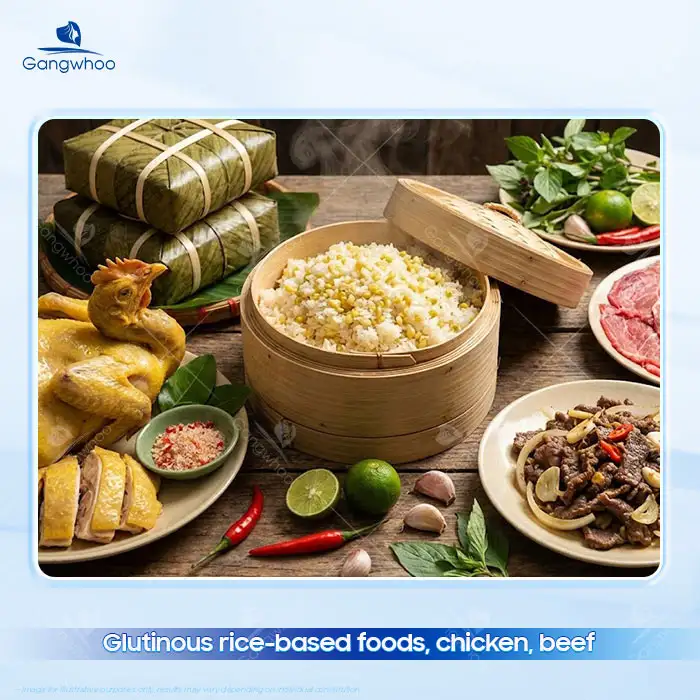
Glutinous rice, chicken, beef
After surgery, avoid foods like glutinous rice, chicken, and beef
These foods can cause itching, pigmentation, or delayed healing of the incision.
Seafood (shrimp, crab, squid)
May cause irritation, redness, or itching in sensitive individuals.
Water spinach
Stimulates excessive fibrous tissue growth, leading to keloid or dark scars.
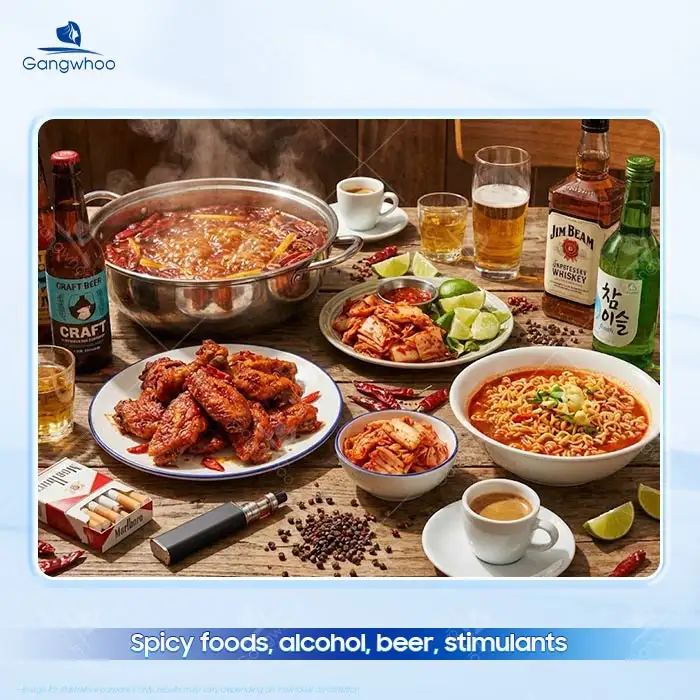
Spicy foods, alcohol, stimulants
Spicy foods, alcohol, and stimulants should also be avoided
These dilate blood vessels, increase inflammation, and prolong abdominal swelling.
High-fat foods, fast food
May cause fat accumulation and reduce liposuction effectiveness.
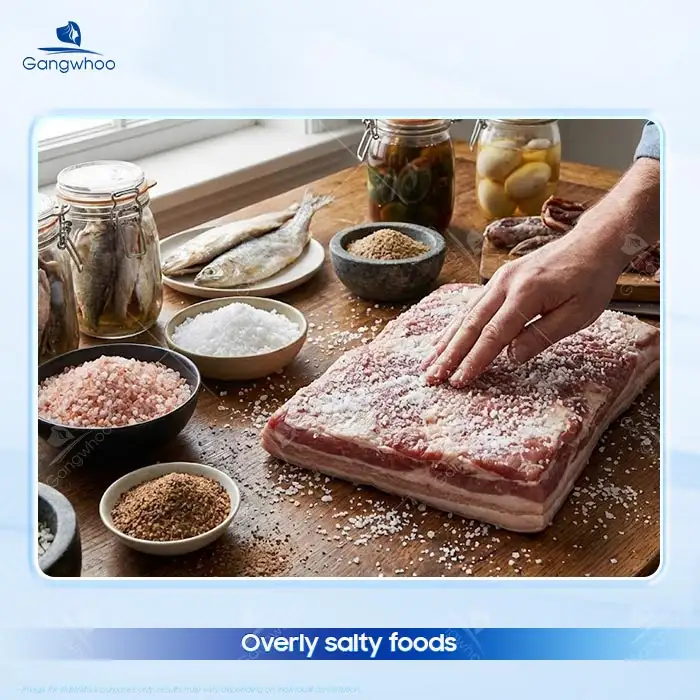
Excessively salty foods
Excessively salty foods should also be avoided after surgery
These can cause water retention, prolong swelling, and create a heavy sensation.
The restriction period is usually 2–4 weeks depending on individual healing. Some foods, like water spinach, should be avoided longer, approximately 6–8 weeks.
Proper Post-Abdominal Liposuction Care
In addition to diet, overall care is very important for optimal results. Doctor-recommended instructions include:
Wear the compression garment for the recommended duration
The garment helps the abdominal skin adhere to the underlying tissue, creating a smooth contour. (First 2 weeks: wear 24/7 – Weeks 3–6: wear 8–12 hours/day)
Light walking early on
Light walking promotes circulation and reduces the risk of fluid accumulation.
Avoid strenuous activity in the first 2–3 weeks
No strong abdominal bending or heavy lifting.
Keep the surgical area clean
Avoid water contact for the first 48 hours and change dressings as instructed.
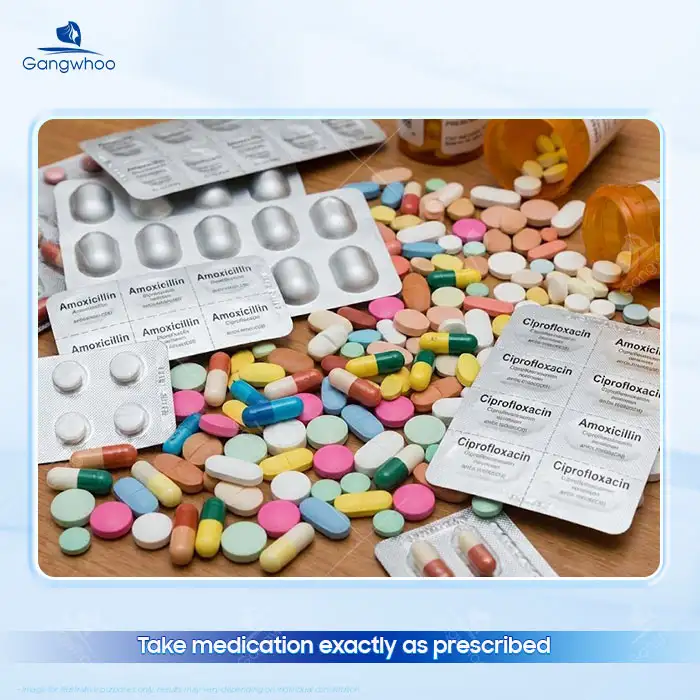
Take medications as prescribed
Follow medications as prescribed by your specialist
Antibiotics – pain relief – anti-inflammatory medications to prevent complications.
Monitor your body and attend follow-ups
If any abnormalities occur, such as redness, increased pain, or fluid leakage, consult your doctor immediately.
At Gangwhoo, patients undergoing Lipo Ultrasound liposuction often recover faster because this technology only targets fat tissue without damaging surrounding tissues, making post-operative care much easier.
Conclusion – Doctor’s Advice
“What to eat after liposuction,” “what to eat after abdominal liposuction,” and “post-liposuction diet” are all crucial factors determining recovery speed and abdominal appearance. Combining a scientific diet with proper care ensures a flat, smooth, and firm abdomen with long-lasting results.
If you wish to have a direct consultation, check your recovery status, or receive detailed guidance on care, you can visit Gangwhoo Cosmetic Hospital for full, medically accurate support.