When Does a Bulky Nasal Tip After Rhinoplasty Return to Normal?
Ngoc Ninh
Rhinoplasty
Asked: 30/11/2025
After rhinoplasty, if I notice that the nasal tip looks larger, is this a normal condition? Are there any warning signs of abnormalities that I should pay attention to?
Hello, thank you for trusting the Doctor with your question. After rhinoplasty, many patients feel concerned when they notice that the nasal tip appears bulky or remains swollen for many days. This can be a normal condition; however, in some cases, it may be a warning sign of abnormalities that require close monitoring. The Doctor will analyze each aspect in detail to help put your mind at ease.
What are the causes of a bulky nasal tip after rhinoplasty?
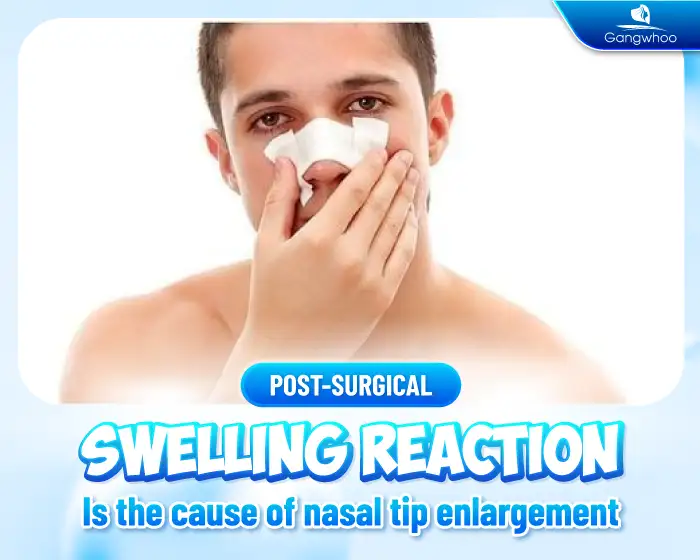
The Doctor explains that the main cause of a bulky nasal tip after rhinoplasty usually comes from postoperative soft tissue swelling.
During rhinoplasty, the surgeon must dissect the tissues and insert cartilage into the nose. This process can traumatize the capillaries and soft tissues around the nasal tip, leading to edema. Therefore, swelling of the nasal tip in the first few days after rhinoplasty is a completely normal physiological response.
In addition, several other factors may also cause the nasal tip to appear larger after rhinoplasty:
Individual constitution: Some people are more prone to swelling, resulting in a longer recovery time and making the nasal tip appear larger than usual.
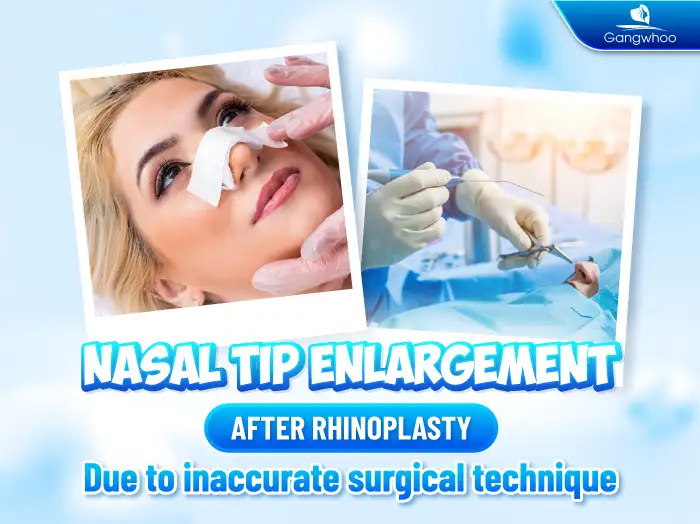
Surgical technique: If tissue dissection is not precise or the cartilage is not placed in proper balance, it can create pressure on the tissues, causing prolonged swelling of the nasal tip after surgery.
Postoperative care: Failure to follow dietary restrictions, frequent touching or manipulating the nose, or not adhering strictly to the doctor’s instructions can all increase swelling and prolong the condition of a bulky nasal tip after rhinoplasty.
In summary, most cases of a bulky nasal tip after rhinoplasty result from postoperative tissue swelling; however, careful monitoring is needed to distinguish between normal reactions and abnormal signs.
Cases where a bulky nasal tip after rhinoplasty is considered normal
The nasal tip is swollen only during the first 7–14 days and then gradually subsides.
The skin color of the nasal area remains healthy and pink, with no widespread bruising or signs of necrosis.
Swelling is mainly limited to the soft tissues and is not accompanied by severe pain.
Follow-up examinations and imaging show no cartilage displacement or fluid accumulation.
In these cases, patience is key. By following postoperative care instructions and taking medications as prescribed, the nasal shape will stabilize within 1–3 months, and the nasal tip will gradually become more refined.
Cases where a bulky nasal tip after rhinoplasty is an abnormal sign
If you notice any of the following signs, you should visit a medical facility or see your surgeon immediately for evaluation:
A swollen nasal tip accompanied by redness, warmth, or discharge, which may indicate infection.
Persistent pain and swelling of the nasal tip that does not improve even after 2–3 weeks.
A crooked nose, shiny red nasal tip, or signs suggesting a risk of cartilage exposure.
Hematoma or fluid accumulation within the nasal cavity, causing nasal deformity.
These are serious complications that require timely medical intervention to avoid long-term effects on both nasal aesthetics and overall health.
Postoperative care notes to prevent complications after rhinoplasty
To minimize the risk of a bulky nasal tip and prevent complications, you should keep in mind the following:
Take medications and attend follow-up visits exactly as scheduled by your doctor.
Apply cold compresses during the first 48 hours, then switch to warm compresses to help reduce swelling more quickly.
Avoid foods that may increase the risk of hypertrophic scarring or prolonged swelling, such as chicken meat, glutinous rice, seafood, and water spinach.
Do not touch, squeeze, or apply pressure to the nose, and avoid sleeping on your side or face-down for at least the first month.
Keep the surgical site clean, change dressings, and disinfect as instructed.
Attend regular follow-up appointments so the doctor can monitor your recovery and address any abnormalities early.
Doctor’s advice: After rhinoplasty, nasal tip swelling is a common phenomenon and in most cases resolves on its own. However, it is important to clearly distinguish between normal postoperative reactions and signs of complications in order to respond promptly. If you still have concerns or wish to be examined directly by a doctor, Gangwhoo Cosmetic Hospital is always ready to accompany you with a team of highly experienced specialists and internationally standardized procedures.
Hello Doctor, I am considering rhinoplasty to improve the shape of my nose because my nose is quite low and the tip is slightly wide, making my overall facial features look less harmonious. However, after researching, I found that there are many cosmetic hospitals and spas advertising rhinoplasty services, so I am quite confused about […]
I’ve heard that nowadays there are Nano breast implants without identification chips, which are different from implants with embedded chips. Doctor, could you explain exactly what Nano implants without chips are, what their advantages and disadvantages are, and whether I should choose this type? I’m a bit concerned about having a “chip” inside my body, […]
Doctor, after my rhinoplasty, I noticed that the tip of my nose feels a bit hard compared to normal, and it feels quite uncomfortable. I don’t know what causes this or whether it is a normal condition or an abnormal sign that requires a medical check-up. If this is a normal condition, what should I […]
I am interested in endoscopic breast augmentation because I’ve heard it is gentler than traditional methods. However, I am still a bit afraid of pain and concerned about risks after surgery. Doctor, could you tell me whether endoscopic breast augmentation is painful, what the procedure involves, and what should be noted after surgery to recover […]
Hello Doctor, I just underwent a rhinoplasty and am very concerned about post-operative care. Could you please advise me on the correct and scientific way to care for my nose after surgery so that it recovers quickly, reduces swelling and pain, and avoids complications? Additionally, I would like to know any important precautions during the […]
I am learning about nasal surgery and have seen many people share that rhinoplasty not only enhances beauty but also helps the face look more refined and boosts confidence. So, doctor, could you please share the practical benefits of rhinoplasty, and whether it is worth considering if my nose is slightly low but still balanced?