Nasal Tip Hardness After Rhinoplasty: Causes and Treatment Options
Quoc Dung
Rhinoplasty
Asked: 07/05/2026
Doctor, after my rhinoplasty, I noticed that the tip of my nose feels a bit hard compared to normal, and it feels quite uncomfortable. I don’t know what causes this or whether it is a normal condition or an abnormal sign that requires a medical check-up. If this is a normal condition, what should I do to help the nasal tip become soft again? I hope the doctor can explain this for me.
Hello, thank you for your question. The condition of a hard nasal tip after rhinoplasty is a very common concern among many clients after nose surgery. The doctor will explain in detail to help you better understand this condition, as well as its causes and effective treatment methods, so you can feel more reassured during the recovery process.
What Is Nasal Tip Hardness After Rhinoplasty?
A hard nasal tip after rhinoplasty is a normal sign during the initial postoperative period
A hard nasal tip after rhinoplasty is a condition in which the nasal tip feels firm and harder than usual when touched, lacking the natural softness it had before surgery. This is a common reaction after rhinoplasty, especially when artificial cartilage or autologous cartilage is used for reshaping, building the nasal column, or covering the nasal tip.
This condition usually appears during the early postoperative stage, when the nasal tissues, cartilage, and skin are still recovering and have not yet regained their softness and elasticity. A hard nasal tip may be a normal sign during the early recovery phase, but sometimes it can also indicate other issues if it persists and is accompanied by abnormal symptoms.
Causes of Nasal Hardness After Rhinoplasty
There are many medical causes that can lead to a hard nasal tip after rhinoplasty, stemming from factors related to biological tissue reactions, the characteristics of cartilage materials, and surgical techniques. Below is a detailed scientific analysis of the most common causes:
Inflammatory Response and Soft Tissue Swelling After Surgery
Rhinoplasty is an invasive procedure involving the soft tissues of the nose, causing direct trauma to small blood vessels, connective tissue, nerves, and skin. Acute inflammatory reactions at the surgical site are a natural protective mechanism to isolate injury and activate tissue repair.
Inflammatory reactions and soft tissue swelling may be the cause of nasal tip hardness
Acute inflammation leads to increased capillary permeability, allowing plasma and white blood cells to leak into interstitial tissues, causing swelling around the implant cartilage.
Swelling causes tissue tension, increasing internal tissue pressure and making the nasal tip feel hard when touched.
Inflammatory reactions may last from several days to several weeks depending on the extent of surgery, the individual’s body condition, and postoperative care.
Mechanical Properties and Structure of Implant Cartilage Materials
Artificial cartilage: Silicone, ePTFE, or Medpor implants have a firm structure designed to maintain the nasal bridge and tip shape long-term. Therefore, when placed into relatively elastic soft tissues such as nasal tip skin, the difference in hardness can create a firm and unnatural feeling.
Autologous cartilage: Although highly regarded for compatibility and softness, rib cartilage is very hard and less elastic compared to ear cartilage or septal cartilage. Using rib cartilage for the nasal bridge or tip support can also initially cause a hard sensation.
The physical properties of each cartilage type directly affect how firm or soft the nasal tip feels when touched.
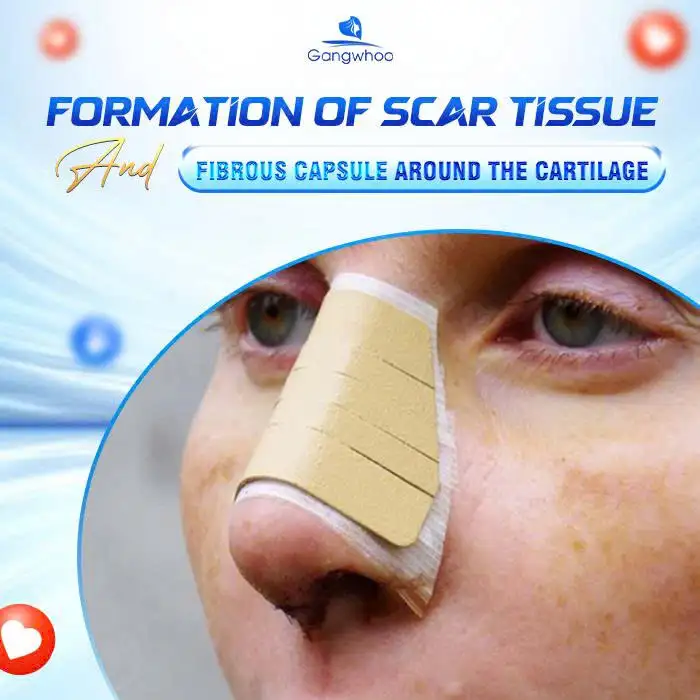
Scar Tissue and Fibrous Capsule Formation Around the Cartilage
A hard nasal tip forms due to scar tissue and fibrous capsule formation around the cartilage
After cartilage is placed into a new position, the body activates wound-healing responses, including fibroblast proliferation and collagen synthesis to create new connective tissue around the cartilage.
This scar tissue or fibrous capsule functions to stabilize the implant and prevent displacement or damage from movement.
However, this tissue layer may become dense and less elastic, causing the nasal tip to lose softness and feel firmer than usual, especially during the first 1–3 months after surgery.
The degree of scarring and eventual softness depend on the individual’s body condition, surgical technique, and postoperative care.
Thin Nasal Tip Skin and Its Effect on Hardness Sensation
The skin of the nasal tip is relatively thin and lacks a thick fat cushion. If the skin is too thin, the implant cartilage may stretch the skin, reducing elasticity in the nasal tip area.
Thin skin increases the risk of implant visibility, redness at the nasal tip, and a hard sensation when touched because the skin cannot provide smooth soft-tissue coverage.
Choosing the appropriate surgical technique and cartilage type according to skin thickness is an important factor in minimizing hardness and improving aesthetics.
Surgical Technique Factors Affecting Nasal Tip Hardness
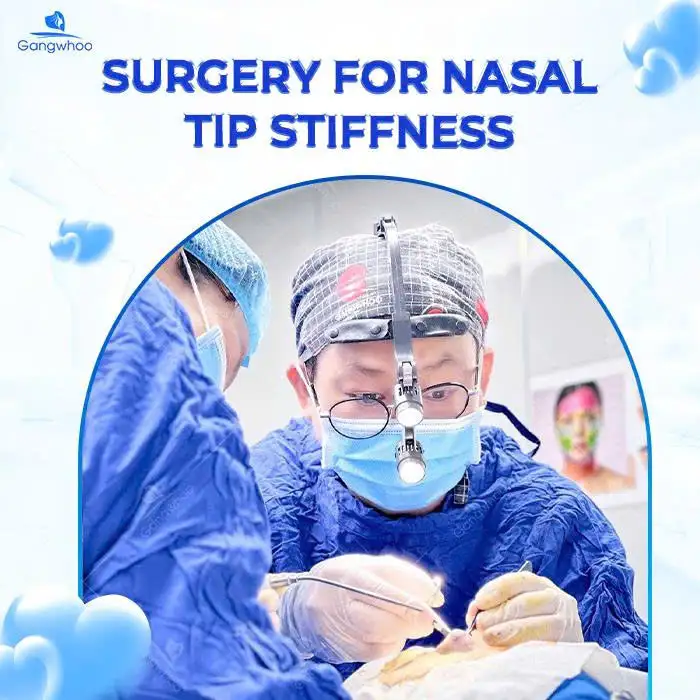
Proper surgical technique helps minimize nasal tip hardness after intervention
Proper techniques help place the cartilage in the correct position and tissue layer, balancing the skin and cartilage to reduce uneven pressure on tissues and minimize hardness reactions.
Conversely, improper techniques such as placing the implant too high, excessive compression, insufficient soft tissue coverage, or using cartilage with unsuitable size or hardness can cause tissue tension, injury, prolonged pain, and hardness.
In addition, rough surgical manipulation may damage sensory nerve structures, increasing feelings of hardness, numbness, and pain at the nasal tip.
If the hardness gradually decreases within 1–3 months, it is usually not a major concern. However, if pain and hardness persist or are accompanied by abnormal signs, careful examination is necessary.
How to Treat a Hard Nasal Tip After Rhinoplasty
When experiencing a hard nasal tip after rhinoplasty, proper treatment and care will help minimize discomfort, promote soft tissue recovery, and prevent serious complications. Below are medically based methods for effectively managing nasal tip hardness:
Proper Warm Compresses to Soften Tissue
After the acute inflammatory phase (usually the first 48–72 hours after surgery), when tissues become more stable, warm compresses can mechanically support blood circulation in the nasal tip area.
Proper warm compresses help soften tissues and improve blood circulation in the nasal tip area
Use a clean towel soaked in warm water at approximately 37–40°C, wring it gently, and apply it to the nasal tip for 10–15 minutes, 2–3 times daily.
The goal is to improve blood circulation, promote soft tissue regeneration, enhance skin elasticity, and reduce hardness caused by swelling or scar tissue.
Avoid using hot water or applying compresses for too long, as this may cause burns or irritation to delicate healing skin.
Warm compresses also help relieve mild pain and increase comfort while supporting nerve recovery in the nasal tip area.
Perform Scientific Nasal Massage According to Doctor’s Instructions
Once the wound has healed and the soft tissue becomes less sensitive, the doctor may guide you through specialized massage techniques aimed at:
Scientific nasal massage under guidance is also a way to reduce swelling and bruising
Stimulating the breakdown of excess collagen connections, softening scar tissue and fibrous tissue around the implant.
Supporting lymphatic circulation, reducing chronic swelling, and improving skin elasticity.
Helping the cartilage and soft tissue adapt and coordinate better, creating a more natural feeling for the nasal tip.
Gentle massage techniques may include rubbing and lightly stroking the nasal bridge and tip with the thumb and index finger from bottom to top and from inside outward. Each session should last 5–10 minutes, 2–3 times daily. Massage must be performed correctly to avoid tissue damage or implant displacement.
Limit and Avoid Strong Mechanical Impact on the Nasal Tip
Throughout the recovery process, the skin and supporting structures remain highly sensitive and can be easily damaged by excessive pressure.
Avoid pressing, squeezing, bumping, or scratching the nasal tip to prevent hematoma, implant displacement, or tissue injury.
When sleeping, keep your head elevated or sleep on a side that places less pressure on the nose to reduce swelling.
Avoid wearing eyeglasses or contact lenses that put pressure on the nasal bridge for at least the first 4 weeks.
Keeping the nasal tip “undisturbed” creates favorable conditions for soft tissue regeneration and faster reduction of hardness.
Strictly Follow Medication Instructions and Attend Regular Follow-Up Visits
Proper medication use as prescribed by the doctor is essential for reducing inflammation, swelling, and postoperative pain:
Commonly prescribed medications include antibiotics to prevent infection, pain relievers, nonsteroidal anti-inflammatory drugs (NSAIDs), or low-dose corticosteroids to control inflammatory reactions.
Do not stop medications or increase dosages on your own, as this may disrupt recovery and prolong nasal tip hardness.
Attend all follow-up appointments so the doctor can monitor recovery progress, assess tissue firmness, and provide timely support if abnormalities are detected.
Proper Nutrition to Support Soft Tissue Recovery
Nutrition plays a key role in tissue regeneration:
Supplement foods rich in vitamin C (oranges, grapefruit, strawberries), vitamin E (sunflower seeds, almonds), and essential amino acids to support collagen synthesis and skin recovery.
Protein from poultry, fish, eggs, and legumes also supports new cell development.
Drink enough water to maintain hydration and promote metabolic processes.
Avoid foods that may cause inflammation or poor scarring, such as sticky rice, beef, water spinach, or seafood for at least 4 weeks.
Seek Medical Consultation and Treatment if Nasal Tip Hardness Persists or Abnormal Signs Appear
If after the first 3 months the hardness does not improve, or if any of the following symptoms appear:
Severe pain, prolonged redness, swelling, or spreading inflammation.
Pus discharge, ulceration, or redness at the nasal tip.
Nasal deformity, implant collapse, or signs of tissue necrosis at the nasal tip.
You should proactively visit a specialized cosmetic medical facility for clinical evaluation, ultrasound, or CT scan if necessary to determine the exact cause. Depending on the condition, the doctor may prescribe fluid drainage, stronger antibiotics, or in some cases revision surgery.
In summary, a hard nasal tip after rhinoplasty is a common condition caused by the healing response and the characteristics of implant cartilage. Most cases gradually improve and disappear once the nose stabilizes within 1–3 months. You should follow postoperative care instructions carefully, attend regular follow-ups, and avoid strong impact on the nose during this period.
If you still have questions or need more detailed consultation for your specific case, do not hesitate to contact the doctor or Gangwhoo Cosmetic Hospital for direct support from the expert team!
Wishing you a soft, naturally beautiful, and healthy nose soon!
Hello Doctor, I am considering rhinoplasty to improve the shape of my nose because my nose is quite low and the tip is slightly wide, making my overall facial features look less harmonious. However, after researching, I found that there are many cosmetic hospitals and spas advertising rhinoplasty services, so I am quite confused about […]
I’ve heard that nowadays there are Nano breast implants without identification chips, which are different from implants with embedded chips. Doctor, could you explain exactly what Nano implants without chips are, what their advantages and disadvantages are, and whether I should choose this type? I’m a bit concerned about having a “chip” inside my body, […]
I am interested in endoscopic breast augmentation because I’ve heard it is gentler than traditional methods. However, I am still a bit afraid of pain and concerned about risks after surgery. Doctor, could you tell me whether endoscopic breast augmentation is painful, what the procedure involves, and what should be noted after surgery to recover […]
Hello Doctor, I just underwent a rhinoplasty and am very concerned about post-operative care. Could you please advise me on the correct and scientific way to care for my nose after surgery so that it recovers quickly, reduces swelling and pain, and avoids complications? Additionally, I would like to know any important precautions during the […]
I am learning about nasal surgery and have seen many people share that rhinoplasty not only enhances beauty but also helps the face look more refined and boosts confidence. So, doctor, could you please share the practical benefits of rhinoplasty, and whether it is worth considering if my nose is slightly low but still balanced?
Doctor, my mother is 50 years old this year. She feels very self-conscious because her nasal bridge is low and slightly wide. I would like to ask whether older adults should undergo rhinoplasty, whether the surgery affects health, and at this age, which method would be the safest?