What are the possible consequences of S-Line rhinoplasty? What should be noted?
Quynh Anh
Rhinoplasty
Asked: 31/01/2026
I’ve heard that the S-Line nose shape looks natural and soft, but some people experience complications after S-Line rhinoplasty such as deviation or redness and shininess. So in reality, what are the risks of this nose shape, and what should I pay attention to beforehand to avoid complications?
Hello, many people, when learning about the S-Line rhinoplasty method, often wonder whether S-Line rhinoplasty has any consequences, whether it is truly safe, and what should be noted before undergoing the procedure. This is a completely reasonable concern, because rhinoplasty is not merely a cosmetic intervention but also directly affects the soft tissue structure, cartilage, and nasal respiratory function. The doctor will explain everything in detail for you from a medical perspective.
What consequences can occur after S-Line rhinoplasty?
By nature, S-Line rhinoplasty is a technique that reshapes the entire nasal structure to create a naturally soft, curved profile in proportion to the face. However, if performed incorrectly, using poor-quality materials, or without proper postoperative care, some consequences of S-Line rhinoplasty may occur as follows:
Undergoing S-Line rhinoplasty at low-quality facilities can easily cause nasal bridge exposure or redness at the nasal tip
Infection and prolonged inflammation: This is the most common complication, usually caused by a non-sterile surgical environment or insufficient surgeon expertise. Bacterial invasion can lead to redness, pain, and swelling of the nose, and may even cause tissue necrosis if not treated promptly.
Exposed nasal bridge or redness and shininess of the nasal tip: When the implant material (usually synthetic cartilage) is placed too close to the skin or when the nasal skin is thin, over time the nasal tip may become shiny, red, or the bridge may become exposed, even leading to skin perforation. This is a relatively serious consequence of S-Line rhinoplasty, often occurring when autologous cartilage is not used to cover the nasal tip.
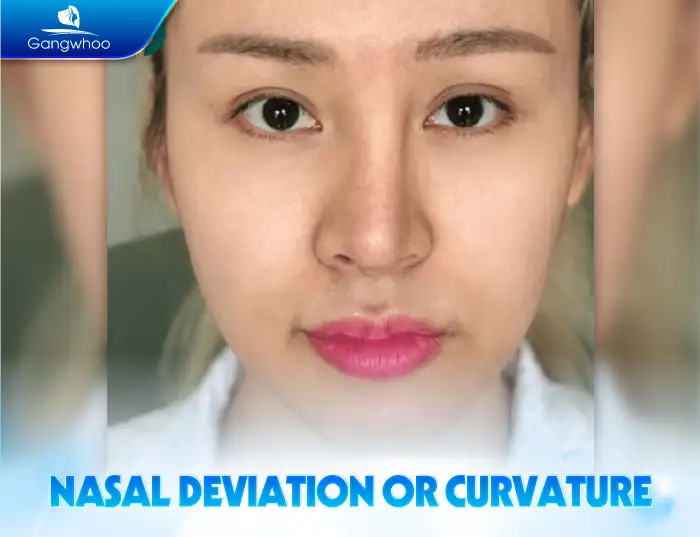
Deviation of the nasal bridge or nasal asymmetry: If the nasal framework is not firmly constructed or the cartilage shifts during the recovery process, the nose may tilt, deviate, or become disproportionate to the face.
Deviation and nasal asymmetry are also possible consequences
Nasal tip contracture: In some cases, due to a tendency for fibrotic scarring or tissue reaction to synthetic cartilage, the nasal tip may shorten and become deformed.
Sensory disturbances in the nasal area: After S-Line rhinoplasty, some patients may experience numbness or reduced sensation at the nasal tip. This condition is usually temporary, but if major nerves are damaged, sensation may not fully recover.
In summary, the consequences of S-Line rhinoplasty largely depend on the surgeon’s technique, sterile conditions, and individual physiology. Severe complications are rare but can still occur if you choose an unsafe cosmetic facility or a surgeon without sufficient expertise.
Factors that determine the safety level of S-Line rhinoplasty
To minimize the consequences of S-Line rhinoplasty, there are four key factors that determine the safety of a rhinoplasty procedure:
A perfectly soft and beautiful nose shape immediately after surgery when performed at a reputable facility
Surgeon’s skill and expertise: A rhinoplasty surgeon must have deep anatomical knowledge, clearly understanding the nasal cartilage structure, soft tissues, blood vessels, and facial anatomy. A skilled surgeon not only enhances aesthetics but also ensures proper nasal breathing and circulation.
Rhinoplasty techniques and technology: Modern S-Line rhinoplasty often combines autologous cartilage (ear cartilage, septal cartilage) to cover the nasal tip, reducing the risk of redness and contracture. The 4D structural rhinoplasty technology at Gangwhoo Cosmetic Hospital is one of the advanced techniques that helps build a stable nasal framework, create a nose shape proportional to the face, and minimize postoperative complications.
Cartilage materials: High-quality cartilage with good biocompatibility, such as Softxil cartilage, Gore-Tex, or autologous cartilage, helps reduce the risk of allergic reactions, rejection, and infection.
Proper postoperative care: Nasal hygiene, medication adherence, and scheduled follow-up visits play an equally important role. If postoperative care is neglected, even with a highly skilled surgeon, complications may still occur due to infection or cartilage displacement.
Important notes when undergoing S-Line rhinoplasty
Before deciding to undergo S-Line rhinoplasty, you should note the following important points to ensure safe and beautiful results:
Rhinoplasty performed with the correct technique and method ensures stable and long-lasting results
Thorough preoperative examination: A specialist in aesthetic surgery should evaluate your nasal structure, skin, cartilage, and facial shape to select the most suitable method. You should not choose a nose shape based solely on trends while ignoring overall facial harmony.
General health check: Individuals with cardiovascular diseases, diabetes, or high blood pressure need to have these conditions well controlled before surgery.
Follow medical instructions: Avoid anticoagulant medications, alcohol consumption, and smoking at least 7–10 days before and after surgery.
Choose a reputable facility: The procedure should be performed at a certified cosmetic hospital with sterile operating rooms and licensed surgeons.
At Gangwhoo Cosmetic Hospital, the team of board-certified plastic surgeons has more than 15 years of experience in S-Line rhinoplasty, applying advanced technologies such as 4D structural rhinoplasty and full autologous costal cartilage rhinoplasty to minimize complications and deliver natural, long-lasting results.
S-Line rhinoplasty is a safe technique when performed according to proper protocols and by highly qualified surgeons. However, to avoid unwanted consequences of S-Line rhinoplasty, you should choose a reputable hospital such as Gangwhoo, where there are comprehensive facilities, advanced technology, and strict sterile control procedures. If you need personalized consultation for your nasal condition, the doctors at Gangwhoo are always ready to support, examine, and provide the most suitable solution. “`
I’ve heard that nowadays there are Nano breast implants without identification chips, which are different from implants with embedded chips. Doctor, could you explain exactly what Nano implants without chips are, what their advantages and disadvantages are, and whether I should choose this type? I’m a bit concerned about having a “chip” inside my body, […]
Doctor, after my rhinoplasty, I noticed that the tip of my nose feels a bit hard compared to normal, and it feels quite uncomfortable. I don’t know what causes this or whether it is a normal condition or an abnormal sign that requires a medical check-up. If this is a normal condition, what should I […]
I am interested in endoscopic breast augmentation because I’ve heard it is gentler than traditional methods. However, I am still a bit afraid of pain and concerned about risks after surgery. Doctor, could you tell me whether endoscopic breast augmentation is painful, what the procedure involves, and what should be noted after surgery to recover […]
Hello Doctor, I just underwent a rhinoplasty and am very concerned about post-operative care. Could you please advise me on the correct and scientific way to care for my nose after surgery so that it recovers quickly, reduces swelling and pain, and avoids complications? Additionally, I would like to know any important precautions during the […]
I am learning about nasal surgery and have seen many people share that rhinoplasty not only enhances beauty but also helps the face look more refined and boosts confidence. So, doctor, could you please share the practical benefits of rhinoplasty, and whether it is worth considering if my nose is slightly low but still balanced?
Doctor, my mother is 50 years old this year. She feels very self-conscious because her nasal bridge is low and slightly wide. I would like to ask whether older adults should undergo rhinoplasty, whether the surgery affects health, and at this age, which method would be the safest?