What Is 4D Structural Autologous Rhinoplasty? How Is It Different From Other Rhinoplasty Methods?
Quang Huy
Rhinoplasty
Asked: 03/12/2025
What is 4D structural autologous rhinoplasty? Compared to other rhinoplasty techniques, what are its advantages and limitations? I am currently researching this method.
Hello, the doctor understands that you are interested in 4D structural autologous rhinoplasty—a fairly advanced technique that has been attracting significant attention from many clients recently. To help you understand more clearly, the doctor will address each of your questions in detail, in a way that is easy to understand while still ensuring medical accuracy.
What is 4D structural autologous rhinoplasty?
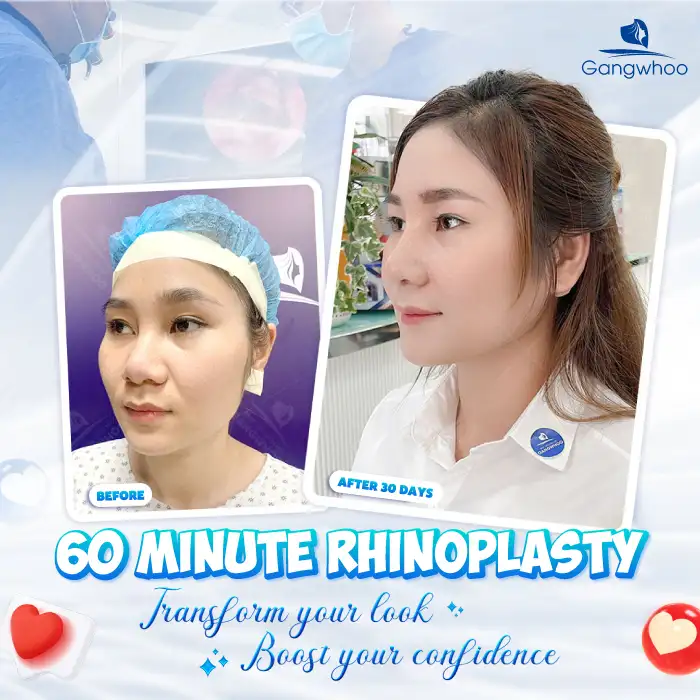
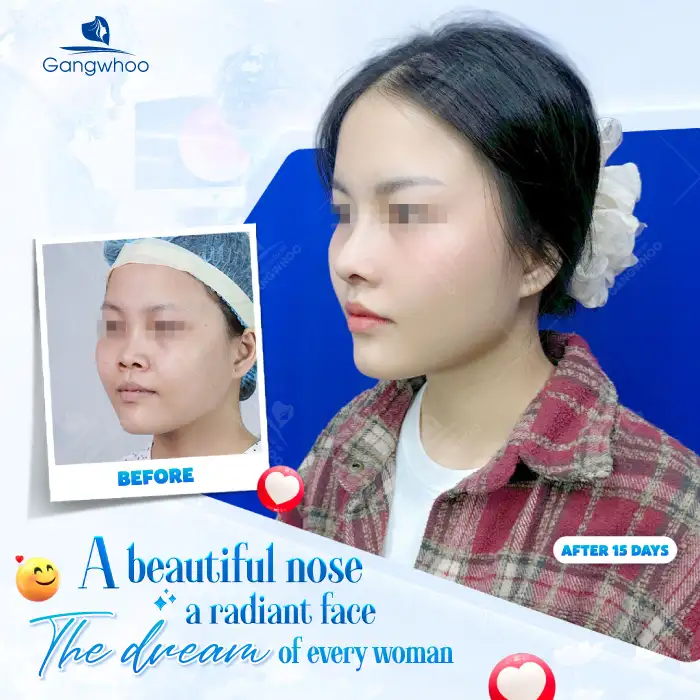
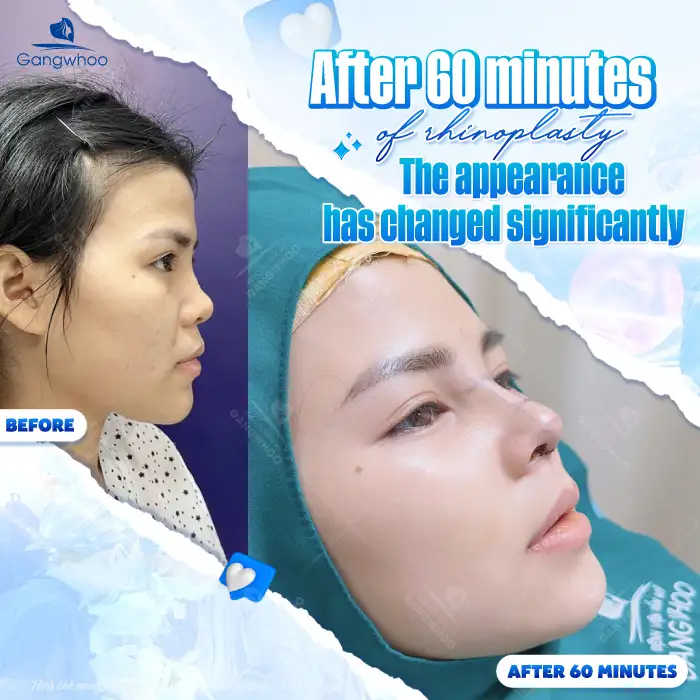
4D structural autologous rhinoplasty is a comprehensive nasal reconstruction technique in which the doctor uses autologous cartilage from your own body (commonly septal cartilage, auricular cartilage, or costal cartilage) to restructure the nose. The special feature of this method is that it does not simply involve placing an implant to raise the nasal bridge; instead, the doctor reconstructs the nasal framework, rebuilds the columella, reshapes the nasal tip, and improves the entire nasal structure, resulting in a more refined, harmonious, and natural-looking nose.
It is called “4D” because the result is not only beautiful from a single angle but also balanced and soft from multiple perspectives—front, side, oblique, and in overall facial harmony. This represents a significant advancement compared to traditional rhinoplasty techniques, which mainly focus on increasing the height of the nasal bridge.
Advantages and disadvantages of 4D structural autologous rhinoplasty
Advantages:
Because it uses entirely autologous cartilage, biocompatibility is nearly absolute, minimizing the risk of rejection, infection, or redness of the nasal tip.
The nasal shape is maintained long term, remains stable, and is less likely to shift or deviate over time.
The nasal tip is naturally covered and protected by autologous cartilage, significantly reducing the risk of implant exposure, redness, or cartilage displacement—common complications seen with methods relying solely on synthetic implants.
The aesthetic outcome appears soft and natural, without stiffness or an artificial look.
Disadvantages:
Because cartilage must be harvested from your own body, the surgery is more complex and requires a highly skilled and experienced doctor.
The procedure time is longer than rhinoplasty using synthetic implants.
The cost is generally higher than that of conventional rhinoplasty methods.
How is 4D structural autologous rhinoplasty different from conventional methods?
The biggest difference lies in the materials used and the surgical technique. While conventional methods mainly use synthetic implants (such as silicone or ePTFE) to elevate the nasal bridge, 4D structural autologous rhinoplasty uses cartilage
from your own body, offering greater safety and a more natural result.
In addition, instead of only raising the nasal bridge, the doctor intervenes in the entire nasal structure: reconstructing the columella, reshaping the nasal tip, balancing the nostrils, and harmonizing the nose with overall facial features. As a result, the postoperative outcome is not merely a “higher nose” but a “nose with ideal proportions,” capable of addressing even complex cases such as upturned noses, deviated septums, or noses damaged by previous surgeries.
Who is suitable for 4D structural autologous rhinoplasty?
Individuals with complex nasal deformities such as upturned noses, short noses, deviated noses, or noses that have failed previous surgeries.
People with thin nasal skin who are at higher risk of complications when using synthetic implants.
Those who desire a long-lasting, highly natural nasal result.
Individuals who prioritize biological safety and wish to minimize the risk of rejection or infection.
Above is all the information to help you understand what 4D structural autologous rhinoplasty is, along with its advantages, disadvantages, differences, and suitable candidates. If you are still unsure whether this method is appropriate for you, you should visit Gangwhoo Cosmetic Hospital directly to be examined by a specialist, who can then provide the most accurate and personalized treatment plan for you.
Hello Doctor, I am considering rhinoplasty to improve the shape of my nose because my nose is quite low and the tip is slightly wide, making my overall facial features look less harmonious. However, after researching, I found that there are many cosmetic hospitals and spas advertising rhinoplasty services, so I am quite confused about […]
I’ve heard that nowadays there are Nano breast implants without identification chips, which are different from implants with embedded chips. Doctor, could you explain exactly what Nano implants without chips are, what their advantages and disadvantages are, and whether I should choose this type? I’m a bit concerned about having a “chip” inside my body, […]
Doctor, after my rhinoplasty, I noticed that the tip of my nose feels a bit hard compared to normal, and it feels quite uncomfortable. I don’t know what causes this or whether it is a normal condition or an abnormal sign that requires a medical check-up. If this is a normal condition, what should I […]
I am interested in endoscopic breast augmentation because I’ve heard it is gentler than traditional methods. However, I am still a bit afraid of pain and concerned about risks after surgery. Doctor, could you tell me whether endoscopic breast augmentation is painful, what the procedure involves, and what should be noted after surgery to recover […]
Hello Doctor, I just underwent a rhinoplasty and am very concerned about post-operative care. Could you please advise me on the correct and scientific way to care for my nose after surgery so that it recovers quickly, reduces swelling and pain, and avoids complications? Additionally, I would like to know any important precautions during the […]
I am learning about nasal surgery and have seen many people share that rhinoplasty not only enhances beauty but also helps the face look more refined and boosts confidence. So, doctor, could you please share the practical benefits of rhinoplasty, and whether it is worth considering if my nose is slightly low but still balanced?