Hello, after nose augmentation surgery, diet plays an extremely important role in the recovery process. Many patients wonder, “Can you eat hu tieu after nose augmentation?” because this is a familiar, easy-to-digest, and appealing dish. I will help you clearly understand whether hu tieu can be eaten after nose augmentation, as well as provide guidance on proper nutrition and care to help the nose heal faster.
Can you eat hu tieu after nose augmentation?
The answer is YES—you can eat hu tieu after nose augmentation, but you need to pay attention to the timing and preparation method. During the first 2–3 days after surgery, the nose is still swollen and the wound has not yet stabilized, so doctors usually recommend thin porridge or soft soups that are easy to digest and help minimize facial muscle movement. After this period, you may gradually switch to soft hu tieu with minimal oil and seasoning.
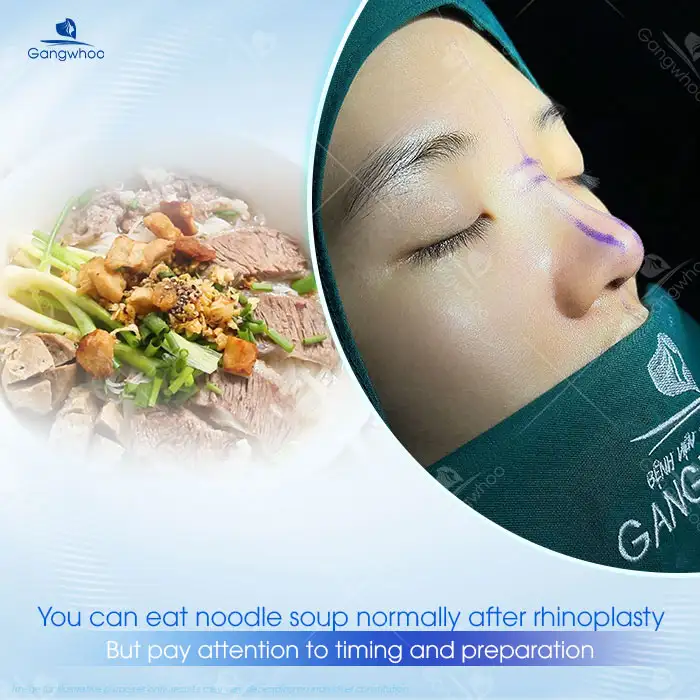
From a medical perspective, whether you can eat hu tieu after nose augmentation also depends on the ingredients of the dish. Hu tieu provides a good amount of energy and contains carbohydrates, protein from lean meat, and fiber from vegetables, which help supply the necessary nutrients for tissue regeneration after surgery. However, you should avoid adding chili, pepper, fried shallots, or rich fatty broth, as these ingredients can cause irritation, increase the risk of inflammation, or prolong recovery time.
In summary, after about 3–5 days, when the wound has dried and stabilized, you can eat hu tieu, but you should choose a light, mildly seasoned, non-spicy version to ensure the safety of your newly shaped nose.
Benefits of eating hu tieu for health after nose augmentation
Hu tieu is a dish with relatively balanced nutritional value. When prepared properly, it can offer several benefits during post-operative recovery, including:
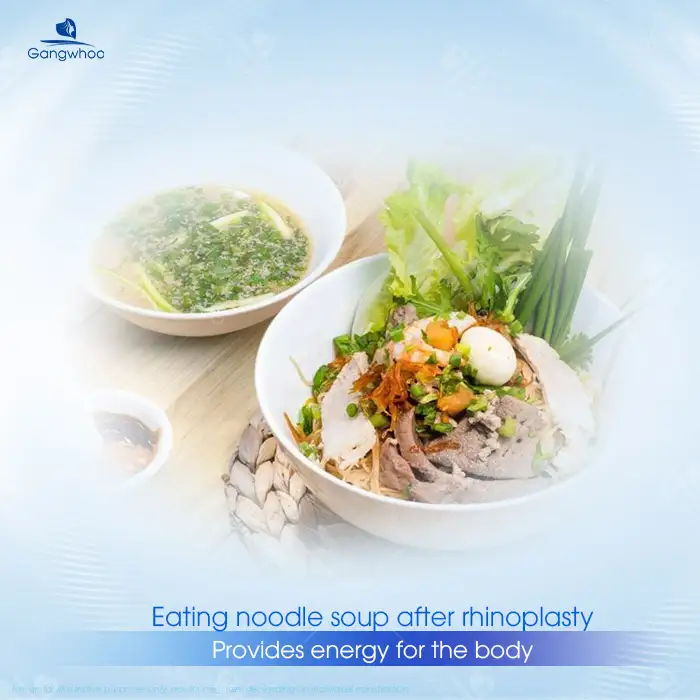
- Providing energy: Hu tieu noodles made from rice contain carbohydrates that help the body recover quickly after anesthesia or sedation.
- Supplying protein: Lean meat, shrimp, or eggs help promote tissue regeneration and faster wound healing.
- Providing vitamins and minerals: When eaten with bean sprouts, scallions, or leafy greens, it helps boost immunity and reduce the risk of inflammation.
- Easy to digest: Especially suitable in the early stage when the body is still weak after surgery.
Therefore, including hu tieu in your post–nose augmentation diet is reasonable, as long as you properly adjust the amount of oil and seasoning.
Notes when preparing hu tieu dishes
To ensure that hu tieu becomes a healing-supportive food rather than a source of irritation, doctors recommend keeping the following points in mind:
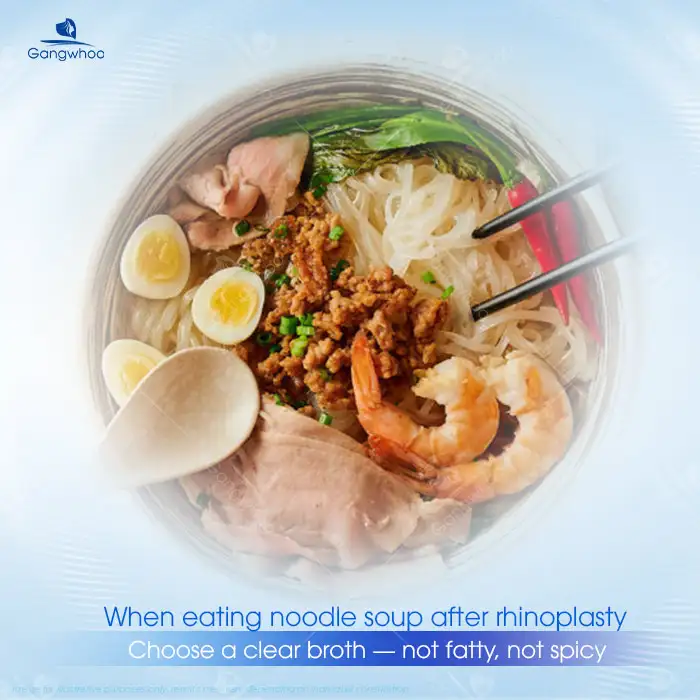
- Choose a light broth, not greasy and not spicy.
- Use lean meat that is boiled or steamed until soft; avoid fried or stir-fried meats.
- Do not add fried shallots, fried garlic, chili, or pepper, as these can cause swelling and a burning sensation at the wound site.
- Eat while the food is warm, avoiding very hot temperatures, as steam may increase nasal discharge and cause discomfort.
- Add mild green vegetables such as boiled greens, bean sprouts, or lettuce to increase vitamin intake.
- Proper preparation not only helps the wound heal faster but also ensures that the nose does not experience prolonged swelling or inflammation.
Foods recommended after nose augmentation
In addition to hu tieu, after nose augmentation you should include food groups that are beneficial for recovery, such as:
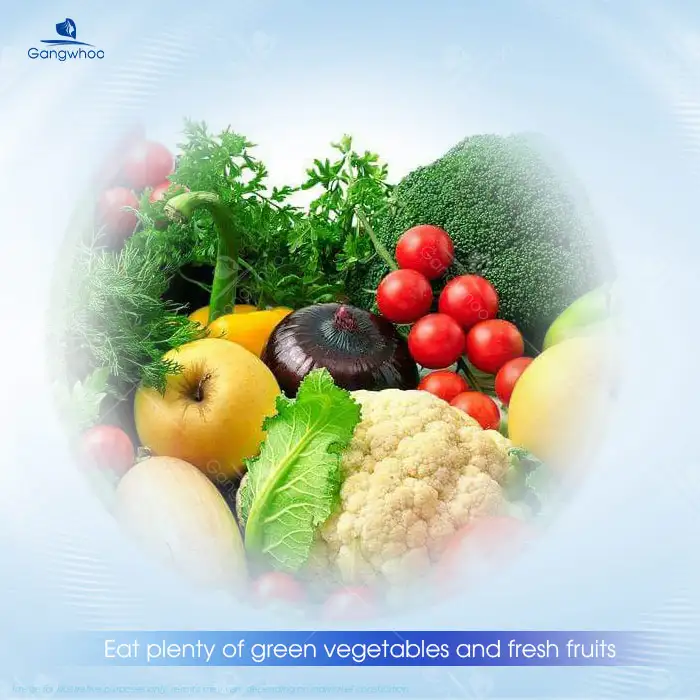
- Green vegetables and fresh fruits: Provide vitamins C, A, and E, supporting tissue regeneration and scar reduction.
- Protein-rich foods: Such as chicken, salmon, eggs, and tofu to support cell regeneration and boost immunity.
- Adequate water intake: Helps detoxify the body and reduce swelling.
At the same time, you should avoid foods that may cause irritation or increase the risk of hypertrophic scarring—such as seafood, beef, sticky rice products, eggs, and water spinach—for at least the first 3–4 weeks.
Hopefully, through this article, you now clearly understand whether you can eat hu tieu after nose augmentation and how to maintain proper nutrition and care after surgery. A well-balanced diet combined with medically guided post-operative care will help your nose stabilize faster, look more natural, and maintain long-term results.
If you are looking for a safe nose augmentation facility with fast recovery and minimal risk of complications, consider Gangwhoo Cosmetic Hospital, where a team of specialized doctors is always ready to accompany you, providing a refined, harmonious, and well-proportioned nasal result.


