Hello, during consultations, doctors often encounter many clients who are in the middle of a cold or have just recovered but still want to proceed with surgery soon. The question “Is it okay to have rhinoplasty when you have a cold?” is something you should pay special attention to, because your physical condition at this time directly affects anesthesia, the recovery process, and the aesthetic outcome after rhinoplasty.
Is it possible to undergo rhinoplasty when you have a cold?
Doctors advise that you should NOT undergo rhinoplasty while you are having a cold, whether it is a mild cold or one caused by weather changes. The reason is that when you have a cold, your immune system is weakened, and the nasal and throat mucosa are swollen and congested, which can easily cause airway obstruction and nasal discharge. If surgery is performed during this period, the patient may face many risks, including:
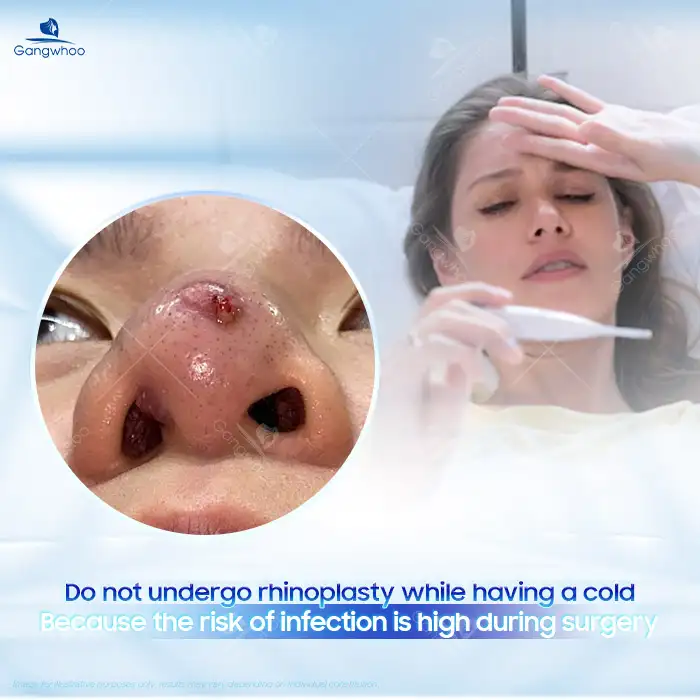
- Difficulty controlling anesthesia: A cold causes inflammation of the upper respiratory tract, and anesthesia or endotracheal intubation may trigger irritation, bronchospasm, or oxygen desaturation during surgery.
- High risk of infection: When the immune system is weakened, the body is more susceptible to bacterial invasion, increasing the risk of surgical site infection, inflammation, or delayed wound healing.
- Impact on nasal shape: Frequent sneezing and runny nose can exert force on the newly operated nose, potentially shifting the cartilage or causing instability in the nasal shape.
Therefore, regarding the question “Is it okay to have rhinoplasty when you have a cold?”, doctors affirm that it should not be performed until the body has fully recovered and all cold symptoms have resolved. This is a fundamental medical safety principle to ensure optimal aesthetic results and patient health.
How long after recovering from a cold can rhinoplasty be performed?
Generally, after a cold has resolved, you should wait at least 1–2 weeks for your body to fully recover and for your immune system to return to normal before undergoing rhinoplasty.
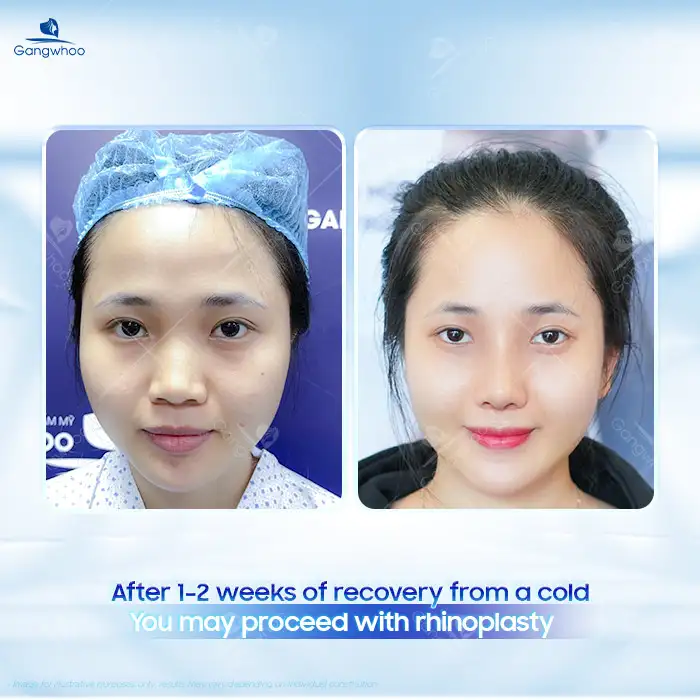
This period allows the nasal and throat mucosa to completely recover, preventing recurrent inflammation, nasal congestion, or discharge during and after surgery. For cases of prolonged viral colds or those accompanied by sinusitis, doctors will conduct a general health examination and nasal–sinus X-rays to ensure safety before surgery.
At Gangwhoo Cosmetic Hospital, all clients are required to undergo a comprehensive preoperative health check before rhinoplasty, including blood tests, blood pressure measurement, and evaluation of the heart, lungs, and respiratory system, to ensure absolute surgical safety.
Should you undergo rhinoplasty immediately after recovering from a cold?
Even right after the cold symptoms subside, the body may still be weak and need time for full recovery; therefore, rhinoplasty should not be performed immediately. Surgery too soon can cause fatigue, slower recovery, and increase the risk of postoperative inflammation.
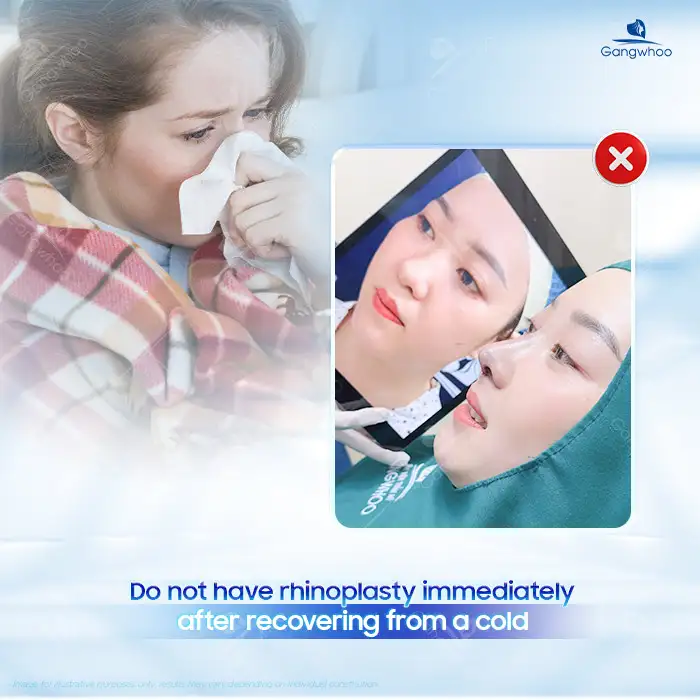
Doctors recommend monitoring your health for at least 5–7 days after all symptoms such as coughing, runny nose, nasal congestion, sore throat, or fatigue have completely disappeared. If your body feels healthy, you are eating normally, sleeping well, and no longer have cold symptoms, you can then safely proceed with surgery.
Especially with modern techniques such as 4K microsurgical endoscopic rhinoplasty using Surgiform or Nanoform implants, surgical intervention is minimally invasive, helps reduce swelling and pain, and leaves no scars, resulting in faster recovery. However, the fundamental factor is still your physical condition—you need to be healthy for the surgery to be performed safely and effectively.
Cases that should be carefully considered before rhinoplasty
In addition to the common cold, there are several other health conditions that should be carefully evaluated before undergoing rhinoplasty:
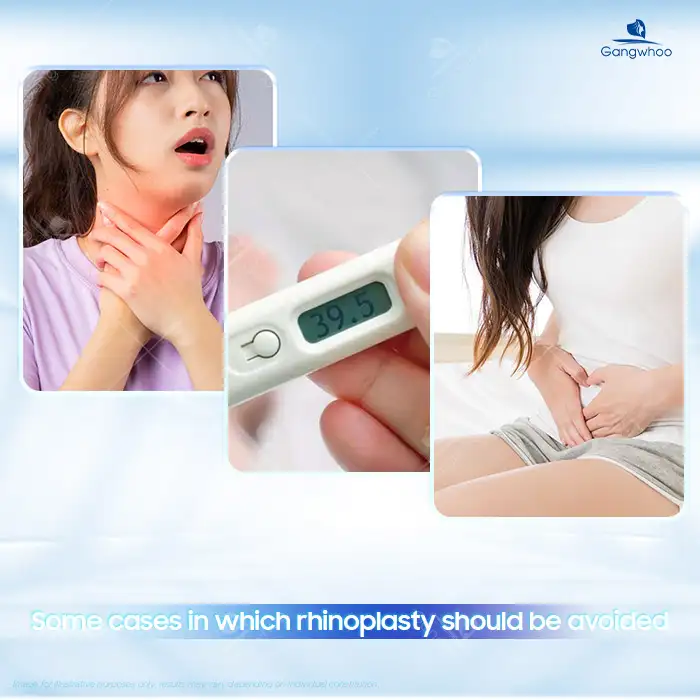
- People with fever, sore throat, pneumonia, or acute respiratory diseases.
- People with poorly controlled chronic conditions such as diabetes, hypertension, or cardiovascular disease.
- Women who are menstruating or pregnant.
- People taking anticoagulants, anti-inflammatory drugs, or corticosteroids.
All of these factors can increase the risk of bleeding, infection, or complications related to anesthesia. Therefore, before rhinoplasty, you must honestly disclose your health condition so the doctor can plan and manage the surgery appropriately.
Advice from Gangwhoo doctors
In summary, if you are wondering whether you can undergo rhinoplasty when you have a cold, the answer is that you should not. Your body needs to be in good health, free from inflammation or nasal discharge, to meet the conditions for safe surgery. Attempting to undergo rhinoplasty while ill can lead to infection risks, prolonged recovery time, or negatively affect the nasal shape.
At Gangwhoo Cosmetic Hospital, every rhinoplasty procedure is performed under strict medical safety protocols, combining advanced 4K microsurgical endoscopic technology with premium Surgiform and Nanoform implants to create a natural, soft nasal shape with no scarring.
If you are still unsure or would like a specialist at Gangwhoo to provide more detailed advice on the appropriate timing for rhinoplasty after recovering from a cold, please leave your information—the medical team will support you wholeheartedly and attentively.


