Is it okay to eat salmon after rhinoplasty? When should salmon be eaten?
Mai Truc
Rhinoplasty
Asked: 30/01/2026
I am currently in the recovery period after rhinoplasty and have heard that salmon is rich in omega-3, which is beneficial for tissue and skin regeneration. However, some people say that eating it too early may cause swelling. So I would like to ask: is it okay to eat salmon after rhinoplasty, and if so, how long after surgery should it be consumed to benefit the body without affecting the nasal shape?
Hello,after rhinoplasty surgery, many people are very cautious about their diet, especially with foods that have a fishy odor such as fish. One of the questions doctors receive quite frequently is “Is it okay to eat salmon after rhinoplasty?”. This is a very reasonable concern, as salmon is highly nutritious but has a mild fishy taste that makes many people worry about its effect on the surgical wound. Below is a detailed medical analysis to help you understand more clearly.
Is it okay to eat salmon after rhinoplasty?
The answer is: Yes, you can eat salmon after rhinoplasty, however, it is necessary to choose the appropriate timing.
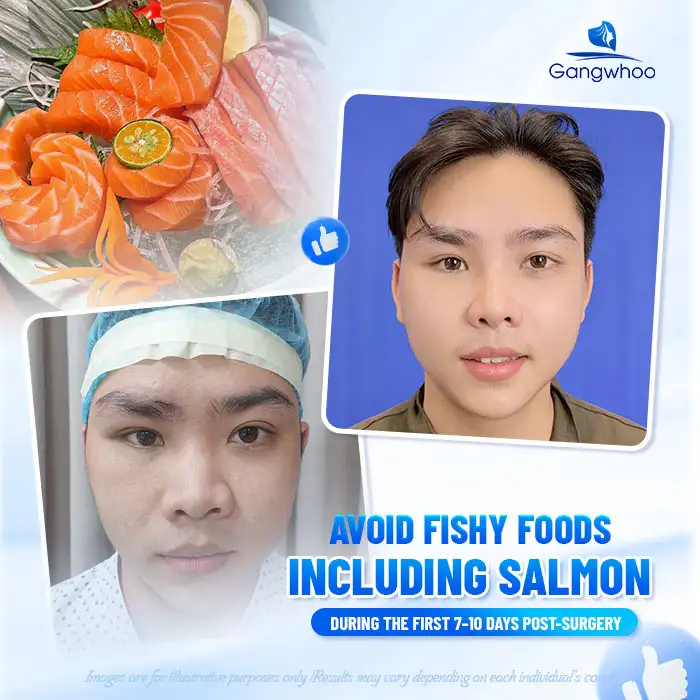
During the first 7–10 days after rhinoplasty, fishy foods including salmon should be avoided
Salmon is a food source rich in omega-3, protein, vitamin D, and natural collagen, which helps accelerate tissue regeneration, reduce inflammation, and soften the skin—all of which are very beneficial for postoperative recovery.
However, during the first 7–10 days after rhinoplasty, doctors recommend completely avoiding fishy foods, including salmon. The reason is that natural histamine in fish may increase inflammatory reactions, cause itching, or delay scar healing in some sensitive individuals.
After the incision has dried, swelling has subsided, and there are no signs of irritation (usually after about 2–3 weeks), you can resume eating salmon normally. When preparing it, you should steam, bake thoroughly, or cook it as porridge, and avoid raw salmon (sashimi, sushi) to prevent gastrointestinal infection.
How long after rhinoplasty can you eat salmon?
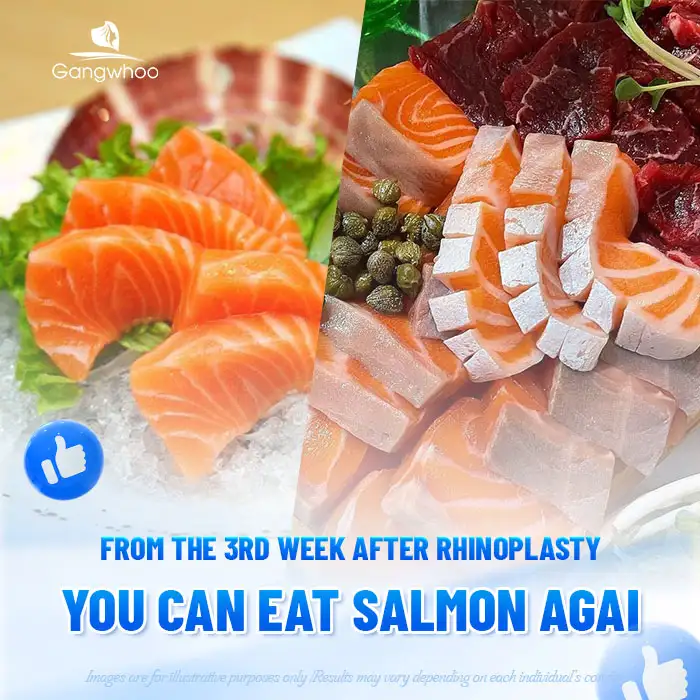
Generally, from the third week after rhinoplasty, you can eat salmon again in moderate amounts if there is no remaining inflammation and the incision has completely closed.
Additional notes from doctors:
From the third week after rhinoplasty, salmon can be eaten normally again
For individuals with allergy-prone constitutions or sensitive skin, it is recommended to wait until after one month before eating salmon to ensure safety.
When resuming consumption, start with a small amount and observe the body’s reaction. If there is no itching, swelling, or redness around the nose, you may continue eating it.
Absolutely avoid undercooked salmon, raw fish salads, or insufficiently cooked dishes for at least the first 4–6 weeks to reduce the risk of infection affecting the healing tissues.
Types of fish that can be chosen as alternatives to salmon after rhinoplasty
If you wish to supplement protein and skin-beneficial nutrients but still want to avoid salmon in the early stage, doctors suggest some types of fish that are mild, less fishy, and easy to digest as alternatives:
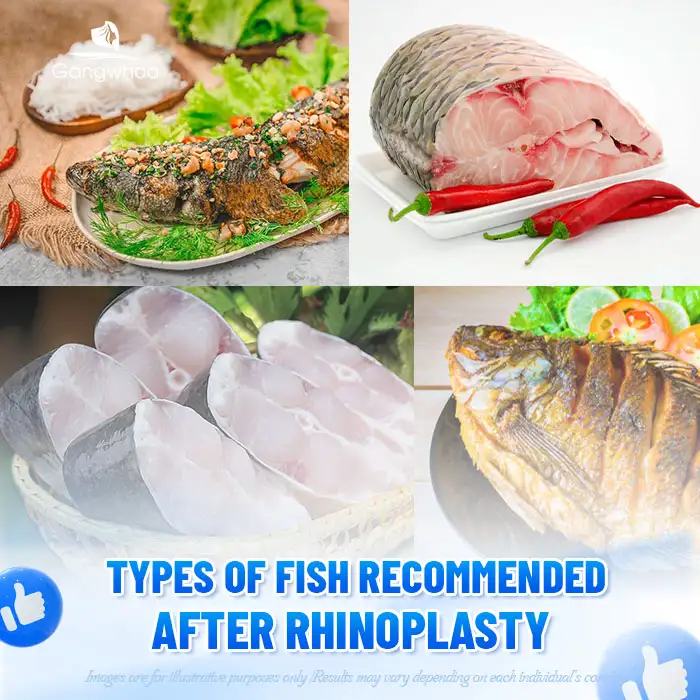
Types of fish recommended after rhinoplasty that you should pay special attention to
Basa fish, snakehead fish: low in fat, rich in protein, helping wounds heal faster.
Tilapia, white fish: mild in taste, easy to prepare, suitable for postoperative recovery.
Common carp: rich in natural collagen, helping the nasal skin become firmer and softer more quickly.
When thoroughly cooked (steamed, boiled, soup, or porridge), these fish help enhance soft tissue recovery without causing irritation.
Foods to avoid after rhinoplasty
In addition to the question of whether salmon can be eaten after rhinoplasty, you should also be aware of the group of foods that should be avoided for at least the first month to ensure nasal stability and prevent unsightly scarring:
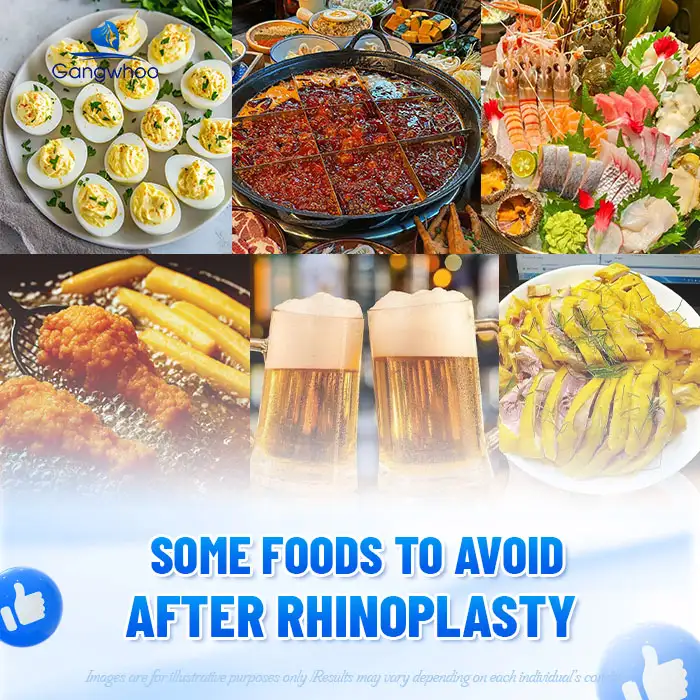
Some foods to avoid after rhinoplasty that you should remember
Beef, water spinach, glutinous rice products, fishy seafood: may cause hypertrophic scarring, itching, or skin darkening.
Spicy foods, fried and oily dishes: may cause inflammation and prolonged swelling.
Adhering to an appropriate diet will help the nose achieve a well-defined shape, smooth nasal skin, and avoid complications after surgery.
At Gangwhoo Cosmetic Hospital, all rhinoplasty procedures are performed using 4K micro-endoscopic technology combined with Nanoform and Surgiform biocompatible cartilage, helping the nose achieve stable, natural shaping while minimizing swelling and inflammation. After surgery, patients are guided in detail by specialist doctors on diet, postoperative care, and regular follow-up to ensure optimal aesthetic results.
If you happen to eat salmon too early or notice any abnormal signs after rhinoplasty, you should visit Gangwhoo Cosmetic Hospital for examination and specific medical advice from a specialist. “`
I’ve heard that nowadays there are Nano breast implants without identification chips, which are different from implants with embedded chips. Doctor, could you explain exactly what Nano implants without chips are, what their advantages and disadvantages are, and whether I should choose this type? I’m a bit concerned about having a “chip” inside my body, […]
Doctor, after my rhinoplasty, I noticed that the tip of my nose feels a bit hard compared to normal, and it feels quite uncomfortable. I don’t know what causes this or whether it is a normal condition or an abnormal sign that requires a medical check-up. If this is a normal condition, what should I […]
I am interested in endoscopic breast augmentation because I’ve heard it is gentler than traditional methods. However, I am still a bit afraid of pain and concerned about risks after surgery. Doctor, could you tell me whether endoscopic breast augmentation is painful, what the procedure involves, and what should be noted after surgery to recover […]
Hello Doctor, I just underwent a rhinoplasty and am very concerned about post-operative care. Could you please advise me on the correct and scientific way to care for my nose after surgery so that it recovers quickly, reduces swelling and pain, and avoids complications? Additionally, I would like to know any important precautions during the […]
I am learning about nasal surgery and have seen many people share that rhinoplasty not only enhances beauty but also helps the face look more refined and boosts confidence. So, doctor, could you please share the practical benefits of rhinoplasty, and whether it is worth considering if my nose is slightly low but still balanced?
Doctor, my mother is 50 years old this year. She feels very self-conscious because her nasal bridge is low and slightly wide. I would like to ask whether older adults should undergo rhinoplasty, whether the surgery affects health, and at this age, which method would be the safest?