Home  >  Aesthetic Q&A  >  Can you eat peanuts after double eyelid surgery? How long should peanuts be avoided?

Can you eat peanuts after double eyelid surgery? How long should peanuts be avoided?

Phan Long
Phan Long
Asked: 24/02/2026

I had double eyelid surgery one week ago and am currently following dietary restrictions. I have heard that eating peanuts may cause hypertrophic scars, so I am a bit concerned. Doctor, may I ask whether it is safe to eat peanuts after double eyelid surgery, and if avoidance is necessary, how long should I refrain from eating them?

Hello, after double eyelid surgery, many patients are often concerned about what they should eat or avoid to ensure proper healing and prevent unsightly scars. One of the most common questions doctors receive is: “Can you eat peanuts after double eyelid surgery?” This is a very practical question, and to help you better understand postoperative nutrition, the doctor will explain in detail from an aesthetic medical perspective.

Can you eat peanuts after double eyelid surgery?

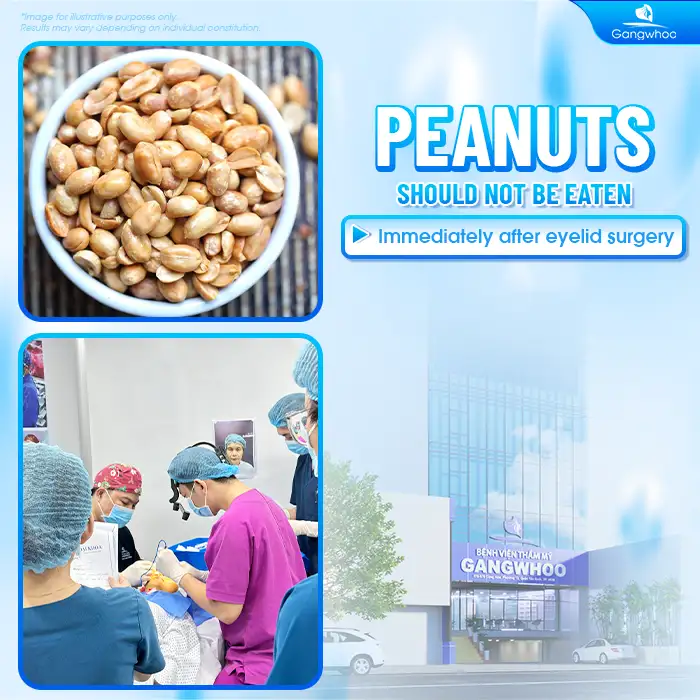
The doctor’s answer is: You SHOULD NOT eat peanuts immediately after double eyelid surgery, especially during the wound healing phase.
Can you eat peanuts after double eyelid surgery? How long should peanuts be avoided?

Medically, peanuts are high in fat, plant-based protein, and are common allergens. In some individuals, peanut proteins may trigger mild inflammatory reactions, causing the surgical area to experience prolonged swelling, itching, or even hypertrophic scar formation in those prone to scarring.

Additionally, according to traditional Eastern medicine, peanuts are considered “heaty” foods. Consuming them too soon after surgery may slow down the healing process or cause the scar to darken, affecting the aesthetic outcome of the eyelid area.

However, the doctor would like to emphasize that this does not mean you must avoid peanuts permanently. Once the wound has fully healed, the eyelids have stabilized, and there are no signs of redness or swelling, you may resume eating peanuts normally without affecting the aesthetic results.

If you undergo exclusive Plasma micro-endoscopic double eyelid surgery at Gangwhoo Cosmetic Hospital, the incision is extremely small, minimally invasive, heals quickly, and leaves virtually no scarring. Therefore, the dietary restriction period is also significantly shortened.

How long should you avoid peanuts?

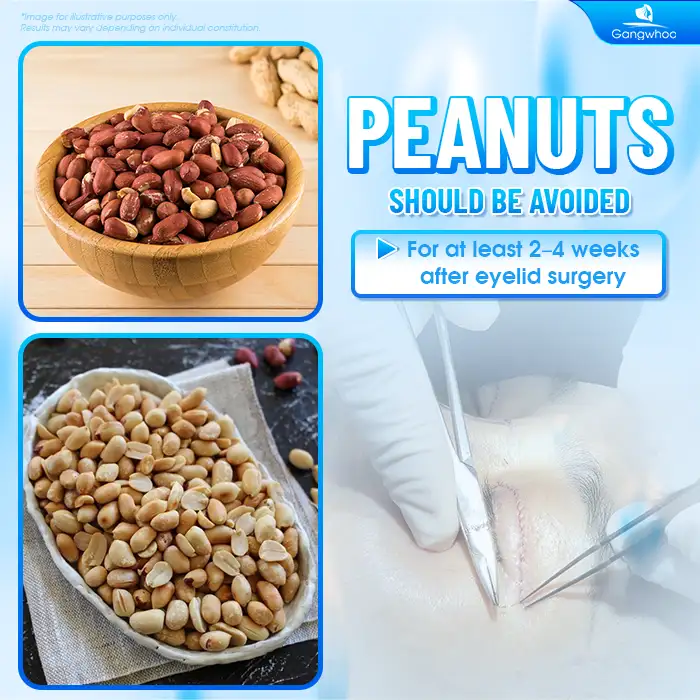
After surgery, the body needs time to fully heal the soft tissues around the eyes. Doctors recommend that you avoid peanuts for at least 2–4 weeks after double eyelid surgery, depending on your individual healing speed.
Can you eat peanuts after double eyelid surgery? How long should peanuts be avoided?

  • First week: This is when the wound has just been sutured, so you should strictly avoid all inflammatory-triggering foods such as peanuts, seafood, sticky rice, beef, eggs, and water spinach.
  • From the second week onward: If the incision is dry and no longer swollen or painful, you may gradually reintroduce small amounts of previously restricted foods, but peanuts should still be limited until the incision is completely stable (usually after 1 month).

In addition, dietary restriction is only one part of the aftercare process. You should also ensure proper wound hygiene, avoid touching the incision with unclean hands, refrain from applying makeup to the eyelid area until fully healed, and strictly follow your doctor’s instructions regarding anti-inflammatory or anti-scar medications if prescribed.

Foods to include after double eyelid surgery

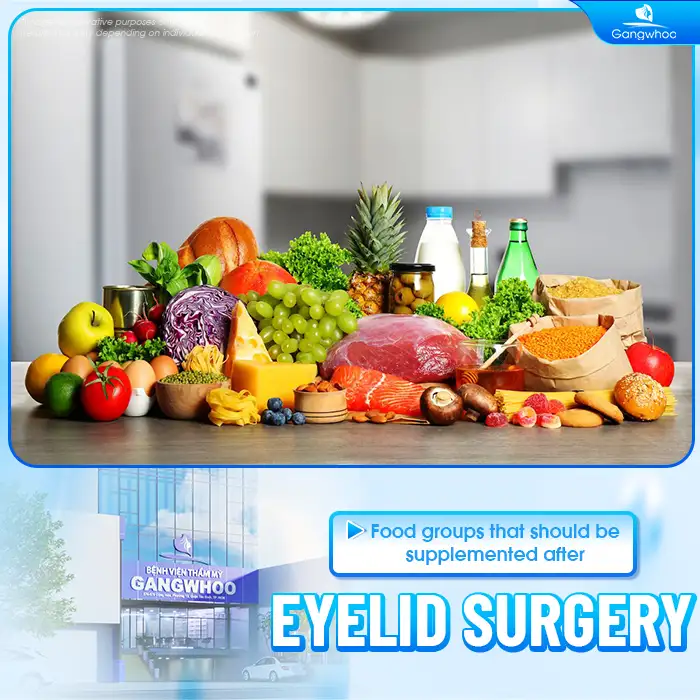
To promote faster healing, optimal skin regeneration, and minimize scar formation, you should increase the following food groups in your daily diet:
Can you eat peanuts after double eyelid surgery? How long should peanuts be avoided?
Recommended food groups after double eyelid surgery
  • Vitamin C-rich foods (oranges, guava, broccoli, bell peppers): boost immunity and promote collagen synthesis.
  • Foods rich in zinc and iron (fish, eggs, walnuts, chicken): support tissue regeneration and accelerate wound healing.
  • Dark green vegetables and fresh fruits: provide antioxidants to help prevent hyperpigmentation in the eyelid area.
  • Drink enough water daily (1.5–2 liters): support detoxification, maintain skin hydration, and enhance natural healing.

Additionally, ensure adequate sleep, limit staying up late, and avoid excessive screen time on computers or phones during the first 7–10 days to prevent eyelid muscle strain.

In summary, regarding the question “Can you eat peanuts after double eyelid surgery?”, doctors recommend that you avoid peanuts for the first 2–4 weeks to prevent undesirable scarring and support faster eyelid recovery. Once the eyelids are fully stabilized, you may resume your normal diet.

If you undergo surgery using the exclusive Plasma micro-endoscopic double eyelid technique at Gangwhoo Cosmetic Hospital, recovery will be significantly faster, with virtually no scarring and less strict dietary restrictions.

If you would like personalized advice regarding postoperative nutrition and eyelid care, please visit Gangwhoo Cosmetic Hospital for a direct examination, condition assessment, and detailed guidance to achieve the best possible recovery results.


Ths Bác Sĩ Phạm Thị Lương

Master's Degree - Doctor

MSc., MD. Pham Thi Luong

1. Introduction to MSc., MD. Pham Thi Luong MSc., MD. Pham Thi Luong, Head of the Department of Anesthesiology and...
Bác Sĩ Vi Văn Cường

Specialist Doctor Level I

Dr. Vi Van Cuong

1. Introduction to Dr. Vi Van Cuong – Specialist in Abdominal, Breast & Gluteal Body Contouring With outstanding skills, extensive...
Bác Sĩ Nguyễn Tấn Phong

Docter

Dr. Nguyen Tan Phong

1. Dr. Nguyen Tan Phong – Anesthesiology & Critical Care Specialist Dr. Nguyen Tan Phong is a highly experienced specialist...
Bác Sĩ Nguyễn Anh Tuấn

Doctor

Dr. Nguyen Anh Tuan

1. Dr. Nguyen Anh Tuan – Rhinoplasty Plastic Surgeon 1.1. Professional Qualifications Dr. Nguyen Anh Tuan is a plastic and...
Bác Sĩ Nguyễn Thị Thanh Vi

Doctor

Dr. Nguyen Thi Thanh Vi

1. Dr. Nguyen Thi Thanh Vi – Eye and Intimate Area Aesthetic Specialist 1.1. Professional Qualifications Dr. Nguyen Thi Thanh...
Bác Sĩ Đặng Thị Niệm

Master's Degree - Doctor

Dr. Dang Thi Niem

1. MSc., MD. Dang Thi Niem – Head of Emergency & Internal Medicine Department 1.1. Professional Qualifications Master of Science...
Bác Sĩ Dư Phương Thụy Vy

Specialist Doctor Level I

Dr. Du Phuong Thuy Vy

1. Dr. Du Phuong Thuy Vy – Eye Aesthetic and Intimate Area Plastic Surgery Specialist 1.1. Professional Qualifications Specialist Level...
Ths Bác Sĩ Huỳnh Văn Trung Hiếu

Master's Degree - Doctor

Dr. Huynh Van Trung Hieu

1. MSc., MD. Huynh Van Trung Hieu – Head of Laboratory Department at Gangwhoo Aesthetic Hospital 1.1. Professional Qualifications Master...
Bác Sĩ Nguyễn Phi Phú

Specialist Doctor Level I

Dr. Nguyen Phi Phu

1. Dr. Nguyen Phi Phu – Rhinoplasty Specialist at Gangwhoo Aesthetic Hospital 1.1. Professional Qualifications Specialist Level I Physician, with...
Bác sĩ Phú Quốc An

Specialist Doctor Level I

Dr. Phu Quoc An

1. Dr. Phu Quoc An – Male Aesthetic Plastic Surgery Specialist at Gangwhoo Aesthetic Hospital 1.1. Professional Qualifications Specialist Level...
Bác Sĩ Phùng Mạnh Cường

Specialist Doctor Level 1

Dr. Phung Manh Cuong

1. Introduction to Dr. Phung Manh Cuong Dr. Phung Manh Cuong is a leading expert in plastic and aesthetic surgery...
Bác Sĩ Trần Kim Thạch

Specialist Level I Doctor

Dr. Tran Kim Thach

Dr. Trần Kim Thạch is an aesthetic specialist physician at Gangwhoo Aesthetic Hospital. He has actively participated in numerous advanced...
Bác Sĩ Lê Ngọc Tuấn Anh

Doctor

Dr Le Ngoc Tuan Anh

Dr. Lê Ngọc Tuấn Anh is a dedicated and highly respected expert in aesthetic medicine, known for his professional integrity,...

Leave a Reply

Your email address will not be published. Required fields are marked *