What Causes Water Blisters After Eyebrow Tattooing? How Should They Be Treated?
Dang Khanh Chi
Asked: 30/05/2026
“Doctor, I have a question. Two days after getting my eyebrows tattooed, I noticed tiny water blisters appearing around my eyebrows, accompanied by slight itching and a mild burning sensation. I’m worried whether this is due to improper aftercare, an allergic reaction to the pigment, or a sign of infection. Could you explain why water blisters occur after eyebrow tattooing and guide me on the proper way to manage them?”
Hello, I understand your concern when experiencing water blisters after eyebrow tattooing, as many people assume this is a serious complication. However, not every case is severe. To help you feel more reassured, I will clearly explain the causes, treatment methods, and situations in which you should seek medical attention.
Why Do Water Blisters Appear After Eyebrow Tattooing?
Eyebrow tattooing may cause water blisters as a skin reaction that can occur within the first 24–72 hours after the procedure. Medically, blisters form when the skin becomes irritated or when the skin barrier is temporarily weakened due to needle penetration. There are three primary causes:
First, skin irritation caused by tattoo pigment.
Skin irritation caused by tattoo pigment
Some individuals with sensitive skin may react to ingredients in the pigment, especially industrial-grade pigments or pigments containing metals. In such cases, the skin develops tiny fluid-filled blisters as a protective response.
Second, the tattooed area is exposed to water or sweat too early.
If water comes into contact with the eyebrows during the first 1–3 days, excessive moisture can cause the newly affected epidermal layer to become overly hydrated, leading to blister formation.
Third, improper aftercare.
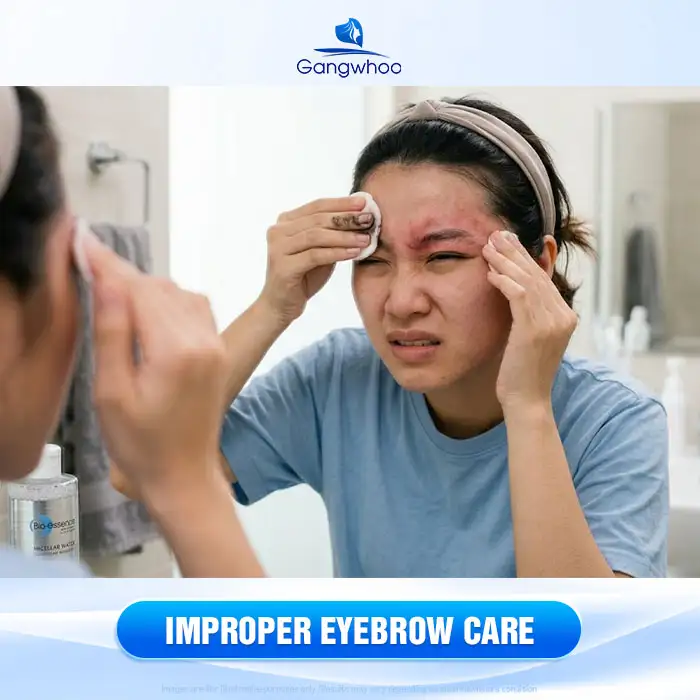
Improper eyebrow aftercare
Applying excessive ointment, using unsuitable products such as coconut oil or petroleum jelly, or frequently touching the eyebrows can clog pores and cause water blisters or pustules.
Additionally, overly aggressive needle techniques by the technician can cause greater skin trauma, resulting in the formation of water blisters.
In general, most cases of water blisters are caused by mild irritation or improper aftercare rather than serious complications. However, a medical evaluation is still necessary to distinguish them from an infection.
How to Treat Water Blisters After Eyebrow Tattooing
If water blisters appear, do not squeeze, pick, or puncture them under any circumstances, as doing so can easily lead to infection, scarring, or uneven peeling.
The recommended management is as follows:
Gently clean with a cotton swab
Keep the eyebrow area completely dry; avoid any water contact until the blisters have dried.
Stop using all topical products, including petroleum jelly, moisturizers, and ointments.
Gently clean with a dry cotton swab and avoid rubbing the area.
Apply indirect cold compresses (place a cool towel lightly on the forehead near the eyebrows, not directly on the tattooed skin).
Use a mild antiseptic solution such as chlorhexidine if prescribed by your doctor.
If the blisters become large, spread extensively, or cause significant itching, the doctor may consider prescribing mild anti-inflammatory medication to reduce the irritation response.
At Gangwhoo Cosmetic Hospital, doctors examine the skin using a skin analysis device to determine whether the condition is simple irritation or a sign of infection. Based on the findings, the most appropriate treatment plan will be recommended.
Warning Signs That Require Medical Attention
Not all water blisters are dangerous, but if any of the following signs appear, you should seek medical evaluation immediately:
Visit a specialist doctor promptly for examination and follow-up
Blisters rapidly spread into larger patches with yellow discharge.
Severe redness and swelling with a burning sensation lasting more than 48 hours.
Sharp or persistent pain rather than the usual mild tightness.
Unpleasant odor or pus discharge — a potential sign of infection.
Blisters accompanied by a mild fever and fatigue.
Bright red needle tracks instead of mild pinkish redness.
In these situations, you should never attempt self-treatment at home, as it may worsen the condition or lead to scarring after healing.
If you are experiencing water blisters after eyebrow tattooing and are unsure whether it is a mild irritation or an infection, you may visit Gangwhoo Cosmetic Hospital for a direct examination, skin assessment, and professional guidance. Early treatment helps preserve beautiful pigment retention and prevents unwanted complications.