Can You Eat Shrimp Paste After Eyelid Surgery? How Long Until You Can Eat It?
Truc Linh
Asked: 06/05/2026
My name is Truc Linh. I had eyelid surgery about 10 days ago. I’m currently on a restricted diet, but lately I’ve been craving shrimp paste a lot. Doctor, could you please tell me in detail whether I can eat shrimp paste after eyelid surgery? If not, how long should I wait before eating it again without worrying about scarring or darkening of the eyelids?
Hello, after undergoing eyelid surgery, diet plays an extremely important role in helping the wound heal quickly and minimizing the risk of bad scarring. One of the most common questions doctors receive is “Can you eat shrimp paste after eyelid surgery?”. This is a very common and completely valid concern, as shrimp paste is a familiar dish but carries potential risks that may affect the healing process. The doctor will analyze it in detail to help you understand better.
Can you eat shrimp paste after eyelid surgery?
The answer is NO, you should not eat shrimp paste after eyelid surgery, at least during the first 4–6 weeks after the procedure.
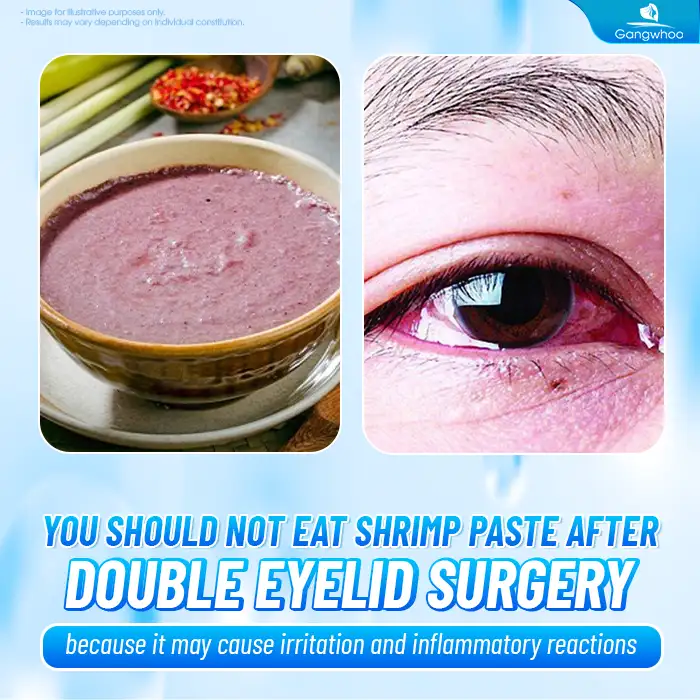
Shrimp paste should be avoided after eyelid surgery as it may cause irritation and inflammatory reactions
The reason is that shrimp paste contains high protein content and has strong irritative properties, which can easily trigger inflammatory responses at the surgical site. Biologically, fermented foods like shrimp paste contain histamine – a mediator that causes vasodilation, increasing the risk of redness, itching, burning sensation, or infection in the recently operated eyelid area.
In addition, shrimp paste contains naturally fermented bacteria. If consumed while the wound has not fully closed, a weakened immune system may be stimulated, leading to hyperpigmentation or hypertrophic scarring, affecting the aesthetic outcome.
Therefore, to ensure safety and promote faster healing, doctors recommend that you completely avoid shrimp paste during the early postoperative period. Instead, prioritize mild, easily digestible foods such as boiled chicken, steamed fish, green vegetables, fresh fruits, and drink plenty of water to support skin regeneration.
How long after eyelid surgery can you eat shrimp paste?
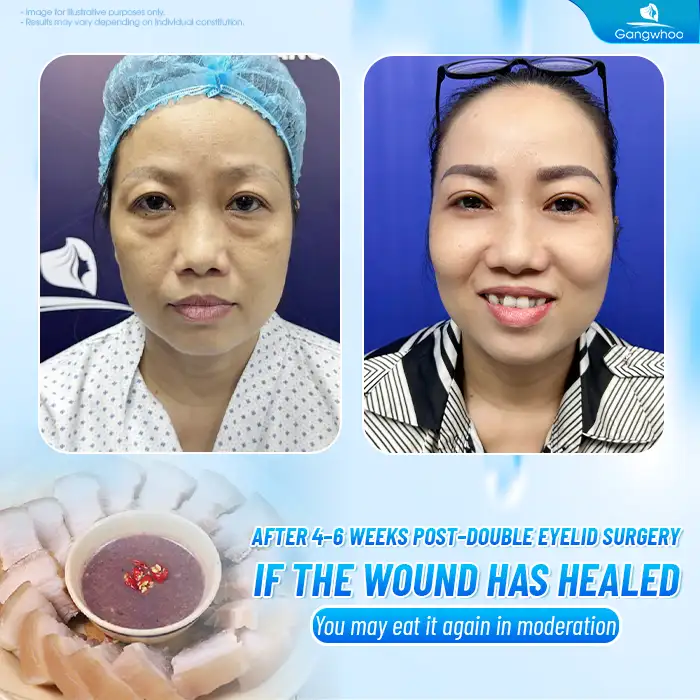
Typically, after eyelid surgery, the wound needs about 4 to 6 weeks to fully heal and stabilize scar tissue. Once the eyelids are no longer swollen and show no signs of inflammation, redness, or discharge, you may consume shrimp paste in moderation. However, it is important to observe your body’s reaction.
After 4–6 weeks, if the wound has healed, shrimp paste can be consumed in moderation
If the eyelid area still feels itchy, tight, or is in the process of regeneration (indicated by pink or slightly red skin), you should continue avoiding it for another 1–2 weeks to ensure safety.
Especially for individuals prone to hypertrophic scars or hyperpigmentation, avoiding shrimp paste is even more necessary and should be prolonged.
At Gangwhoo Cosmetic Hospital, after performing eyelid surgery using microsurgical endoscopy and exclusive Plasma scalpel technology, doctors will provide personalized dietary and rest instructions based on each individual’s condition. This helps shorten recovery time and minimize the risk of food-related irritation.
Potential risks of eating shrimp paste immediately after eyelid surgery
If you eat shrimp paste too early before the wound has healed, you may encounter the following conditions:
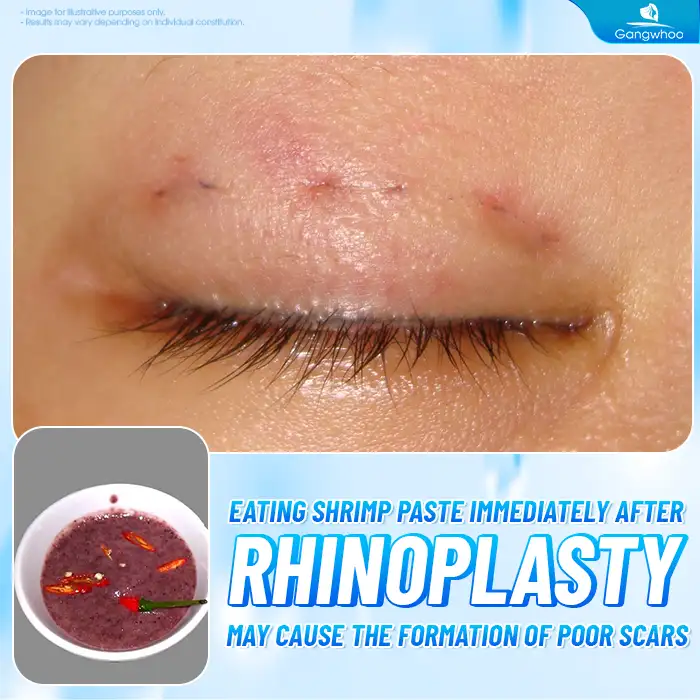
Eating shrimp paste immediately after surgery may lead to undesirable scarring
Increased risk of infection: Shrimp paste is a fermented food containing various bacteria. When the body is healing and the immune system is weakened, consuming shrimp paste may cause infection at the surgical site, leading to swelling, discharge, or pus formation.
Darkening of the eyelid area: Some components in shrimp paste stimulate melanin production – the pigment responsible for skin darkening. During the regeneration phase, this may cause the eyelid skin to become darker, affecting aesthetics and making recovery more difficult.
Higher risk of bad scarring: Prolonged inflammatory reactions can lead to tissue fibrosis, making the eyelids more prone to hypertrophic or keloid scars, directly affecting the new eyelid crease.
The doctor understands that many people are accustomed to eating shrimp paste in dishes such as vermicelli with tofu, fermented pork rolls, fried spring rolls, etc. However, during the postoperative period, strict dietary restriction is essential to ensure the best aesthetic results.
Finally, to help your eyes recover quickly and achieve optimal results, the doctor advises you to strictly follow postoperative care instructions provided by your surgical facility. If you undergo eyelid surgery using microsurgical endoscopy and exclusive Plasma scalpel technology at Gangwhoo Cosmetic Hospital, recovery time will be shortened, wounds will dry faster, and the risk of inflammation will be reduced, making dietary restrictions more flexible after the initial stage.
If you still have concerns about your diet after eyelid surgery or experience prolonged swelling, darkening, or itching, visit Gangwhoo Cosmetic Hospital for a direct consultation with a specialist. Early evaluation will help ensure safe healing