Should You Get Dermal Fillers or Rhinoplasty? What Are the Pros and Cons of Each Method?
Phương Trinh
Rhinoplasty
Asked: 30/11/2025
Doctor, please advise me: should I get dermal fillers or rhinoplasty to suit me better? What are the advantages and disadvantages of each method, and which aspects are more suitable for my needs and personal conditions?
Hello, the question “should I choose dermal fillers or rhinoplasty to achieve a beautiful and safer nasal shape?” is one that doctors receive very frequently. In reality, each method has its own advantages and limitations and is suitable for different nasal conditions. Below is a detailed analysis of each technique to help you make an informed decision.
Pros and Cons of Dermal Filler Rhinoplasty
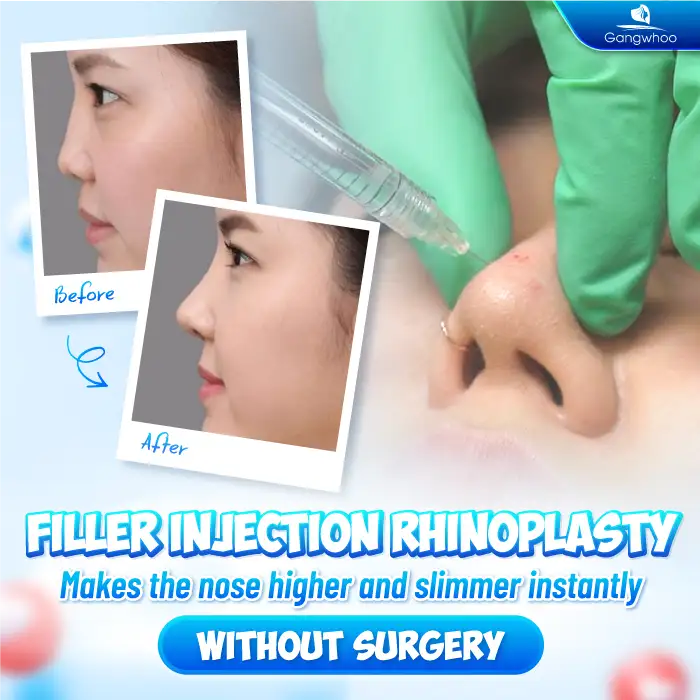
Dermal filler rhinoplasty is a technique that uses fillers (commonly Hyaluronic Acid – HA) injected directly into the nose to instantly make it higher and more refined without surgery.
Advantages:
Quick procedure, typically taking only 15–20 minutes.
Almost no recovery time; normal activities can be resumed immediately after injection.
No surgical incision, minimizing pain and swelling.
If unsatisfactory, the filler can be dissolved with medication.
Disadvantages:
Results last only 9–18 months, depending on the filler type and individual physiology.
Cannot correct significant issues such as a very low nasal bridge, nasal hump, or wide nostrils.
Risk of complications such as vascular occlusion, skin necrosis, or even blindness if injected incorrectly.
Therefore, dermal fillers are suitable for those who want a mild, quick change in nasal shape, but they are not a long-term solution.
Pros and Cons of Surgical Rhinoplasty
Surgical rhinoplasty involves placing implants (synthetic cartilage, autologous cartilage, or a combination) to comprehensively reshape the nasal structure.
Advantages:
Long-lasting results, stable for over 10 years, or even permanent if performed with proper technique.
Can comprehensively correct defects such as a low or humped nasal bridge, wide nostrils, a short or upturned nasal tip.
Creates a more balanced and harmonious nasal shape with the face.
Disadvantages:
As it is a minor surgical procedure, it requires a recovery period, usually 1–2 weeks.
Swelling and bruising may occur in the early stage.
Higher cost compared to dermal filler rhinoplasty.
Surgical rhinoplasty is suitable for those who desire comprehensive nasal improvement and long-lasting results.
So, Should You Choose Dermal Fillers or Rhinoplasty? Which Is More Effective?
To accurately answer the question “are fillers or rhinoplasty better?”, the doctor must base the recommendation on your goals and your current nasal condition.
If you only want a slight increase in nasal height, minimal change, wish to avoid surgery, and accept short-term results, dermal fillers are a quick and convenient option.
If you want a well-balanced nasal shape, long-term stability, and thorough correction of imperfections, surgical rhinoplasty is definitely the more optimal solution.
In summary, whether to choose rhinoplasty or fillers depends on personal expectations and nasal characteristics. However, in terms of long-term effectiveness and safety, surgical rhinoplasty is generally recommended by specialists over fillers.
Doctor’s Advice: You should visit a reputable aesthetic facility for a direct examination, as only after assessing the nasal structure can a doctor provide the most appropriate recommendation. At Gangwhoo Cosmetic Hospital, our team of specialist doctors will conduct a thorough analysis and help you choose the best method, ensuring both safety and optimal aesthetic results.
I am interested in endoscopic breast augmentation because I’ve heard it is gentler than traditional methods. However, I am still a bit afraid of pain and concerned about risks after surgery. Doctor, could you tell me whether endoscopic breast augmentation is painful, what the procedure involves, and what should be noted after surgery to recover […]
Hello Doctor, I just underwent a rhinoplasty and am very concerned about post-operative care. Could you please advise me on the correct and scientific way to care for my nose after surgery so that it recovers quickly, reduces swelling and pain, and avoids complications? Additionally, I would like to know any important precautions during the […]
I am learning about nasal surgery and have seen many people share that rhinoplasty not only enhances beauty but also helps the face look more refined and boosts confidence. So, doctor, could you please share the practical benefits of rhinoplasty, and whether it is worth considering if my nose is slightly low but still balanced?
Doctor, my mother is 50 years old this year. She feels very self-conscious because her nasal bridge is low and slightly wide. I would like to ask whether older adults should undergo rhinoplasty, whether the surgery affects health, and at this age, which method would be the safest?
I really enjoy spicy food, but I had rhinoplasty just one week ago. Many people say that spicy food should be completely avoided, but I’m not sure if that’s true. So is it harmful to eat spicy food after rhinoplasty, and if it is allowed, what level would be considered safe?
I’ve heard that the S-Line nose shape looks natural and soft, but some people experience complications after S-Line rhinoplasty such as deviation or redness and shininess. So in reality, what are the risks of this nose shape, and what should I pay attention to beforehand to avoid complications?