Hello, when learning about rhinoplasty procedures, many clients have questions about sedation during rhinoplasty—a fairly technical term that not everyone fully understands. Many people also confuse sedation rhinoplasty with general anesthesia rhinoplasty, not knowing how these two methods differ or which option is safer and more effective. Today, the doctor will help you clearly understand the nature of sedation in rhinoplasty, its role, and provide the most appropriate advice for each individual case.
What Is Sedation During Rhinoplasty?
First, let me explain in simple terms. Sedation during rhinoplasty is the use of mild sedative medications combined with pain relief before surgery to help the body relax, reduce anxiety, and minimize pain throughout the procedure.
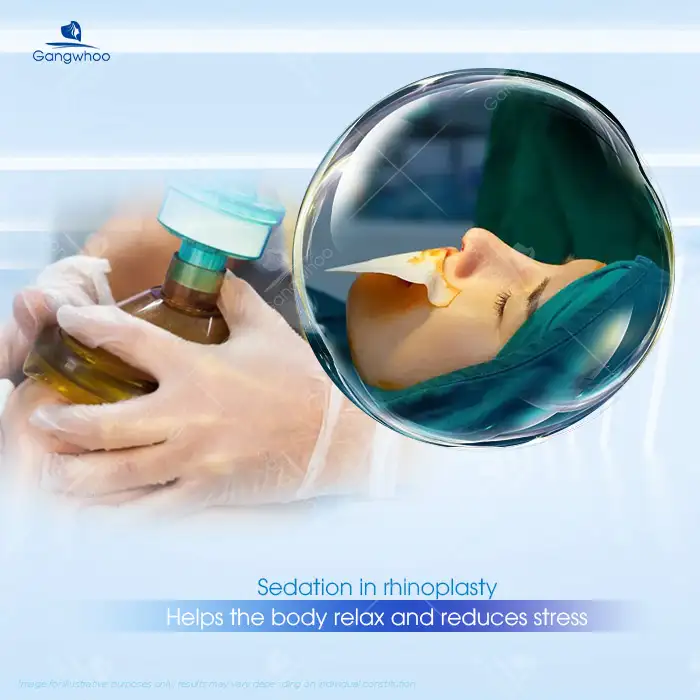
Unlike general anesthesia—which causes the patient to completely lose consciousness and feel nothing—sedation places you in a semi-awake, semi-asleep state. Your body is relaxed, but you can still breathe on your own and recover quickly after the surgery is completed.
Typically, the anesthesiologist administers the medication via injection or intravenous infusion before the surgery begins. After a few minutes, the body relaxes, vital signs stabilize, and the procedure can proceed more safely and gently.
Therefore, when asked “what is sedation during rhinoplasty,” it can be simply understood as a preoperative supportive method that helps patients feel comfortable, pain-free, and relaxed while still ensuring absolute safety throughout the rhinoplasty procedure.
The Role of Sedation in Rhinoplasty Surgery
In aesthetic surgery in general, and sedation rhinoplasty in particular, sedation plays a very important role, benefiting both the surgeon and the patient during the procedure.
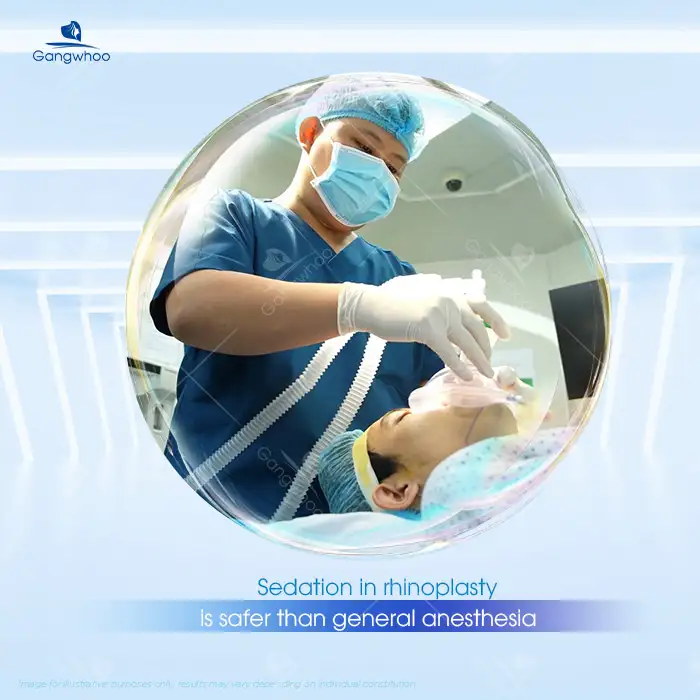
- Pain and anxiety reduction: Sedation relaxes the central nervous system, reducing pain reflexes and anxiety. Many patients share that they “doze off for a while and open their eyes to find the surgery already finished,” which is the effect of sedation.
- Stabilizing vital signs: When patients are comfortable and not overly stimulated, vital indicators such as heart rate, blood pressure, and breathing remain stable, allowing the surgeon to operate more precisely and effectively.
- Safer than general anesthesia: Because sedation does not completely suppress respiration or consciousness, the risk of complications is significantly lower. After surgery, patients wake up quickly, experience no nausea or fatigue, and can go home to rest after a few hours of monitoring.
At Gangwhoo Cosmetic Hospital, all sedation rhinoplasty procedures are performed in a sterile operating room with direct supervision by an anesthesiology and resuscitation specialist. This ensures absolute safety for clients in all situations, including complex surgeries such as structural or reconstructive rhinoplasty.
So Should You Choose General Anesthesia or Sedation for Rhinoplasty?
This is a question doctors receive very frequently, especially from first-time rhinoplasty patients. In reality, both general anesthesia and sedation have their own advantages, and the choice depends on the patient’s physical condition and the type of surgery being performed.
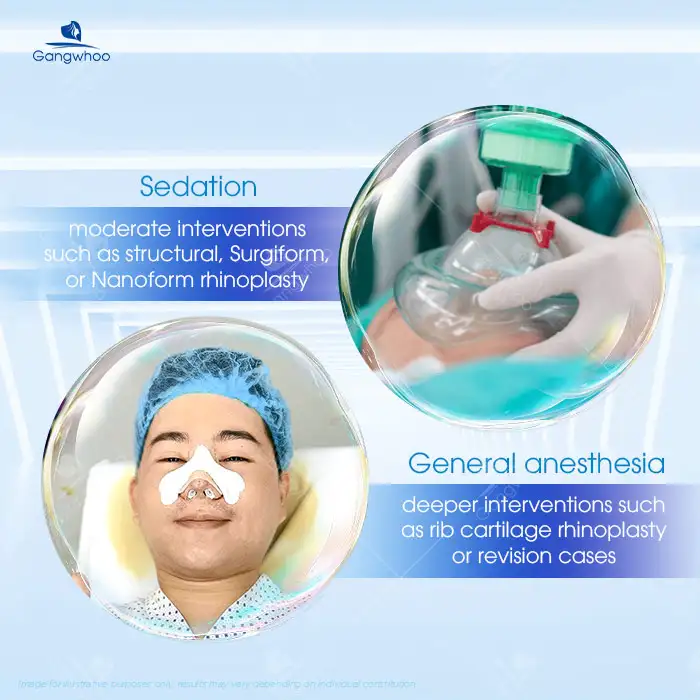
- Sedation: Suitable for rhinoplasty procedures with moderate levels of intervention, such as semi-structural rhinoplasty, Surgiform rhinoplasty, Nanoform rhinoplasty, or simple nose shape corrections. Advantages include high safety, fast recovery, gentle experience, and no postoperative nausea.
- General anesthesia: Typically applied to complex cases requiring deep structural intervention, such as rib cartilage rhinoplasty, failed rhinoplasty reconstruction, or procedures involving multiple combined corrections. In these cases, general anesthesia allows the surgeon sufficient time for meticulous work and minimizes patient reflexes.
Overall, most rhinoplasty procedures at Gangwhoo Cosmetic Hospital currently use sedation, as this method meets the criteria of safety, comfort, and fast recovery.
Gangwhoo is also one of the few hospitals in Vietnam applying 4K endoscopic microsurgical rhinoplasty techniques, helping minimize invasiveness, reduce swelling and pain, leave no visible scars, and combine with high-quality implants such as Surgiform and Nanoform to create natural, soft, and long-lasting nasal shapes.
If you are still uncertain whether to choose sedation or general anesthesia for rhinoplasty, the doctor recommends visiting Gangwhoo Cosmetic Hospital for a direct consultation. Here, the anesthesiology team and nasal surgery specialists will evaluate your health condition and nasal structure and propose the most suitable option for you.


