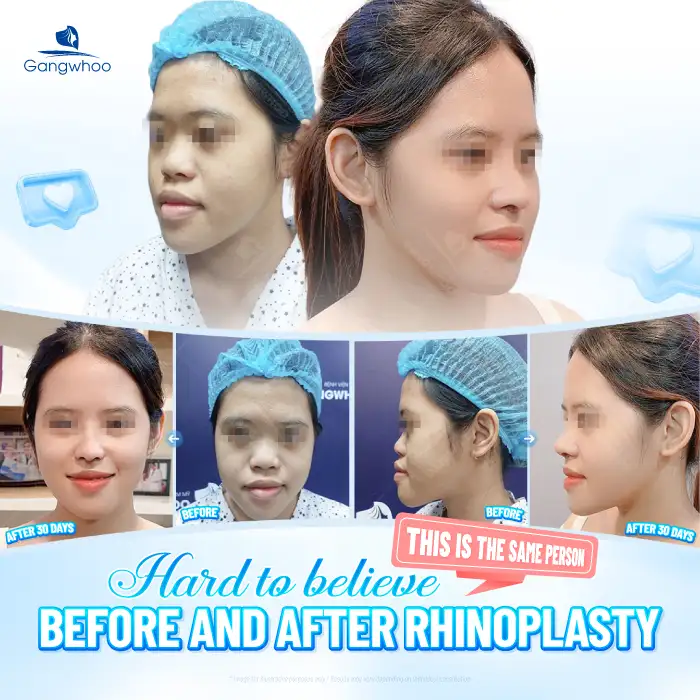
Is American cartilage rhinoplasty good? Should you choose it for rhinoplasty?
Mai Phuong
Rhinoplasty
Asked: 07/01/2026
How does the doctor evaluate American cartilage rhinoplasty? Should American cartilage materials be chosen for rhinoplasty? Compared with autologous cartilage or other materials, what are the advantages and disadvantages of American cartilage?
Hello, the doctor understands that when researching materials for rhinoplasty, you will encounter many different names such as Korean cartilage, American cartilage, Nanoform, Surgiform, and more. Among them, many people wonder whether American cartilage rhinoplasty is good and how American nasal implants differ from other types on the market. This is a very good question, because the choice of material directly determines the durability, safety, and aesthetic outcome of the nose after surgery. The doctor will analyze this in detail for you.
Is American cartilage rhinoplasty good?
First of all, to clearly understand whether American cartilage rhinoplasty is good, you need to know that American nasal implants are artificial materials that are researched, manufactured, and strictly tested according to United States medical standards (FDA – Food and Drug Administration). These types of cartilage are designed with high biocompatibility, helping to minimize rejection reactions or capsular contracture after surgery.
From a professional standpoint, the doctor can affirm that American cartilage rhinoplasty is one of the safest and most effective options available today. The cartilage has the following characteristics:
Soft yet able to maintain shape well, helping the nose look natural without stiffness.
Does not cause irritation or allergies, suitable even for sensitive constitutions.
Long-term compatibility with nasal tissue, minimizing implant visibility, redness, or deformation.
However, the final outcome still depends on the surgeon’s skill, the technique of dissection and fixation, as well as the individual biological compatibility of each patient. Therefore, in addition to choosing good-quality cartilage, you should select a reputable aesthetic facility and an experienced doctor to ensure absolute safety.
Outstanding types of American cartilage currently available
Currently, there are quite a few types of American nasal implants being used by hospitals and aesthetic institutes. Some typical examples include:
Surgiform cartilage (USA):
This is the most premium type among current artificial cartilage materials. With a micropore structure, Surgiform allows body tissue to adhere to it, providing firm fixation and a natural feel similar to real cartilage. It is FDA-approved and is commonly used by leading aesthetic surgeons worldwide.
Also originating from the USA, ePTFE has good flexibility and is often used for patients who desire a high yet natural and refined nasal shape. However, this type requires precise fixation techniques to prevent implant displacement after surgery.
Nanoform cartilage (USA):
This is an improved version of Surgiform, featuring a denser microporous structure that allows nasal tissue to adhere more firmly and recover faster. Nanoform is considered the “gold generation” of artificial cartilage and can maintain a stable nasal shape for a very long time.
The above American cartilage types are widely applied in major cosmetic hospitals, especially in ultra-structural rhinoplasty, cartilage-wrapped rhinoplasty, or full structural rhinoplasty techniques.
Duration of results when choosing American cartilage rhinoplasty
One of the reasons American cartilage rhinoplasty is so popular is its outstanding durability. On average, if performed with proper technique and followed by good postoperative care, the nasal shape can be maintained for 15–20 years, or even longer in patients with favorable physiology.
This is because American cartilage has a durable structure that does not oxidize or degrade over time. Especially with premium lines such as Surgiform or Nanoform, the cartilage can firmly integrate with nasal tissue and remain stable almost permanently, while still ensuring a soft and natural nasal appearance.
However, you should note that the duration of results also depends on:
Therefore, choosing the right reputable facility is just as important as selecting the type of cartilage.
So, should you choose American cartilage rhinoplasty?
If you are looking for a safe, durable rhinoplasty method with a natural-looking result, then American cartilage rhinoplasty is certainly an option worth considering. This type of cartilage offers high compatibility, minimizes complications, and provides results that last much longer than conventional materials.
Especially at Gangwhoo Cosmetic Hospital, doctors apply premium American cartilage lines such as Surgiform and Nanoform in combination with 4K microsurgical endoscopic rhinoplasty techniques, allowing precise control of every step, minimizing invasiveness, and leaving no scars at all. The nasal shape is delicately sculpted, harmonious with the face, delivering natural beauty and long-lasting results over time.
When choosing rhinoplasty, do not focus solely on the material—consider the overall factors including technique, surgeon expertise, and sterile safety protocols. If you are unsure which type of cartilage suits you best, visit Gangwhoo Cosmetic Hospital for a direct examination and personalized consultation to design a nasal shape that meets ideal facial proportions.
Hello Doctor, I am considering rhinoplasty to improve the shape of my nose because my nose is quite low and the tip is slightly wide, making my overall facial features look less harmonious. However, after researching, I found that there are many cosmetic hospitals and spas advertising rhinoplasty services, so I am quite confused about […]
I’ve heard that nowadays there are Nano breast implants without identification chips, which are different from implants with embedded chips. Doctor, could you explain exactly what Nano implants without chips are, what their advantages and disadvantages are, and whether I should choose this type? I’m a bit concerned about having a “chip” inside my body, […]
Doctor, after my rhinoplasty, I noticed that the tip of my nose feels a bit hard compared to normal, and it feels quite uncomfortable. I don’t know what causes this or whether it is a normal condition or an abnormal sign that requires a medical check-up. If this is a normal condition, what should I […]
I am interested in endoscopic breast augmentation because I’ve heard it is gentler than traditional methods. However, I am still a bit afraid of pain and concerned about risks after surgery. Doctor, could you tell me whether endoscopic breast augmentation is painful, what the procedure involves, and what should be noted after surgery to recover […]
Hello Doctor, I just underwent a rhinoplasty and am very concerned about post-operative care. Could you please advise me on the correct and scientific way to care for my nose after surgery so that it recovers quickly, reduces swelling and pain, and avoids complications? Additionally, I would like to know any important precautions during the […]
I am learning about nasal surgery and have seen many people share that rhinoplasty not only enhances beauty but also helps the face look more refined and boosts confidence. So, doctor, could you please share the practical benefits of rhinoplasty, and whether it is worth considering if my nose is slightly low but still balanced?