Can you undergo rhinoplasty while pregnant? Does it affect the fetus?
Dieu Hang
Rhinoplasty
Asked: 28/01/2026
I am currently 3 months pregnant, but my nose has always been very low and slightly crooked. I planned to wait until after giving birth to have it done, but my friend told me to do it early to look prettier. So can I undergo rhinoplasty while pregnant, and will anesthetic drugs or the surgical process affect the fetus?
Hello, the doctor understands that during pregnancy, many women still wish to improve their appearance to feel more confident and beautiful. However, one of the questions the doctor often receives is: “Can you undergo rhinoplasty while pregnant?”. This is an issue that needs to be clearly explained from a medical perspective, as it directly relates to the health of both the mother and the fetus. The doctor will help you understand this in more detail.
Can you undergo rhinoplasty while pregnant?
The answer is no, it is not recommended. From a medical standpoint, pregnant women should absolutely not undergo rhinoplasty or any invasive cosmetic surgery. The reason is that during rhinoplasty, doctors must use local anesthetics, pain relievers, antibiotics, and sometimes general anesthesia, and all of these medications may affect the fetus, especially during the first trimester—the critical period when the fetus’s vital organs are forming.
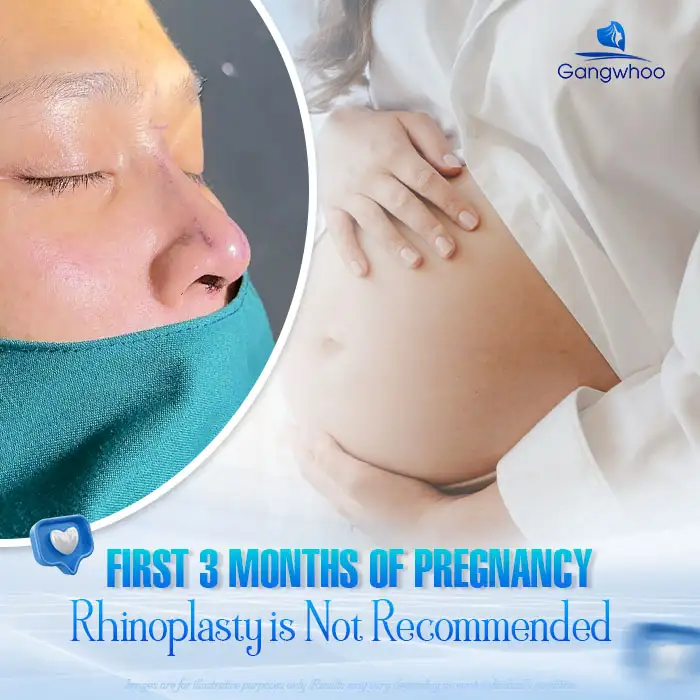
The first 3 months of pregnancy are not suitable for rhinoplasty as it may affect health and aesthetic results
In addition, physiological changes during pregnancy such as increased heart rate, blood pressure, hormonal changes, and altered blood clotting ability make surgery more prone to risks such as bleeding, fluid accumulation, or infection than usual. Therefore, when doctors are asked “can you undergo rhinoplasty while pregnant”, the professional answer is always not recommended at any stage of pregnancy.
Moreover, pregnant women are more prone to swelling and fluid retention, which makes the postoperative nasal shape difficult to stabilize and affects aesthetic outcomes. Therefore, although the desire to beautify is understandable, you should wait until after childbirth and full recovery before undergoing rhinoplasty to ensure absolute safety.
Does rhinoplasty during pregnancy affect the fetus?
If a mother accidentally undergoes rhinoplasty without knowing she is pregnant, the greatest concern is the impact of medications and surgical stress on the fetus. Some local anesthetics and antibiotics are able to cross the placenta, thereby affecting the development of the fetal brain and nervous system, especially in the first trimester.
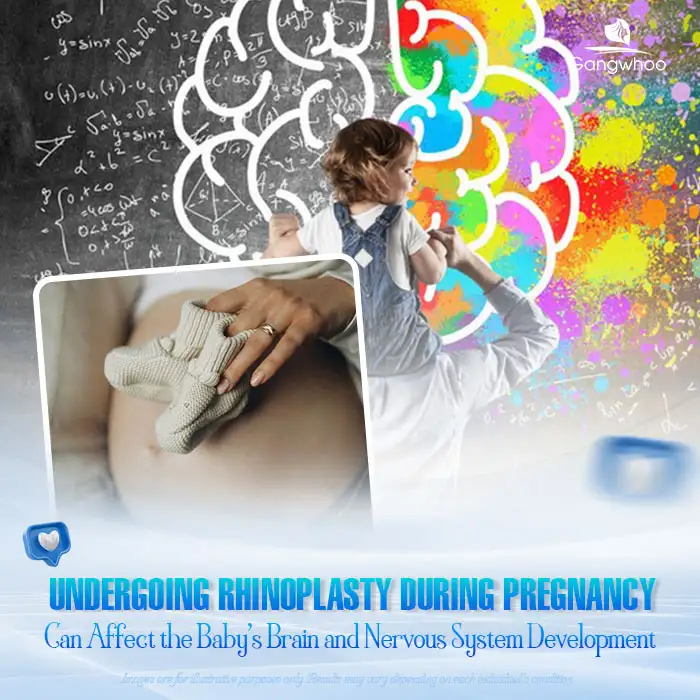
Rhinoplasty during pregnancy may affect the development of the baby’s brain and nervous system
In addition, during surgery, stress and pain may cause the mother’s body to release stress hormones (cortisol), increasing the risk of uterine contractions, threatened miscarriage, or preterm birth. Although not all cases result in serious complications, from a medical safety perspective, these risks cannot be ignored.
Therefore, if you are pregnant and have already undergone rhinoplasty, doctors advise you to visit a specialized medical facility for ultrasound examinations and regular fetal monitoring to ensure normal fetal development. After delivery, when the body has stabilized, doctors can reassess the nasal condition and provide corrective options if necessary.
Appropriate timing for rhinoplasty after pregnancy
The best time for you to undergo rhinoplasty after childbirth is after weaning and full physical recovery, usually around 6 months to 1 year postpartum.
The reasons include:
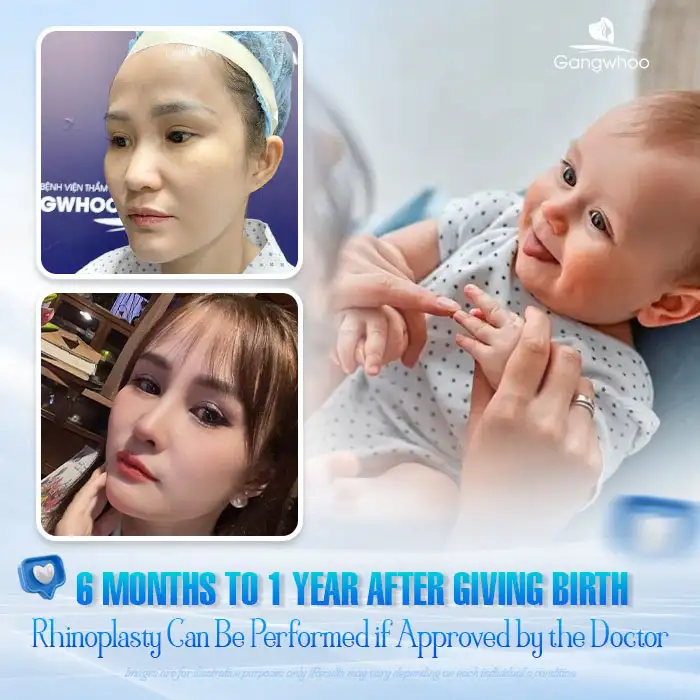
From 6 months to 1 year after childbirth, rhinoplasty can be performed if indicated by a doctor
By then, hormones have stabilized, reducing the risk of prolonged swelling and bruising after surgery.
The body and immune system have recovered, helping wounds heal faster and lowering the risk of infection.
For breastfeeding mothers, the use of pain relievers or antibiotics after surgery may affect breast milk, so it is necessary to wait until at least 1–2 months after stopping breastfeeding before proceeding.
At this time, if you undergo rhinoplasty at Gangwhoo Cosmetic Hospital, doctors will conduct a comprehensive health examination, blood tests, and blood pressure checks to ensure you meet all conditions before surgery.
The hospital applies 4K microsurgical endoscopic rhinoplasty technology combined with Nanoform and Surgiform synthetic cartilage, helping shape a well-proportioned nose, reduce swelling, speed up recovery, and minimize complications—especially suitable for busy mothers who want quick recovery to care for their babies.
In summary, regarding the question “can you undergo rhinoplasty while pregnant”, the doctor’s answer is not recommended at any stage of pregnancy.
Beauty is a woman’s right, but the health of both mother and fetus is the most important factor. You should wait until after childbirth and full recovery before undergoing rhinoplasty to achieve the safest and most beautiful results.
If you need in-depth consultation with a specialist about the appropriate timing or safe rhinoplasty technologies after childbirth, you may visit Gangwhoo Cosmetic Hospital—where a team of highly skilled doctors and advanced endoscopic equipment will help you achieve a naturally beautiful, golden-ratio nose while ensuring health safety. “`
Hello Doctor, I am considering rhinoplasty to improve the shape of my nose because my nose is quite low and the tip is slightly wide, making my overall facial features look less harmonious. However, after researching, I found that there are many cosmetic hospitals and spas advertising rhinoplasty services, so I am quite confused about […]
I’ve heard that nowadays there are Nano breast implants without identification chips, which are different from implants with embedded chips. Doctor, could you explain exactly what Nano implants without chips are, what their advantages and disadvantages are, and whether I should choose this type? I’m a bit concerned about having a “chip” inside my body, […]
Doctor, after my rhinoplasty, I noticed that the tip of my nose feels a bit hard compared to normal, and it feels quite uncomfortable. I don’t know what causes this or whether it is a normal condition or an abnormal sign that requires a medical check-up. If this is a normal condition, what should I […]
I am interested in endoscopic breast augmentation because I’ve heard it is gentler than traditional methods. However, I am still a bit afraid of pain and concerned about risks after surgery. Doctor, could you tell me whether endoscopic breast augmentation is painful, what the procedure involves, and what should be noted after surgery to recover […]
Hello Doctor, I just underwent a rhinoplasty and am very concerned about post-operative care. Could you please advise me on the correct and scientific way to care for my nose after surgery so that it recovers quickly, reduces swelling and pain, and avoids complications? Additionally, I would like to know any important precautions during the […]
I am learning about nasal surgery and have seen many people share that rhinoplasty not only enhances beauty but also helps the face look more refined and boosts confidence. So, doctor, could you please share the practical benefits of rhinoplasty, and whether it is worth considering if my nose is slightly low but still balanced?