Will the Sutures Be Visible After Rhinoplasty? How to Care for Proper Wound Healing
Huu Phuoc
Rhinoplasty
Asked: 11/12/2025
After having rhinoplasty, I noticed that the suture line at the tip of my nose can be quite visible. So how should I care for the wound to help the sutures dissolve quickly and prevent unsightly scarring? I am very concerned about this.
Hello, the doctor understands that before undergoing surgery, many patients worry about whether sutures will be visible after rhinoplasty. This is a completely reasonable concern, as everyone hopes that their nose will look natural after recovery, without leaving any aesthetic traces. Below, the doctor will explain in detail so you can better understand the wound-healing process, the reasons why sutures may be visible, and how to minimize scarring to help the nose heal as smoothly as possible.
Will sutures be visible after rhinoplasty?
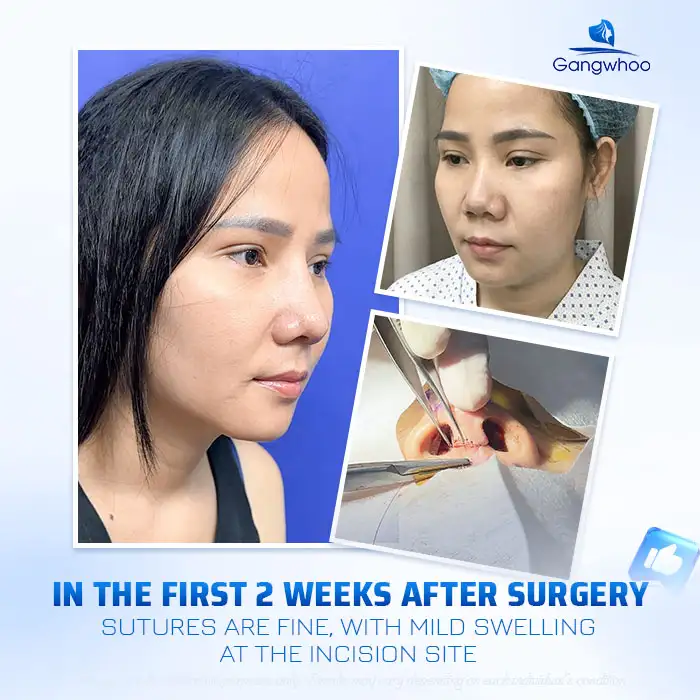
From a medical perspective, after rhinoplasty there will be a small suture line to close the incision, usually located at the columella or inside the nostrils. Therefore, in the early postoperative period (1–2 weeks), you may see fine sutures or mild swelling around the incision area—this is a normal bodily response during the healing process.
However, if the surgery is performed using 4K microsurgical endoscopic rhinoplasty, the incision is extremely small and closed with ultra-fine aesthetic sutures, allowing the wound to heal quickly and leaving almost no visible scar or suture marks after recovery.
Cases where sutures remain clearly visible after rhinoplasty are usually caused by the following factors:
The surgeon’s technique is not precise, with improper or overly tight suturing.
A predisposition to keloid scarring or extremely thin skin.
Improper postoperative care, leading to inflammation, redness, or wound dehiscence.
Typically, sutures are removed after 7–10 days. About 1–2 months after rhinoplasty, the wound has fully healed, and the skin around the columella gradually fades, restoring a smooth and natural skin surface.
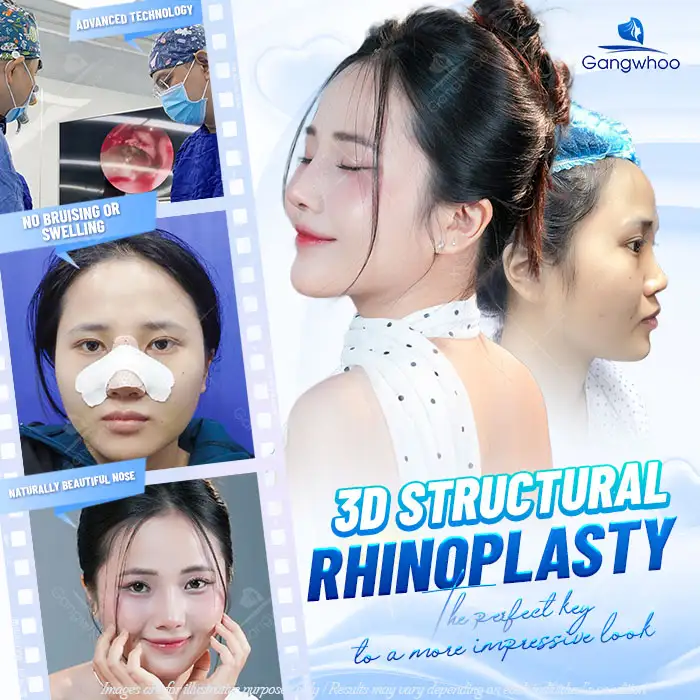
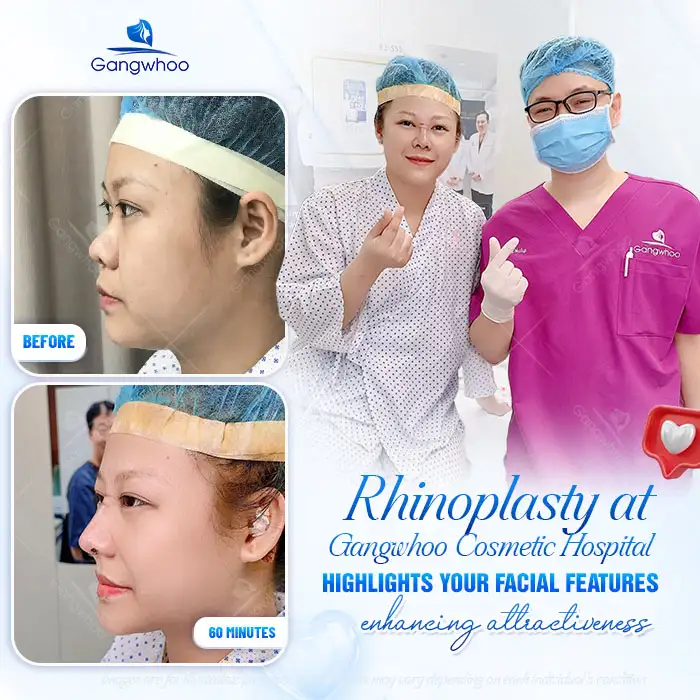
At Gangwhoo Cosmetic Hospital, the application of 4K microsurgical endoscopic rhinoplasty allows precise dissection of each tissue layer, minimizing trauma. Combined with the use of premium aesthetic sutures and cartilage materials such as Surgiform or Nanoform, the nasal skin heals smoothly, with no visible sutures and no aesthetic scarring.
Rhinoplasty methods that help minimize scarring
Currently, 4K microsurgical endoscopic rhinoplasty is considered the most advanced technique to minimize the risk of visible sutures and postoperative scarring.
Unlike older methods that rely solely on manual dissection, the 4K endoscopic technique at Gangwhoo allows surgeons to observe the entire nasal structure on a high-definition monitor and accurately identify the areas requiring intervention. As a result, dissection, cartilage placement, and wound closure are performed with great precision, significantly reducing soft tissue damage.
In addition, choosing the appropriate cartilage material greatly affects the healing process. Premium materials such as Surgiform and Nanoform have high biocompatibility, helping prevent skin contraction or implant exposure. This allows the incision to close more quickly and smoothly, making sutures almost invisible after healing.
Post-rhinoplasty care to promote fast wound healing
To minimize scarring and ensure a quick recovery, you must strictly follow the doctor’s postoperative care instructions. Some important guidelines include:
Keep the wound clean and dry: Avoid water, dust, or cosmetics contacting the suture area during the first 7 days.
Take medication and attend follow-up appointments as scheduled: Prescribed anti-inflammatory and antibiotic medications help reduce the risk of infection.
Avoid touching, squeezing, or applying pressure to the nose: This can cause the wound to open or shift.
Maintain a proper diet: Avoid spicy foods, seafood, beef, and water spinach; supplement with vitamin C and zinc to promote tissue regeneration.
Apply cold compresses during the first 1–2 days: This helps reduce swelling and improves blood circulation, supporting smoother healing.
In reality, with proper care, the incision heals beautifully without leaving any marks, and sutures are no longer visible after about 3–4 weeks.
With modern technology and highly experienced surgeons, the concern about visible sutures after rhinoplasty is no longer a major issue. When performed at a reputable facility using 4K microsurgical endoscopic techniques and premium cartilage materials such as Surgiform or Nanoform, the nose recovers with a natural, smooth appearance and no scarring.
If you are looking for a reliable place to undergo rhinoplasty or need correction for visible sutures or old, aesthetically unpleasing scars, Gangwhoo Cosmetic Hospital is a trusted choice. With over 15 years of experience in nasal plastic surgery, the medical team at Gangwhoo consistently pursues the highest standards: a naturally beautiful nose – safety – and no aesthetic traces.
Hello Doctor, I am considering rhinoplasty to improve the shape of my nose because my nose is quite low and the tip is slightly wide, making my overall facial features look less harmonious. However, after researching, I found that there are many cosmetic hospitals and spas advertising rhinoplasty services, so I am quite confused about […]
I’ve heard that nowadays there are Nano breast implants without identification chips, which are different from implants with embedded chips. Doctor, could you explain exactly what Nano implants without chips are, what their advantages and disadvantages are, and whether I should choose this type? I’m a bit concerned about having a “chip” inside my body, […]
Doctor, after my rhinoplasty, I noticed that the tip of my nose feels a bit hard compared to normal, and it feels quite uncomfortable. I don’t know what causes this or whether it is a normal condition or an abnormal sign that requires a medical check-up. If this is a normal condition, what should I […]
I am interested in endoscopic breast augmentation because I’ve heard it is gentler than traditional methods. However, I am still a bit afraid of pain and concerned about risks after surgery. Doctor, could you tell me whether endoscopic breast augmentation is painful, what the procedure involves, and what should be noted after surgery to recover […]
Hello Doctor, I just underwent a rhinoplasty and am very concerned about post-operative care. Could you please advise me on the correct and scientific way to care for my nose after surgery so that it recovers quickly, reduces swelling and pain, and avoids complications? Additionally, I would like to know any important precautions during the […]
I am learning about nasal surgery and have seen many people share that rhinoplasty not only enhances beauty but also helps the face look more refined and boosts confidence. So, doctor, could you please share the practical benefits of rhinoplasty, and whether it is worth considering if my nose is slightly low but still balanced?