Hello, many clients after rhinoplasty often wonder whether they can eat pumpkin, as they are concerned that this food might affect the healing process or alter the surgical results. I will help you understand this more clearly from a medical perspective so you can have the most appropriate nutritional plan after rhinoplasty.
Can you eat pumpkin after rhinoplasty?
The answer is yes—you can absolutely eat pumpkin after rhinoplasty. However, it should be consumed in moderation and prepared properly to maximize its benefits for the recovery process.
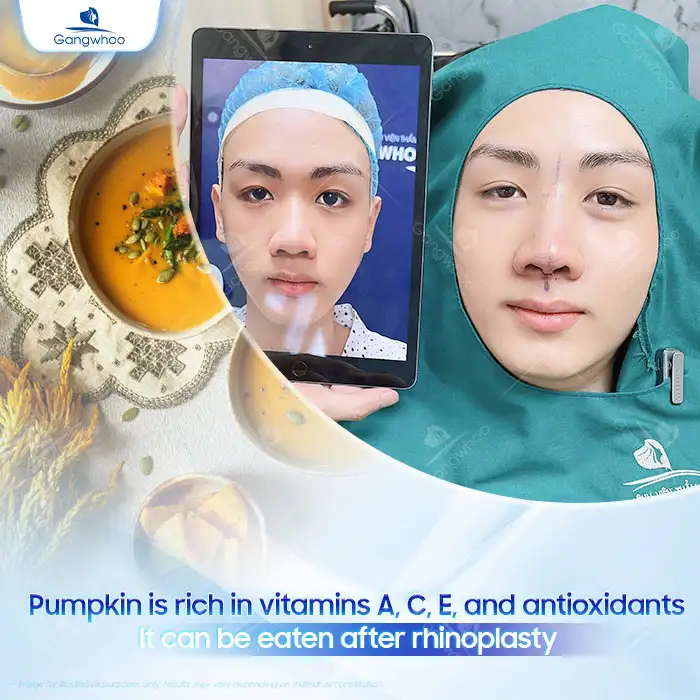
Pumpkin is rich in vitamins A, C, E, and antioxidants, which help boost immunity, promote cell regeneration, and support faster wound healing. These nutrients aid in the regeneration of soft tissues around the nasal area, help reduce inflammation, lower the risk of infection, and minimize postoperative scarring. Therefore, adding pumpkin to your diet after rhinoplasty in the right way is indeed beneficial.
However, consuming excessive amounts of pumpkin over a long period—especially when prepared in sweet dishes high in sugar or fat—may increase blood sugar levels and cause internal heat, which is not favorable for recovery. Some individuals with sensitive constitutions may experience mild itching in the healing skin when consuming too many warming foods such as pumpkin.
For this reason, doctors recommend eating pumpkin only 2–3 times per week, preferably boiled, steamed, or cooked as pumpkin porridge to ensure easy digestion and optimal nutrient retention. Thus, pumpkin is not a food that needs to be avoided after rhinoplasty; on the contrary, when eaten properly, it is very beneficial for skin and cartilage tissue recovery.
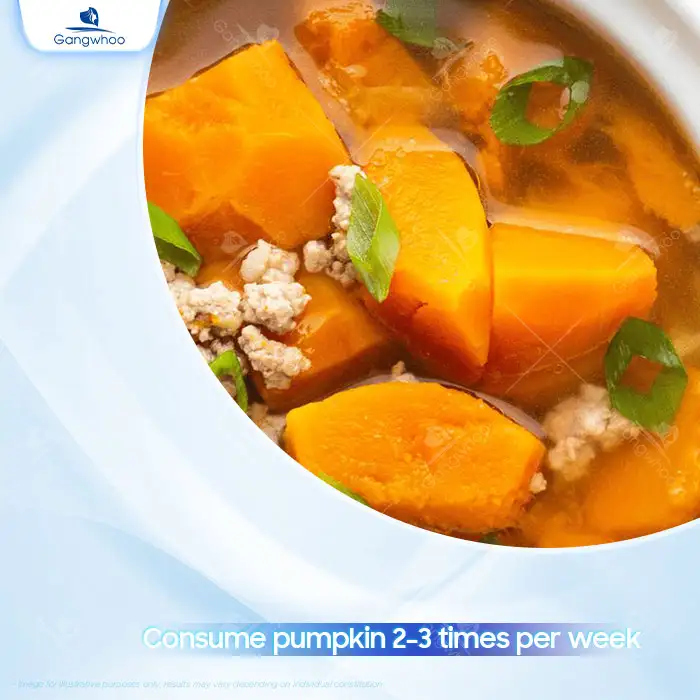
Benefits of eating pumpkin after rhinoplasty
After rhinoplasty, the body needs ample nutrients for cell regeneration, wound healing, and inflammation reduction. Pumpkin is one of the natural foods that effectively meets these needs thanks to its valuable nutrients:
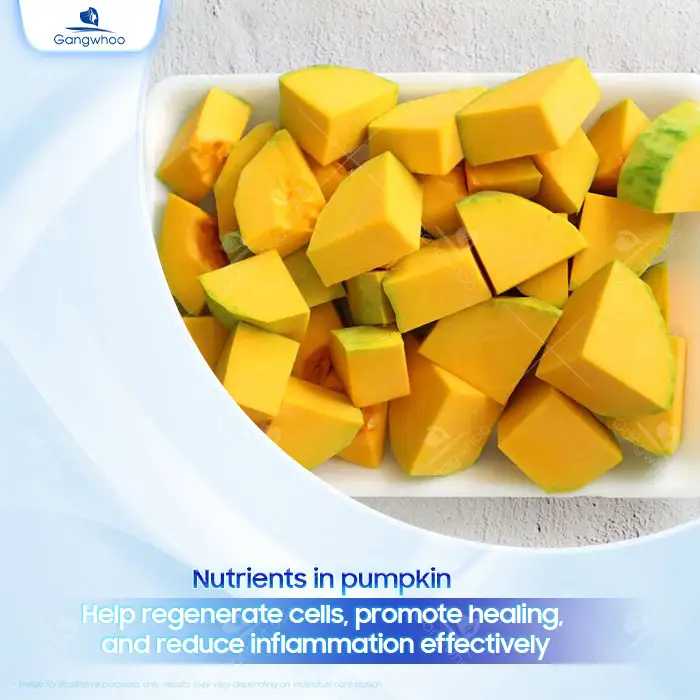
- Vitamin A and beta-carotene: stimulate epithelial cell proliferation, support rapid wound healing, and help reduce the risk of dark scars.
- Vitamin C: promotes collagen synthesis, enhances skin elasticity, and helps nasal tissues bond more effectively.
- Antioxidants: provide anti-inflammatory effects, reduce swelling, and help the nose recover faster.
- Fiber and minerals: support digestive health, enabling better nutrient absorption during the postoperative recovery period.
As a result, consuming pumpkin properly not only benefits overall health but also contributes to quicker stabilization of the nasal shape and smoother, more natural-looking skin around the nose after surgery.
Recommended pumpkin-based dishes for post-rhinoplasty patients
To facilitate nutrient absorption and avoid irritation to the surgical area, you should prioritize soft, easy-to-digest, and low-fat dishes. Some pumpkin dishes recommended after rhinoplasty include:
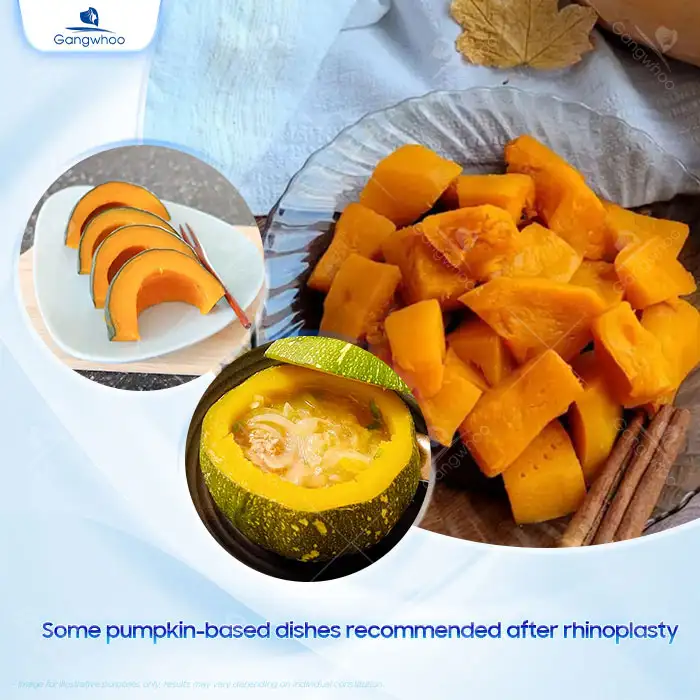
- Pumpkin porridge with minced meat: easy to eat, rich in protein and vitamins, helping the body recover quickly.
- Pumpkin soup stewed with bones: provides natural collagen, supporting soft tissue regeneration around the nose.
- Pureed pumpkin soup: soft, aromatic, and energy-rich—very suitable in the early postoperative days.
- Unsweetened fresh milk pumpkin smoothie: supplies vitamins and antioxidants while soothing the digestive system.
These dishes are beneficial for overall health and help reduce nasal swelling and stabilize the nasal shape more quickly after surgery.
Advice from Gangwhoo doctors
In summary, you can eat pumpkin after rhinoplasty, and it is even highly beneficial if consumed properly and in moderation. Pumpkin is not a food that needs to be avoided after rhinoplasty; rather, it is a nutritious source that helps the body recover faster and reduce the risk of poor scarring.
At Gangwhoo Cosmetic Hospital, the medical team always accompanies clients throughout the postoperative period—not only ensuring natural, harmonious nasal aesthetics but also providing scientific care and nutritional guidance to help achieve long-lasting results. Currently, the hospital applies many advanced techniques such as 4K microsurgical endoscopic rhinoplasty without scarring, using high-end Surgiform and Nanoform implants to create a refined, soft, and naturally realistic nasal shape.
If you are still unsure about your diet after rhinoplasty or would like personalized advice from a specialist on the most suitable nasal shape for your face, you may contact Gangwhoo Cosmetic Hospital directly for detailed support.


