Comparison between conventional rhinoplasty and structural rhinoplasty: What are the differences?
Minh Kha
Rhinoplasty
Asked: 07/01/2026
I would like to compare conventional rhinoplasty with structural rhinoplasty. What are the basic differences between these two methods? Could you help me understand clearly so I can choose the option that best suits my nasal condition?
Hello, many people who are researching nasal aesthetics often wonder whether they should choose conventional rhinoplasty or structural rhinoplasty to achieve the most natural, durable, and safe nasal shape. Each method has its own advantages and disadvantages, suitable for different nasal conditions and aesthetic expectations. Below, the doctor will explain each method in detail and help you understand which option is the most optimal choice.
Conventional rhinoplasty method
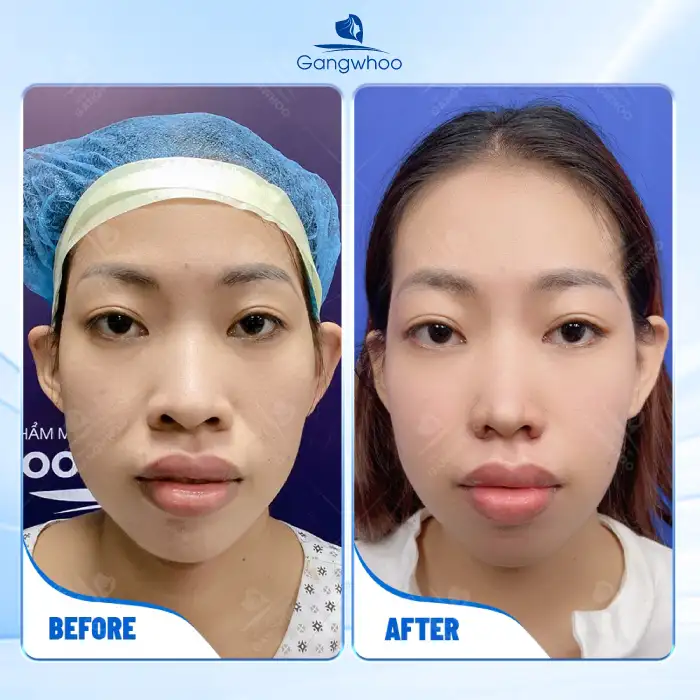
Regarding the question of what conventional rhinoplasty is and how it is applied, the doctor would like to share that this is currently the simplest rhinoplasty technique. This method mainly uses synthetic implants (commonly silicone or flexible soft implants) placed on the nasal bridge to increase height and create a more refined contour.
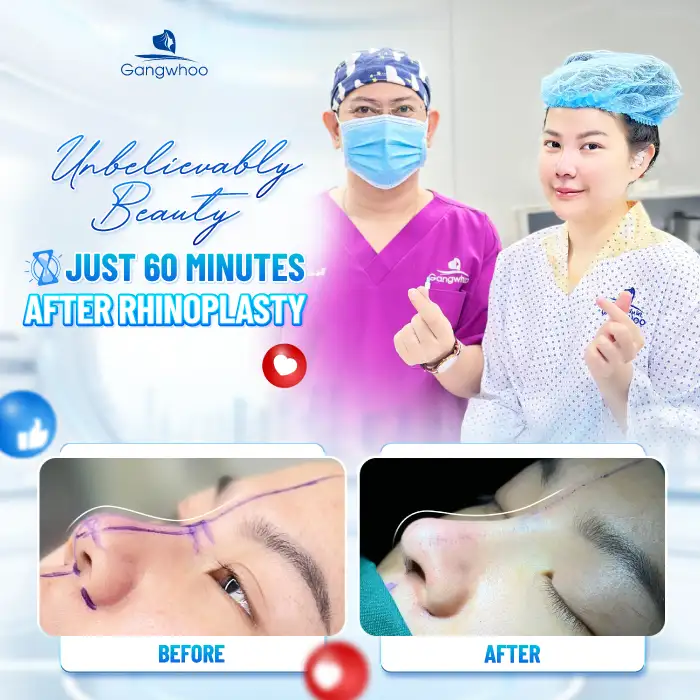
Because it only intervenes in the nasal bridge, the procedure time is relatively short (about 45–60 minutes), minimally invasive, and the cost is quite affordable. However, the drawback of conventional rhinoplasty is that it cannot correct complex defects such as a large nasal tip, short nose, thin nasal skin, or a deviated nose. Therefore, over time, if the nasal tissue is thin or the implant contracts, the nose may develop implant visibility or redness.
In summary, conventional rhinoplasty is only suitable for those who already have a relatively good nasal foundation, thick nasal skin, and simply need mild bridge augmentation to achieve better facial balance.
Structural rhinoplasty method
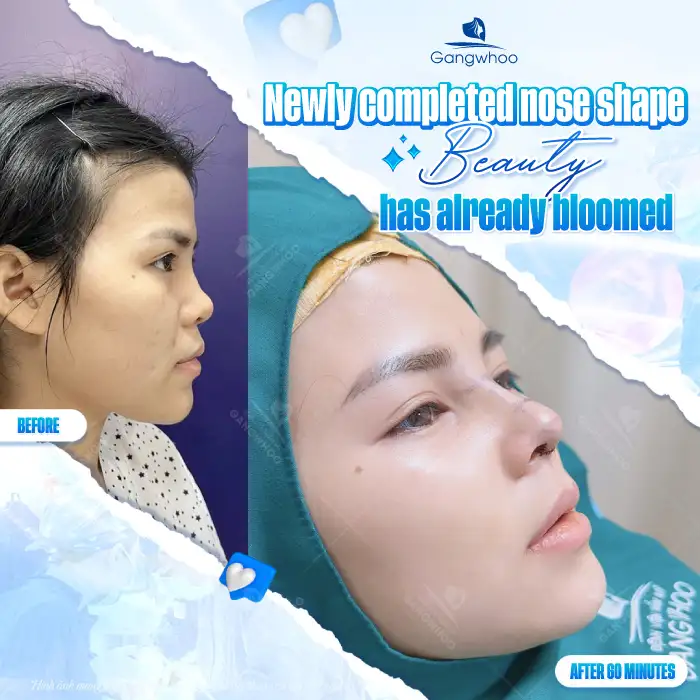
Unlike conventional rhinoplasty, structural rhinoplasty is a comprehensive technique that intervenes in the nasal bridge, tip, columella, and nasal base. The doctor reconstructs the nasal framework by combining synthetic implants (such as Surgiform, Nanoform) with autologous cartilage (commonly harvested from the ear or nasal septum) to create a firm, harmonious, and more natural nasal shape.
The greatest advantage of this method is its ability to correct most nasal defects such as an upturned nose, short nasal tip, large nasal tip, dorsal hump, or noses that have previously failed surgery. In addition, because autologous cartilage is used to cover the nasal tip, biocompatibility is high, minimizing the risk of implant exposure, redness, contraction, or material-related allergies.
At Gangwhoo Cosmetic Hospital, 4K microsurgical endoscopic structural rhinoplasty is applied, allowing precise manipulation, minimal invasiveness, no external scarring, and ensuring a soft, natural-looking nasal shape.
Comparison between conventional rhinoplasty and structural rhinoplasty
To help you visualize more easily, the doctor summarizes the main differences between the two methods as follows:
Criteria
Conventional rhinoplasty
Structural rhinoplasty
Scope of intervention
Only the nasal bridge is augmented
Complete reconstruction of the nasal shape (bridge – tip – columella)
Materials used
Synthetic implant
Combination of synthetic implant and autologous cartilage
Duration of results
5–7 years (depending on individual physiology)
15–20 years or longer
Safety level
Moderate – possible implant visibility or redness if nasal skin is thin
High – minimizes complications, with a soft and natural nasal shape
Suitable candidates
People with a good existing nasal shape and thick nasal skin
People with short or deviated noses, previous failed surgeries, or those seeking long-term durability
Thus, if you only want mild improvement of the nasal bridge, conventional rhinoplasty is a cost-effective and sufficient option. However, if you desire a comprehensive, long-lasting, and highly safe nasal result, structural rhinoplasty is the optimal approach.
Should you choose conventional rhinoplasty or structural rhinoplasty?
Depending on your current nasal condition and aesthetic goals, the doctor will recommend the most appropriate method. However, from a professional perspective, the doctor advises prioritizing structural rhinoplasty if you want a harmonious, natural-looking nasal shape with long-term durability.
Especially at Gangwhoo Cosmetic Hospital, all structural rhinoplasty procedures are performed using 4K microsurgical endoscopic technology and premium synthetic implants such as Surgiform and Nanoform—ensuring maximum safety, minimizing complications, and delivering an elegant, soft nasal shape tailored to each face.
If you are still uncertain about which method to choose, you can visit Gangwhoo Cosmetic Hospital to be directly examined by a specialist doctor, have your nasal structure evaluated, and receive the most optimal aesthetic solution for you.
Gangwhoo Cosmetic Hospital – The place that delivers natural nasal shapes, golden-ratio proportions, and long-lasting beauty over time.
Hello Doctor, I am considering rhinoplasty to improve the shape of my nose because my nose is quite low and the tip is slightly wide, making my overall facial features look less harmonious. However, after researching, I found that there are many cosmetic hospitals and spas advertising rhinoplasty services, so I am quite confused about […]
I’ve heard that nowadays there are Nano breast implants without identification chips, which are different from implants with embedded chips. Doctor, could you explain exactly what Nano implants without chips are, what their advantages and disadvantages are, and whether I should choose this type? I’m a bit concerned about having a “chip” inside my body, […]
Doctor, after my rhinoplasty, I noticed that the tip of my nose feels a bit hard compared to normal, and it feels quite uncomfortable. I don’t know what causes this or whether it is a normal condition or an abnormal sign that requires a medical check-up. If this is a normal condition, what should I […]
I am interested in endoscopic breast augmentation because I’ve heard it is gentler than traditional methods. However, I am still a bit afraid of pain and concerned about risks after surgery. Doctor, could you tell me whether endoscopic breast augmentation is painful, what the procedure involves, and what should be noted after surgery to recover […]
Hello Doctor, I just underwent a rhinoplasty and am very concerned about post-operative care. Could you please advise me on the correct and scientific way to care for my nose after surgery so that it recovers quickly, reduces swelling and pain, and avoids complications? Additionally, I would like to know any important precautions during the […]
I am learning about nasal surgery and have seen many people share that rhinoplasty not only enhances beauty but also helps the face look more refined and boosts confidence. So, doctor, could you please share the practical benefits of rhinoplasty, and whether it is worth considering if my nose is slightly low but still balanced?