Suggested Meal Plan for People Who Have Just Undergone Rhinoplasty to Help Wounds Heal Faster
Diem Quynh
Rhinoplasty
Asked: 18/01/2026
I had rhinoplasty 3 days ago, and currently I am mainly eating porridge because I’m afraid it might affect the wound. Doctor, could you suggest a suitable meal plan for someone who has just had rhinoplasty to help the wound heal quickly and avoid scarring?
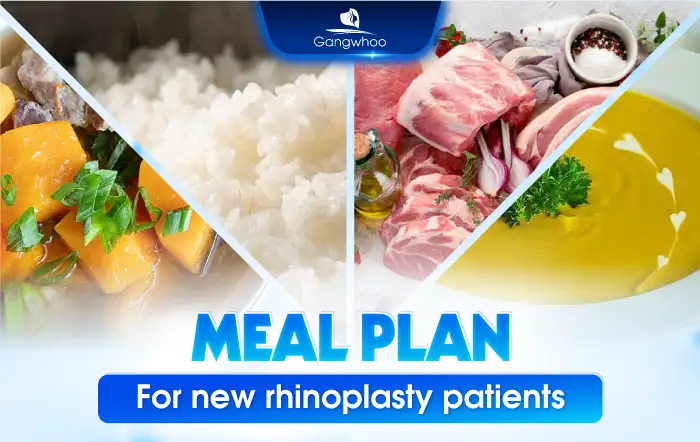
Hello, after undergoing rhinoplasty surgery, nutrition plays an extremely important role in helping wounds heal faster, reducing swelling, and preventing poor scarring. Many people underestimate this stage, causing prolonged recovery or results that do not meet expectations. Below, the doctor will share detailed information about a meal plan for people who have just had rhinoplasty, including foods to eat, suggested meals for the first 7 days, and cooking tips to help you take the best care of yourself.
Foods to Choose After Rhinoplasty
After rhinoplasty, the body needs nutrients that help stimulate tissue growth, regenerate skin, and support anti-inflammatory processes, so you should prioritize the following foods:
After rhinoplasty, you should eat easily digestible protein-rich food groups
Easily digestible protein-rich foods: such as chicken breast, salmon, basa fish, boiled eggs, tofu. Protein is the main component that helps regenerate cells and repair damaged tissue, but you should choose low-fat options to avoid inflammation.
Foods rich in vitamin C: oranges, tangerines, kiwi, guava, broccoli help boost immunity, reduce swelling and bruising, and support collagen formation—an important factor in faster wound healing and softer nasal skin.
Foods containing zinc and iron: such as oysters, whole grains, pumpkin, soybeans, which help tissue regeneration and strengthen immunity after surgery.
Drink plenty of water and supplement with coconut water and vegetable juices: to help detoxify the body, limit inflammation, and reduce the risk of subdermal hematoma.
However, you should avoid foods that are too hard, spicy, or hot, as they can increase blood flow to the nasal area, leading to prolonged swelling. In addition, strictly avoid foods that may cause keloid scarring such as beef, sticky rice products, water spinach, seafood, eggs, etc., for at least the first month.
Suggested Meal Plan for the First 7 Days After Rhinoplasty
The doctor suggests a meal plan for people who have just had rhinoplasty during the first 7 days, ensuring adequate nutrition, easy digestion, and faster recovery:
A meal plan for people who have just had rhinoplasty that you should consider adding
Days 1–2:
Morning: Thin plain porridge, carrot juice.
Lunch: Pureed vegetable soup stewed with chicken breast.
Throughout the first 7 days, you should prioritize soft foods, limit strong chewing or opening your mouth too wide to avoid affecting the recovering nasal area. After the first week, you can gradually return to a normal diet, but should continue to avoid foods that may cause scarring for another 2–3 weeks.
Notes During Food Preparation
To ensure safety and help wounds heal faster, when preparing a meal plan for people who have just had rhinoplasty, you should pay attention to the following:
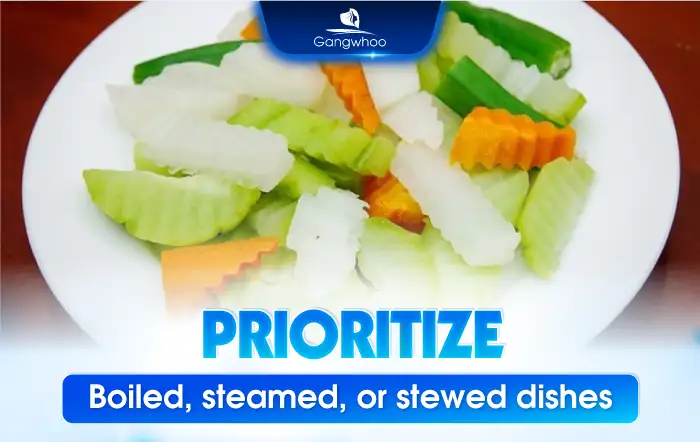
Prioritize dishes prepared by boiling, steaming, or slow stewing until soft
Prioritize steaming, boiling, or stewing: helps retain nutrients, makes food easier to digest, and avoids oils and fats that may cause inflammation or irritation.
Do not season too salty or spicy: as high salt intake can cause water retention, leading to prolonged nasal swelling.
Wash hands thoroughly before eating or cooking: to prevent infection, especially during the first week after surgery.
Divide meals throughout the day: eat 4–5 small meals instead of 3 large ones to help the body absorb nutrients better and reduce digestive burden.
A scientific nutritional regimen will help significantly shorten recovery time, reduce swelling and bruising, and support the nose in settling into its ideal shape faster.
At Gangwhoo Cosmetic Hospital, after each rhinoplasty procedure, patients are guided in detail by doctors on nutrition and postoperative care, along with a recovery monitoring booklet.
If you need further consultation on nutrition or choosing suitable rhinoplasty technology, you can visit Gangwhoo Cosmetic Hospital
Hello Doctor, I am considering rhinoplasty to improve the shape of my nose because my nose is quite low and the tip is slightly wide, making my overall facial features look less harmonious. However, after researching, I found that there are many cosmetic hospitals and spas advertising rhinoplasty services, so I am quite confused about […]
I’ve heard that nowadays there are Nano breast implants without identification chips, which are different from implants with embedded chips. Doctor, could you explain exactly what Nano implants without chips are, what their advantages and disadvantages are, and whether I should choose this type? I’m a bit concerned about having a “chip” inside my body, […]
Doctor, after my rhinoplasty, I noticed that the tip of my nose feels a bit hard compared to normal, and it feels quite uncomfortable. I don’t know what causes this or whether it is a normal condition or an abnormal sign that requires a medical check-up. If this is a normal condition, what should I […]
I am interested in endoscopic breast augmentation because I’ve heard it is gentler than traditional methods. However, I am still a bit afraid of pain and concerned about risks after surgery. Doctor, could you tell me whether endoscopic breast augmentation is painful, what the procedure involves, and what should be noted after surgery to recover […]
Hello Doctor, I just underwent a rhinoplasty and am very concerned about post-operative care. Could you please advise me on the correct and scientific way to care for my nose after surgery so that it recovers quickly, reduces swelling and pain, and avoids complications? Additionally, I would like to know any important precautions during the […]
I am learning about nasal surgery and have seen many people share that rhinoplasty not only enhances beauty but also helps the face look more refined and boosts confidence. So, doctor, could you please share the practical benefits of rhinoplasty, and whether it is worth considering if my nose is slightly low but still balanced?