Hello, the doctor understands your concern when experiencing eye socket pain after rhinoplasty. This is a condition that quite a few people encounter in the early postoperative period. However, it is important to clearly distinguish between normal bodily responses and warning signs of complications in order to take timely and appropriate action.
What causes eye socket pain after rhinoplasty?
First of all, the doctor confirms that eye socket pain after rhinoplasty during the first few days can occur due to changes in tissue structure and nerves in the nasal–orbital region. The specific causes usually include:

- Impact on the infraorbital nerve: During tissue dissection and placement of rhinoplasty materials, if the soft tissue near this nerve is affected, pain, soreness, or radiation of pain to the eye socket area can occur.
- Inflammatory response and soft tissue swelling: After surgery, the body activates a natural inflammatory response. Swelling around the nasal bridge and eye area can cause a feeling of pain and tightness.
- Improper sleeping position or incorrect postoperative care: Sleeping on one side, bending the head down too low, or applying hot compresses at the wrong time can increase facial pressure and lead to eye socket pain.
- Rare cases: If the nasal cartilage or implant is improperly positioned or compresses blood vessels or nerves, the pain may be more severe, accompanied by symptoms such as blurred vision or asymmetric swelling.
Therefore, mild eye socket pain during the first 3–5 days is usually normal. However, if the pain increases, spreads, or lasts longer than one week, it may be an abnormal sign that requires in-depth examination.
Is eye socket pain after rhinoplasty a complication?
In most cases, eye socket pain is only a temporary postoperative reaction and not a complication. However, if the pain is accompanied by one or more of the following signs, the doctor advises you to seek medical evaluation immediately:

- Pain radiating to the temples, deep pain inside the orbit, or a heavy-headed sensation.
- Asymmetric nasal swelling, redness, or abnormal discharge.
- Blurred vision, eye pain, or a feeling of compression.
- Pain lasting more than 7 days and not improving despite taking pain relief medication.
In such cases, complications such as infection, fluid accumulation, nerve compression, or implant displacement may have occurred. These situations require timely medical intervention to prevent deeper damage to both the nose and the eye area.
Symptoms indicating complications after rhinoplasty
From a professional perspective, complications after rhinoplasty can present at various levels. In addition to eye socket pain after rhinoplasty, you should also watch for the following signs:
- Abnormal and prolonged swelling or pain: Normally, swelling and pain gradually decrease after 5–7 days. If they worsen, this may indicate inflammation or infection.
- Redness, warmth, discharge, or pus from the nose: These are signs of localized infection and require early intervention with antibiotics and medical management.
- Deviated, curved, or protruding nasal bridge: This may result from incorrect implant placement or poor tissue compatibility.
- Changes in vision or blurred vision: This is a dangerous sign that may be related to compression of ocular blood vessels or nerves and requires immediate medical attention.
If any of these symptoms appear, you should absolutely not attempt self-treatment at home. Instead, you should visit Gangwhoo Cosmetic Hospital or a medical facility with a plastic surgery specialty so that doctors can perform diagnostic imaging (CT scan or soft tissue ultrasound) to accurately determine the cause and provide safe treatment.
Doctor’s advice:
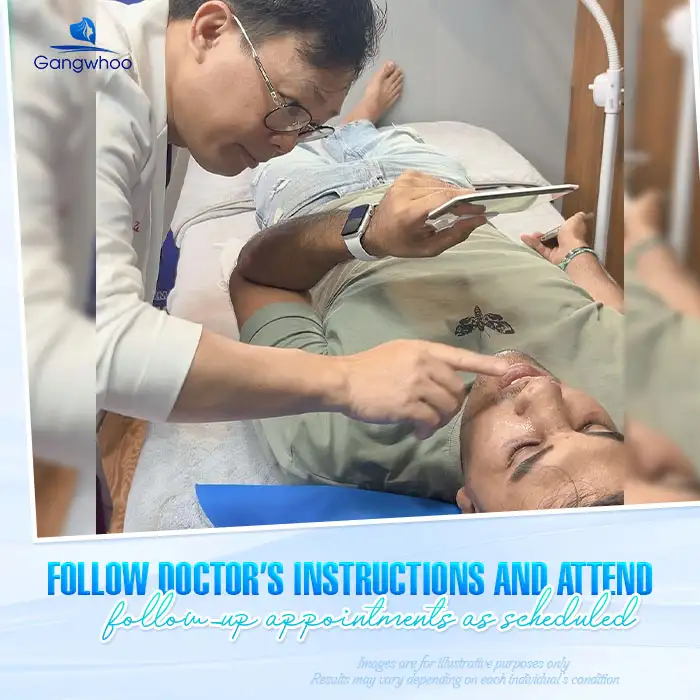
After rhinoplasty, strictly following postoperative care instructions and attending scheduled follow-up visits play a crucial role in the early detection of abnormal signs. At Gangwhoo Cosmetic Hospital, all rhinoplasty cases are closely monitored through specialized postoperative care protocols. By applying modern technologies such as 4D structural rhinoplasty, ear cartilage rhinoplasty, and semi-structural rhinoplasty, the medical team can optimize a harmonious nasal shape while ensuring absolute safety for the nasal–orbital nervous system.
If you are experiencing eye socket pain after rhinoplasty or need a thorough examination, you should visit Gangwhoo Cosmetic Hospital so that the doctor can directly assess your condition and provide the most appropriate management guidance.


