Hello, I understand that nowadays many people are interested in rhinoplasty using autologous fat because it is often perceived as a “natural” and “safe” method, as it uses the patient’s own body fat. However, from a professional medical perspective, this technique is not suitable for every case. I will clearly analyze for you whether you should consider autologous fat rhinoplasty, in terms of effectiveness, risks, and alternative options that may be more optimal, so that you can make the most appropriate decision.
Should you undergo rhinoplasty using autologous fat?
Basically, autologous fat rhinoplasty is a method in which fat (also known as fat grafting for nasal augmentation) is harvested from the patient’s own body—commonly from the abdomen, thighs, or hips—and then injected into the nasal bridge to create natural height. However, doctors generally do not recommend this method if you desire a high, slim nasal shape with long-lasting results.
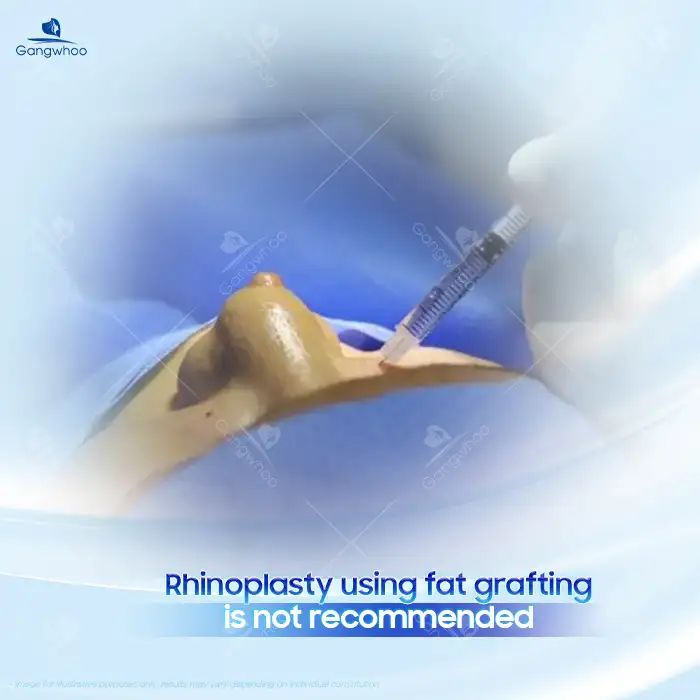
The reason is that autologous fat has unstable biological properties. After being grafted into the nasal area, a portion of the fat is absorbed by the body within the first 1–3 months, with only about 30–50% of the fat remaining. This makes the nasal shape prone to “dropping,” “losing form,” or nearly returning to its original appearance after a short period of time. In addition, the nose has thin skin and limited soft tissue padding, so fat grafting in this area can easily lead to lumpiness, asymmetry, or even vascular blockage if not performed with proper technique.
This method is sometimes applied in certain special situations—such as softening the nasal tip or improving minor depressions after previous nasal surgery—but it is not considered a standard or primary rhinoplasty solution. Therefore, if you ask whether you should undergo rhinoplasty using autologous fat, my answer is that it should only be done when clearly indicated by a board-certified plastic surgeon, and it should not be viewed as a long-term nasal augmentation solution.
Potential complications of rhinoplasty using autologous fat
Although fat injection rhinoplasty may seem simple, in reality it carries considerable risks if not performed correctly and by a highly qualified physician. Possible complications include:
- Fat accumulation or lump formation: When fat is not evenly distributed or is absorbed unevenly, it can form small lumps under the skin, resulting in an uneven and unnatural nasal shape.
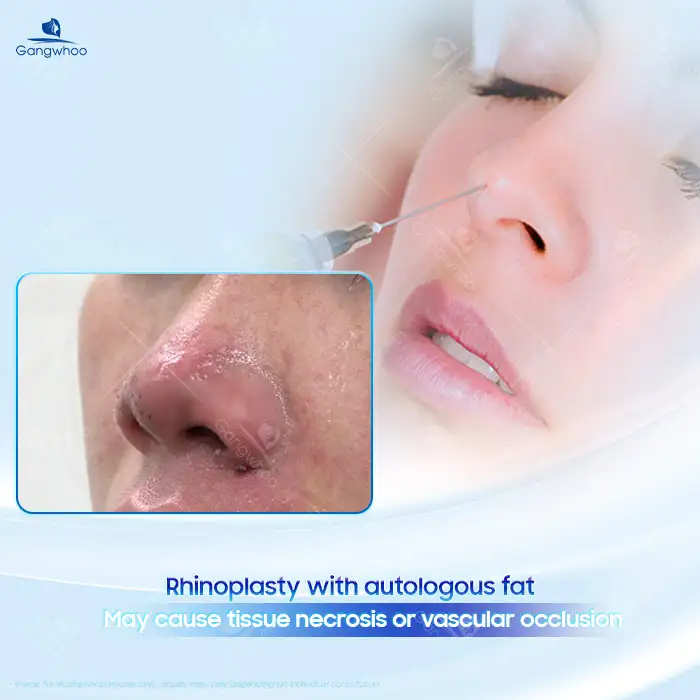
- Tissue necrosis or vascular occlusion: If the injection needle enters the wrong tissue plane, fat may enter blood vessels, causing vascular blockage, which can lead to nasal tissue necrosis or, in severe cases, visual impairment.
- Nasal deformity after fat resorption: Due to the low survival rate of grafted fat, most of it may be absorbed over time, causing the nose to collapse, deviate, or lose its shape after just a few months.
- Infection: If the fat harvesting, processing, and injection procedures are not performed under strict sterile conditions, the risk of infection and nasal skin necrosis is very high.
From a professional standpoint, the nose is not an ideal area for fat grafting because the skin is thin and the vascular network is dense. Therefore, doctors typically use autologous fat to improve sunken cheeks or the nasolabial folds, while rhinoplasty is better performed using specialized implant materials designed specifically for nasal structure.
Other effective rhinoplasty methods for long-lasting results
If you desire a higher, more refined, and long-lasting nasal shape, doctors recommend choosing more advanced rhinoplasty methods instead of autologous fat rhinoplasty, such as:
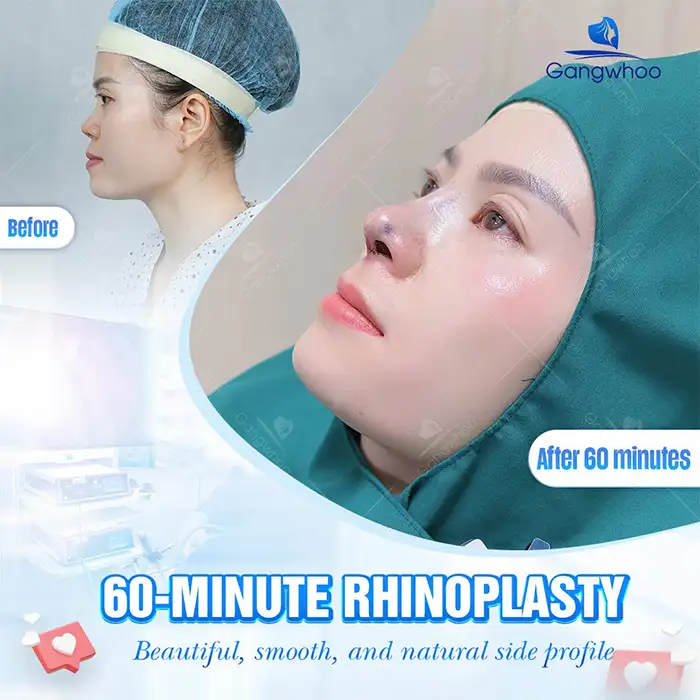
- Structural rhinoplasty using Surgiform or Nanoform implants: These implants have high biocompatibility and do not contract or deform over time. In particular, Surgiform is made from ePTFE (an advanced form of PTFE, in the same family as Gore-Tex), allowing it to integrate firmly with nasal tissues, remain stable, and provide a natural, soft appearance.
- 4K microsurgical endoscopic rhinoplasty: This technique, which is exclusively applied at Gangwhoo Cosmetic Hospital, allows surgeons to operate with precision down to each millimeter, minimizing tissue trauma, leaving no scars, and significantly reducing swelling and pain. As a result, clients recover faster and maintain long-term results.
These technologies not only enhance nasal aesthetics but also ensure maximum safety and suitability for a wide range of facial structures, helping you achieve a natural and harmonious nasal appearance.
If you are still unsure whether you should undergo rhinoplasty using autologous fat, my advice is that this method should only be used as a supportive aesthetic technique and not as a primary solution for nasal bridge augmentation. To achieve a naturally high nose with long-term stability and safety, you should consider modern rhinoplasty techniques such as using Surgiform or Nanoform implants combined with 4K microsurgical endoscopic rhinoplasty—currently applied at Gangwhoo Cosmetic Hospital.
If you would like a more detailed consultation with a plastic surgery specialist regarding your nasal structure or want to explore the most suitable rhinoplasty solution, you can visit Gangwhoo directly for an in-depth examination and consultation. Doctors are always ready to help you achieve a natural-looking, long-lasting, and safe nasal result.


