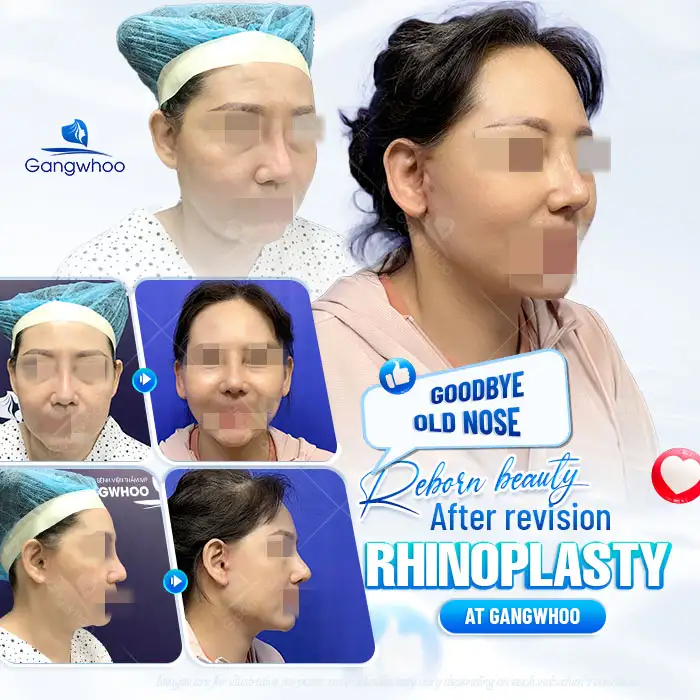
Is it harmful to revise or undergo multiple rhinoplasty procedures? When is revision rhinoplasty necessary?
Minh Chau
Rhinoplasty
Asked: 11/12/2025
Will revising or undergoing multiple rhinoplasty procedures negatively affect the nose? When is the appropriate and safest time to have revision rhinoplasty? I am very afraid of having multiple procedures and ending up with a damaged nasal shape.
Hello, I understand that many people, after having rhinoplasty for some time, wish to make adjustments to further improve their nose shape. However, undergoing rhinoplasty multiple times makes many individuals concerned about safety, aesthetic outcomes, and long-term effects on the nasal structure. So, is having rhinoplasty multiple times harmful, and what should be noted to ensure safety? Let me analyze this in detail for you.
Is undergoing rhinoplasty multiple times harmful?
First of all, I would like to clarify that undergoing rhinoplasty multiple times is not necessarily dangerous; however, it does carry higher risks compared to the first surgery, especially if it is not performed with proper techniques or at an unreliable facility.
From a medical perspective, each rhinoplasty surgery involves intervention in the soft tissues, cartilage, and nasal skin. After having rhinoplasty once, scar tissue and existing cartilage may cause the area to become more sensitive, with reduced blood supply. Therefore, if revision rhinoplasty is performed multiple times within a short period, the risk of complications such as nasal tip necrosis, cartilage exposure, infection, or hematoma increases significantly.
In addition, nasal tissues that undergo repeated interventions gradually lose their natural elasticity, making it more difficult to recreate a soft, natural-looking nasal shape. As a result, multiple rhinoplasty procedures should only be performed when truly necessary—for example, in cases of complications, nasal deviation, implant exposure, or unsatisfactory results.
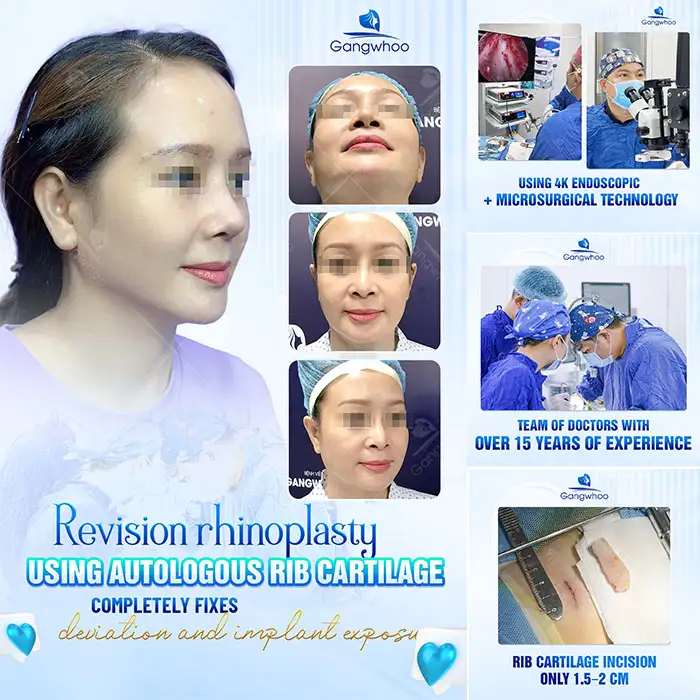
At Gangwhoo Cosmetic Hospital, when receiving revision rhinoplasty cases, doctors always thoroughly examine the nasal structure, assess the condition of scar tissue, and evaluate healing capacity before indicating surgery. The hospital also applies 4K endoscopic microsurgery rhinoplasty techniques, which allow precise dissection, minimal invasiveness, and maximum preservation of existing nasal tissues, ensuring safety even in cases where the nose has undergone multiple previous surgeries.
Cases where revision or repeat rhinoplasty is necessary
Not everyone needs multiple rhinoplasty procedures, but in the following situations, doctors may indicate revision surgery to ensure aesthetic results and safety:
Nasal deviation, warping, or cartilage exposure: often due to improper implant placement or thin nasal skin, resulting in visible cartilage beneath the skin.
Redness, inflammation, or nasal tip contracture: signs of tissue reaction or infection that require intervention and implant replacement.
A nasal shape that is not harmonious with the face: cases where patients wish to adjust the nose to better suit overall facial proportions or new aesthetic trends.
Implant displacement or nasal deformation over time: caused by aging or poor-quality implant materials.
However, before performing a second or further revision rhinoplasty, doctors always recommend waiting at least 6–12 months from the most recent surgery. This period allows the nasal tissues to stabilize completely, ensuring higher accuracy in revision results and minimizing the risk of repeat surgeries.
How to care for the nose after rhinoplasty to avoid multiple revisions
To avoid concerns about whether multiple rhinoplasty procedures are harmful, proper postoperative care plays an extremely important role. Below are some guidelines doctors strongly recommend following:
Keep the nose clean and dry: avoid contact with water, cosmetics, or dust for at least the first 7–10 days.
Strictly follow the doctor’s instructions: including taking prescribed antibiotics and anti-swelling medication, and attending regular follow-up visits to detect any abnormalities early.
Avoid touching, squeezing, or sleeping on your side against the nose: as this may cause implant displacement or nasal deformation.
Maintain proper nutrition: consume foods rich in protein, vitamins A and C, zinc, etc., to support faster tissue recovery.
Avoid strong impacts or early sports activities: as pressure on the facial area can affect the newly placed cartilage.
Most importantly, choosing a reputable aesthetic facility and a highly qualified doctor from the very beginning is the key factor in avoiding multiple revisions.
At Gangwhoo Cosmetic Hospital, all rhinoplasty procedures are directly performed by specialized doctors, using high-end implants such as Surgiform and Nanoform, combined with scar-free 4K endoscopic microsurgery techniques to ensure maximum safety and natural results. The finalized nasal shape is not only harmonious but also durable over time, minimizing the need for revision surgeries.
If you are concerned about whether undergoing rhinoplasty multiple times is harmful or need a professional evaluation of your current nasal condition, please visit Gangwhoo Cosmetic Hospital for a direct consultation. Our doctors will help determine whether revision is necessary and provide the most optimal solution—ensuring a naturally beautiful, safe, harmonious, and long-lasting nasal result.
I’ve heard that nowadays there are Nano breast implants without identification chips, which are different from implants with embedded chips. Doctor, could you explain exactly what Nano implants without chips are, what their advantages and disadvantages are, and whether I should choose this type? I’m a bit concerned about having a “chip” inside my body, […]
Doctor, after my rhinoplasty, I noticed that the tip of my nose feels a bit hard compared to normal, and it feels quite uncomfortable. I don’t know what causes this or whether it is a normal condition or an abnormal sign that requires a medical check-up. If this is a normal condition, what should I […]
I am interested in endoscopic breast augmentation because I’ve heard it is gentler than traditional methods. However, I am still a bit afraid of pain and concerned about risks after surgery. Doctor, could you tell me whether endoscopic breast augmentation is painful, what the procedure involves, and what should be noted after surgery to recover […]
Hello Doctor, I just underwent a rhinoplasty and am very concerned about post-operative care. Could you please advise me on the correct and scientific way to care for my nose after surgery so that it recovers quickly, reduces swelling and pain, and avoids complications? Additionally, I would like to know any important precautions during the […]
I am learning about nasal surgery and have seen many people share that rhinoplasty not only enhances beauty but also helps the face look more refined and boosts confidence. So, doctor, could you please share the practical benefits of rhinoplasty, and whether it is worth considering if my nose is slightly low but still balanced?
Doctor, my mother is 50 years old this year. She feels very self-conscious because her nasal bridge is low and slightly wide. I would like to ask whether older adults should undergo rhinoplasty, whether the surgery affects health, and at this age, which method would be the safest?