Is Korean Nose Implantation Good? Should You Choose It?
Ngoc Bich
Rhinoplasty
Asked: 15/12/2025
I’ve heard that Korean nose implants are very popular. Doctor, may I ask whether this method is actually good and whether I should choose it for my nose augmentation?
Hello, when researching materials for nose augmentation, one of the most frequently mentioned options is the Korean nose implant. This is an artificial implant widely used in Vietnam today; however, not everyone clearly understands its nature, advantages, disadvantages, and suitable candidates. I will analyze this in detail so you can fully understand it before making a decision.
What Is a Korean Nose Implant?
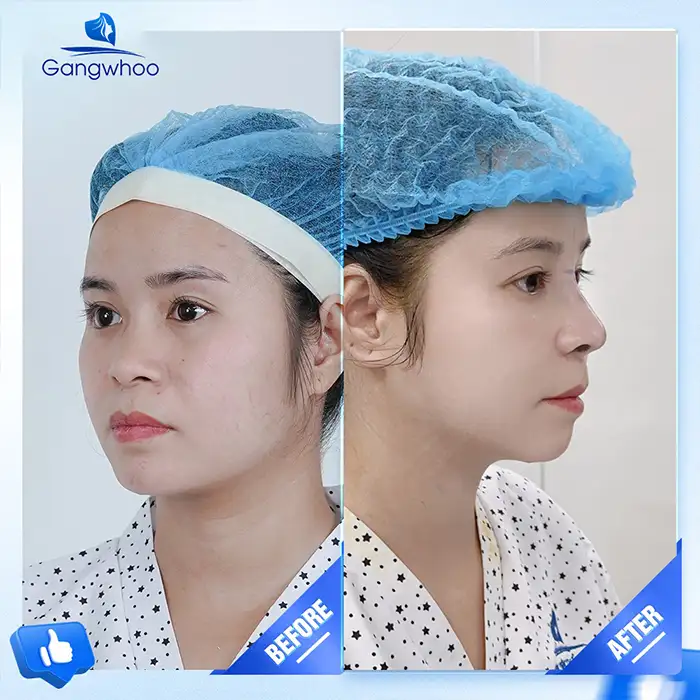
A Korean nose implant is essentially a type of artificial implant manufactured using advanced medical-grade technology, typically made from medical-grade silicone or ePTFE (Gore-Tex) imported from Korea. The characteristics of this implant are its flexibility and softness, and it is designed with shapes compatible with the nasal structure of Asians, making placement easier and achieving high aesthetic results.
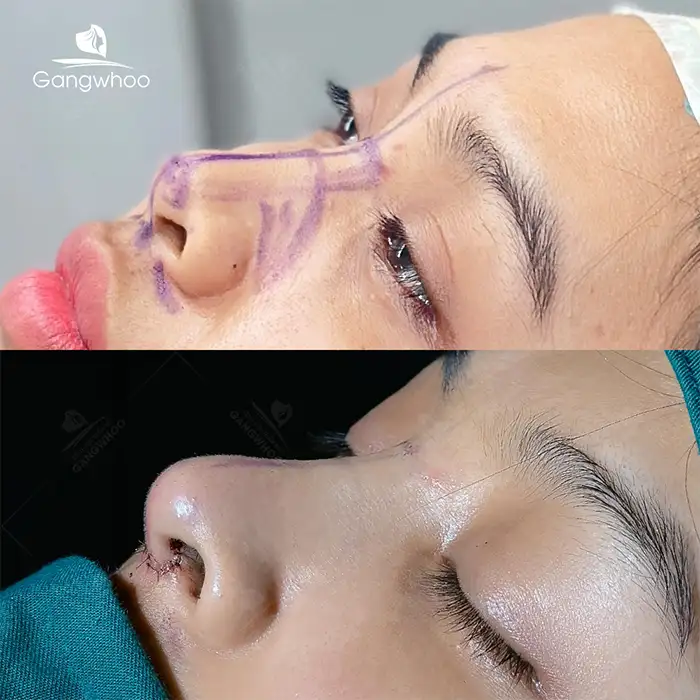
In Korean implant rhinoplasty, the doctor uses this material to elevate and straighten the nasal bridge, thereby improving overall facial harmony. In addition, in some cases it is combined with autologous cartilage (harvested from the septum or ear cartilage) to cover the nasal tip, helping to reduce complications such as redness or implant exposure.
Compared with traditional artificial implants, soft Korean implant rhinoplasty provides a more natural feel, easier shaping, and less postoperative discomfort.
Advantages and Disadvantages of Korean Nose Implants
Advantages
Soft and flexible, easy to shape, resulting in a natural-looking nose without stiffness.
Safe, as it is produced from specialized medical materials with relatively good biocompatibility.
Simple implantation procedure, shorter surgery time, and minimal trauma.
More affordable compared with some premium materials such as Surgiform or European-imported ePTFE implants.
Disadvantages
There is still a risk of complications such as implant exposure or redness at the nasal tip, especially in people with thin nasal skin.
The durability of Korean implants is not as long-lasting as Surgiform; results typically last about 7–10 years, after which revision may be needed.
As an artificial material, its ability to fully “naturalize” is not as optimal as autologous cartilage.
In summary, Korean artificial implant rhinoplasty offers fairly good safety and aesthetic outcomes, but there are still certain risks that need to be carefully evaluated by a doctor before proceeding.
Who Is Suitable for Korean Implant Rhinoplasty?
Based on professional experience, Korean implant rhinoplasty is usually suitable for:
Individuals with a low nasal bridge who want a higher, straighter nose without needing a complex solution.
Individuals with relatively thick nasal skin and sufficient soft tissue to cover the implant.
Clients who desire natural, soft results while maintaining a moderate budget.
Individuals who have never had nasal surgery and have no previous complications (cases with prior complications often require autologous cartilage or more advanced implants).
Conversely, for those with very thin nasal skin, previous failed rhinoplasty, or a desire for lifelong results, doctors may recommend considering other types of implants.
So, Should You Choose a Korean Nose Implant?
In conclusion, the answer to “Should I undergo rhinoplasty with a Korean implant?” depends largely on each individual’s nasal structure and personal needs.
If you are looking for stable aesthetic results, reasonable cost, and a natural nasal shape, a Korean implant can be a suitable choice. If you prioritize maximum safety, long-term complication prevention, or have a history of complications, autologous cartilage or Surgiform may be more appropriate options.
In many cases, doctors often combine Korean implants with autologous cartilage to leverage the advantages of both—creating a high, attractive nasal bridge while keeping the nasal tip soft and natural.
The most important point is that you should not decide on the implant type based solely on general reference information. Instead, you need an in-person examination by a specialist doctor, who will analyze skin thickness, bone structure, and existing cartilage to determine the optimal solution.
In summary, Korean nose implants are a safe, popular option that delivers high aesthetic effectiveness for many cases. However, to ensure beautiful and long-lasting results, you should choose a reputable facility and be operated on directly by a specialist. At Gangwhoo Cosmetic Hospital, the team of doctors personalizes each surgical case, flexibly combining different implant materials to provide you with a harmonious, safe, and durable nasal result.
Hello Doctor, I am considering rhinoplasty to improve the shape of my nose because my nose is quite low and the tip is slightly wide, making my overall facial features look less harmonious. However, after researching, I found that there are many cosmetic hospitals and spas advertising rhinoplasty services, so I am quite confused about […]
I’ve heard that nowadays there are Nano breast implants without identification chips, which are different from implants with embedded chips. Doctor, could you explain exactly what Nano implants without chips are, what their advantages and disadvantages are, and whether I should choose this type? I’m a bit concerned about having a “chip” inside my body, […]
Doctor, after my rhinoplasty, I noticed that the tip of my nose feels a bit hard compared to normal, and it feels quite uncomfortable. I don’t know what causes this or whether it is a normal condition or an abnormal sign that requires a medical check-up. If this is a normal condition, what should I […]
I am interested in endoscopic breast augmentation because I’ve heard it is gentler than traditional methods. However, I am still a bit afraid of pain and concerned about risks after surgery. Doctor, could you tell me whether endoscopic breast augmentation is painful, what the procedure involves, and what should be noted after surgery to recover […]
Hello Doctor, I just underwent a rhinoplasty and am very concerned about post-operative care. Could you please advise me on the correct and scientific way to care for my nose after surgery so that it recovers quickly, reduces swelling and pain, and avoids complications? Additionally, I would like to know any important precautions during the […]
I am learning about nasal surgery and have seen many people share that rhinoplasty not only enhances beauty but also helps the face look more refined and boosts confidence. So, doctor, could you please share the practical benefits of rhinoplasty, and whether it is worth considering if my nose is slightly low but still balanced?