Hello, I understand that after undergoing rhinoplasty, many patients feel concerned when experiencing nasal congestion after surgery. This is a fairly common symptom and can cause discomfort, especially during the first few days postoperatively. However, nasal congestion is not always a dangerous sign. I will help you clearly understand the causes, the level of impact, and the safest, most scientific ways to manage this condition.
Causes of nasal congestion after rhinoplasty
Nasal congestion after rhinoplasty can result from various causes, mainly related to the body’s natural response after surgery or technical factors during the procedure. Specifically:
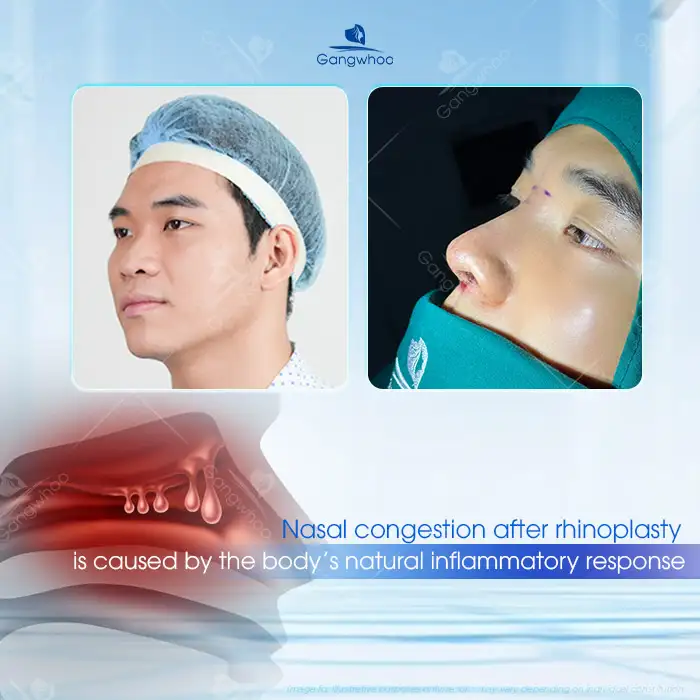
- Swelling of the nasal mucosa: After surgery, the soft tissues and nasal mucosa swell due to the body’s natural inflammatory response. This narrows the airway, causing a temporary feeling of nasal blockage.
- Fluid accumulation or dried blood: In some cases, secretions or blood clots in the nasal cavity may temporarily obstruct airflow.
- Deep intervention into the septum or nasal tip: If surgical techniques are not precise, cartilage or implant materials may affect internal structures, reducing airflow space.
- Allergic predisposition or pre-existing rhinitis: Patients with a history of sinusitis or allergic rhinitis are more prone to experiencing nasal congestion after rhinoplasty.
Typically, this condition lasts about 3–7 days and gradually improves as the soft tissues heal. However, if nasal congestion persists for more than 10 days after rhinoplasty or is accompanied by unusual signs such as persistent pain, yellow discharge, or breathing difficulty, you should seek medical evaluation promptly.
Is nasal congestion after rhinoplasty dangerous?
I affirm that in most cases, nasal congestion after rhinoplasty is a normal postoperative reaction during the recovery phase and is not dangerous. It reflects the body’s response to tissue trauma and implanted cartilage as it adapts.
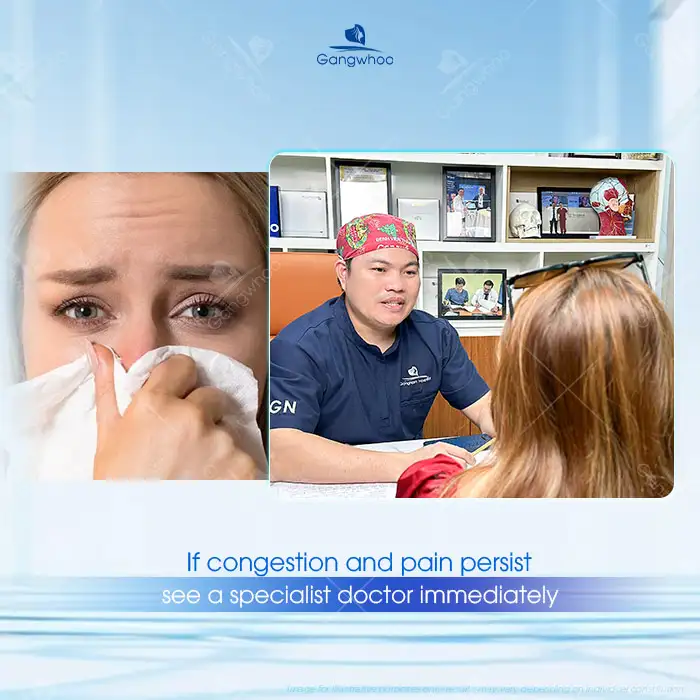
However, if nasal congestion is accompanied by prolonged pain, significant redness and swelling, foul-smelling discharge, or a mild fever, this may indicate infection or cartilage compression on internal nasal structures. In such cases, evaluation and timely treatment by a specialist are necessary to prevent complications.
Notably, these complications are more likely to occur when surgery is performed at facilities that do not meet sterility standards, with inexperienced surgeons, or when cartilage placement is incorrect. Therefore, choosing a reputable cosmetic hospital is a key factor in ensuring safety.
At Gangwhoo Cosmetic Hospital, rhinoplasty procedures are performed using 4K endoscopic microsurgery techniques, allowing precise visualization of blood vessels and cartilage structures, minimizing invasiveness and thereby significantly reducing postoperative swelling and nasal congestion.
How to manage nasal congestion after rhinoplasty
To improve nasal congestion after rhinoplasty, you can follow these measures:

- Keep your head elevated while sleeping during the first 5–7 days to reduce nasal swelling.
- Do not blow your nose forcefully or pick your nose for at least the first 2 weeks.
- Rinse your nose with 0.9% saline solution as instructed by your doctor to clear secretions and improve airflow.
- Drink plenty of water and supplement with vitamin C and protein to support tissue regeneration.
If you experience excessive nasal discharge or difficulty breathing, visit the hospital for professional cleaning and thorough evaluation.
At Gangwhoo Cosmetic Hospital, after rhinoplasty, patients receive detailed postoperative care instructions, anti-inflammatory and anti-swelling medications, and scheduled follow-up visits to monitor nasal recovery. In addition, Gangwhoo uses Surgiform and Nanoform implants—ultra-soft materials with high biocompatibility that minimize irritation and do not compress the airway, thereby significantly reducing the likelihood of nasal congestion after surgery.
Nasal congestion after rhinoplasty is a common reaction and is generally not dangerous if monitored and managed properly. However, if the condition persists or is accompanied by unusual symptoms, you should visit a reputable cosmetic facility for evaluation.
At Gangwhoo Cosmetic Hospital, a team of rhinoplasty specialists accompanies patients through consultation, surgery, and postoperative care, ensuring a naturally beautiful nose that harmonizes with the face and absolute safety for respiratory health.
If you are experiencing nasal congestion after rhinoplasty, please visit Gangwhoo for prompt examination and appropriate guidance.


