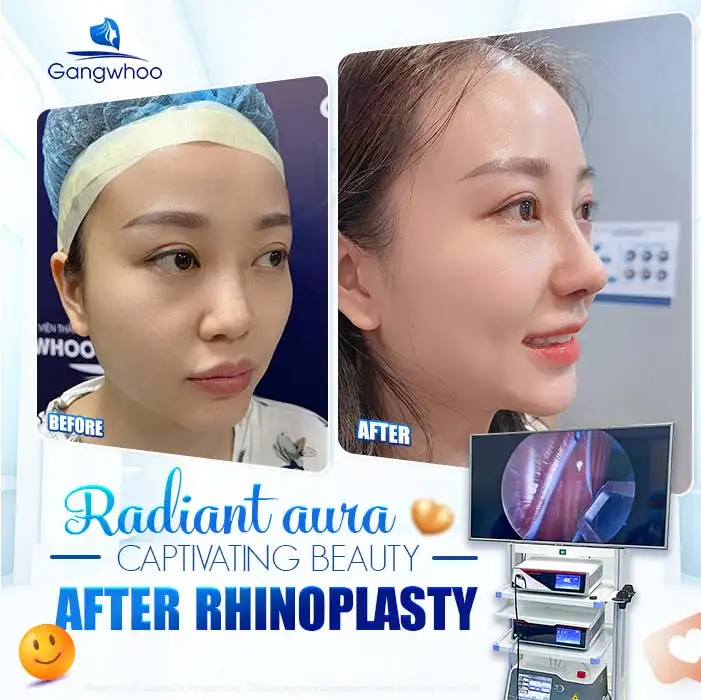
What is temporalis fascia–wrapped rhinoplasty? What effects does this technique have on the face?
Mai Tram
Rhinoplasty
Asked: 08/12/2025
Doctor, I’ve heard about the temporalis fascia–wrapped rhinoplasty technique, but I’m not sure what this method involves and what effects it has on the face. Can it effectively improve the nasal shape or overall facial appearance?
Hello, doctor has received your question about temporalis fascia–wrapped rhinoplasty—a technique that has gained a lot of attention for its safety and natural results. This is an advanced method in nasal cosmetic surgery, and the doctor will explain each aspect in detail so it’s easy for you to understand.
What is temporalis fascia–wrapped rhinoplasty?
Temporalis fascia–wrapped rhinoplasty can be simply understood as a technique that uses a portion of the temporalis fascia (a thin layer of tissue covering the temporalis muscle on the side of the head) to wrap around the nasal bridge or nasal tip when placing a synthetic implant.
From a professional perspective, temporalis fascia has the following characteristics:
Thin, flexible, and easy to shape: helping to cover the synthetic implant and create a soft cushioning layer.
High biocompatibility: because it is autologous tissue, the body rarely rejects it, reducing the risk of inflammation or allergic reactions.
Supports protection of the nasal skin: limiting complications such as redness, implant visibility, or implant displacement—issues commonly seen when using synthetic implants alone.
Therefore, temporalis fascia–wrapped rhinoplasty is considered a safe solution that delivers an elevated, aesthetically pleasing nasal shape while maintaining a natural look and minimizing risks.
What effects does temporalis fascia–wrapped rhinoplasty have on the face?
When undergoing temporalis fascia–wrapped rhinoplasty, the benefits go beyond nasal reshaping and also bring improvements to overall facial harmony:
Creates a balanced, natural nasal shape: the fascia layer softly covers the implant, resulting in a refined, elegant nasal bridge without a rigid appearance.
Reduces the risk of aesthetic complications: with protection from autologous tissue, issues such as redness, implant show-through, or skin contraction are significantly minimized.
Balances overall facial features: a proportionately elevated nasal bridge makes the face appear more graceful, with better harmony between the eyes and lips.
Long-lasting results: thanks to the high adaptability of temporalis fascia, rhinoplasty outcomes remain stable for many years.
In other words, this method not only enhances the nose but also contributes to improved overall facial harmony, delivering a natural beauty that meets medical aesthetic standards.
Who is suitable for temporalis fascia–wrapped rhinoplasty?
Not everyone needs to apply this technique. Based on professional expertise, the doctor finds temporalis fascia–wrapped rhinoplasty particularly suitable for the following individuals:
Those with thin nasal skin, who are prone to implant visibility or redness if only synthetic implants are used.
Those who wish to enhance nasal height with a soft, natural appearance while ensuring safety.
Cases with mild complications after previous rhinoplasty, requiring a more secure protective layer for the implant.
Individuals seeking long-term results and wishing to minimize the need for multiple revision procedures.
For more complex cases (damaged noses, deviated noses, or severe complications), doctors often combine temporalis fascia–wrapped rhinoplasty with reconstructive techniques to achieve optimal outcomes.
If you are unsure whether you are suitable for temporalis fascia–wrapped rhinoplasty, the doctor advises you to come in for a direct consultation to assess your nasal condition, skin thickness, and tissue structure.
At Gangwhoo Cosmetic Hospital, the team of specialist doctors will base their recommendations on your facial characteristics to provide a safe, personalized solution, ensuring a naturally beautiful and long-lasting nose without worries about complications.
Hello Doctor, I am considering rhinoplasty to improve the shape of my nose because my nose is quite low and the tip is slightly wide, making my overall facial features look less harmonious. However, after researching, I found that there are many cosmetic hospitals and spas advertising rhinoplasty services, so I am quite confused about […]
I’ve heard that nowadays there are Nano breast implants without identification chips, which are different from implants with embedded chips. Doctor, could you explain exactly what Nano implants without chips are, what their advantages and disadvantages are, and whether I should choose this type? I’m a bit concerned about having a “chip” inside my body, […]
Doctor, after my rhinoplasty, I noticed that the tip of my nose feels a bit hard compared to normal, and it feels quite uncomfortable. I don’t know what causes this or whether it is a normal condition or an abnormal sign that requires a medical check-up. If this is a normal condition, what should I […]
I am interested in endoscopic breast augmentation because I’ve heard it is gentler than traditional methods. However, I am still a bit afraid of pain and concerned about risks after surgery. Doctor, could you tell me whether endoscopic breast augmentation is painful, what the procedure involves, and what should be noted after surgery to recover […]
Hello Doctor, I just underwent a rhinoplasty and am very concerned about post-operative care. Could you please advise me on the correct and scientific way to care for my nose after surgery so that it recovers quickly, reduces swelling and pain, and avoids complications? Additionally, I would like to know any important precautions during the […]
I am learning about nasal surgery and have seen many people share that rhinoplasty not only enhances beauty but also helps the face look more refined and boosts confidence. So, doctor, could you please share the practical benefits of rhinoplasty, and whether it is worth considering if my nose is slightly low but still balanced?